Historical Significance
Continued Protestant reforms that shaped the Church of England and English religious identity.
Biography
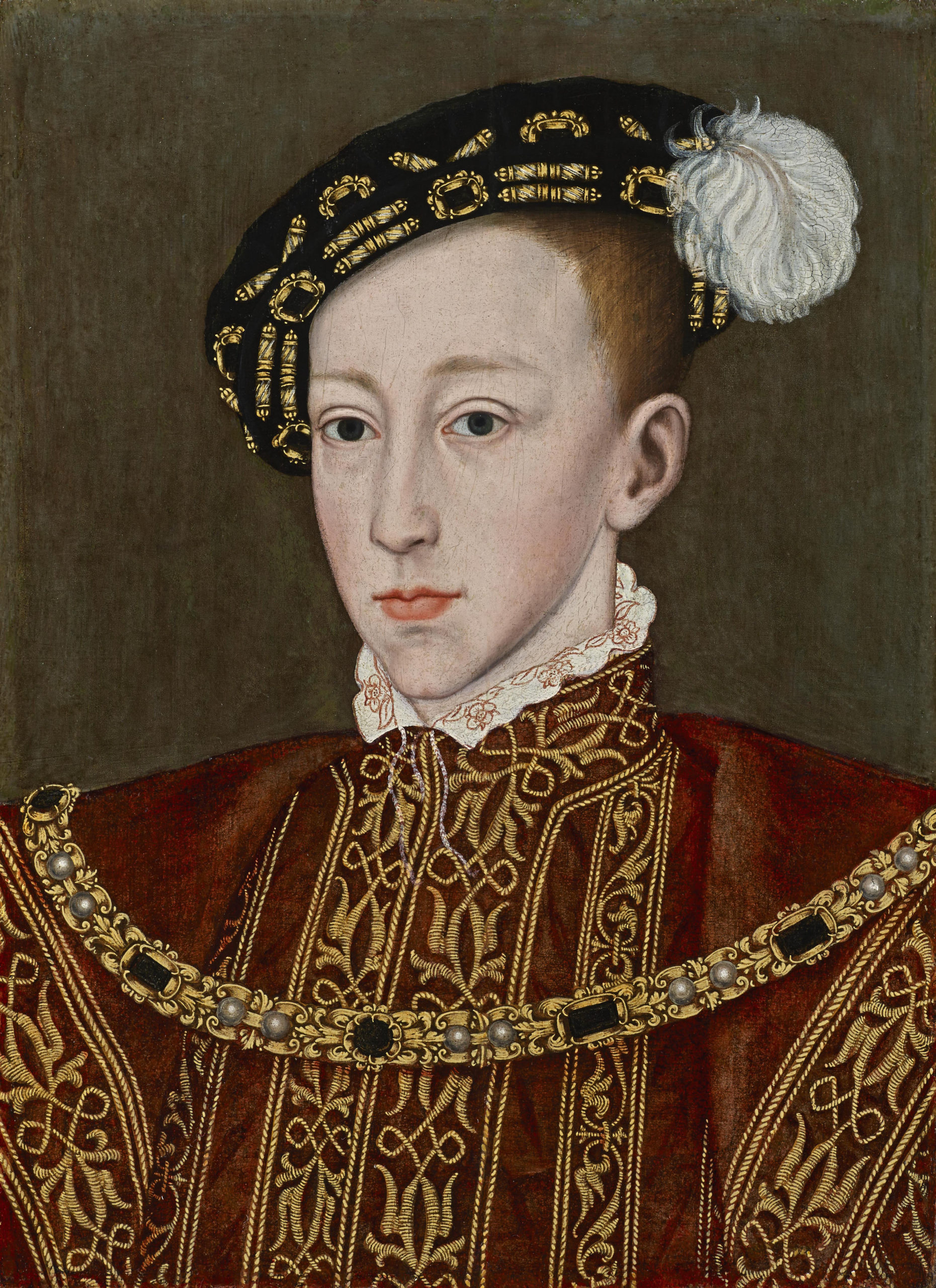
Edward VI was born on 12 October 1537 at Hampton Court Palace, the only surviving legitimate son of Henry VIII. His mother, Jane Seymour, died twelve days after his birth.
Edward received an excellent humanist education and showed remarkable intellectual ability. He was tutored by some of the finest scholars of the age and became proficient in Latin, Greek, and French. He was also deeply interested in theology and became a committed Protestant.
When Henry VIII died in January 1547, Edward became king at just nine years old. Real power was exercised by a Regency Council, first led by his uncle Edward Seymour, Duke of Somerset, and later by John Dudley, Duke of Northumberland.
During Edward's reign, the Protestant Reformation advanced significantly. The Book of Common Prayer was introduced in 1549, establishing English as the language of worship. Catholic practices were suppressed, and church interiors were stripped of their traditional decorations.
Edward took an active interest in government as he grew older and kept a detailed journal of his reign. However, his health began to fail in 1552. He likely suffered from tuberculosis, possibly complicated by measles.
Knowing he was dying, Edward attempted to exclude his Catholic half-sister Mary from the succession, naming Lady Jane Grey as his heir. He died on 6 July 1553 at Greenwich Palace, aged just fifteen. His attempt to alter the succession failed, and Mary became queen.
Key Facts
Became king at just 9 years old
Was highly educated and spoke Latin, Greek, and French
Established the Book of Common Prayer in 1549
Died at 15, possibly from tuberculosis
Attempted to exclude his sisters from the succession
Kept a detailed journal of his reign
His mother died 12 days after his birth