The Boleyn Family: From Merchants to Monarchy's Edge
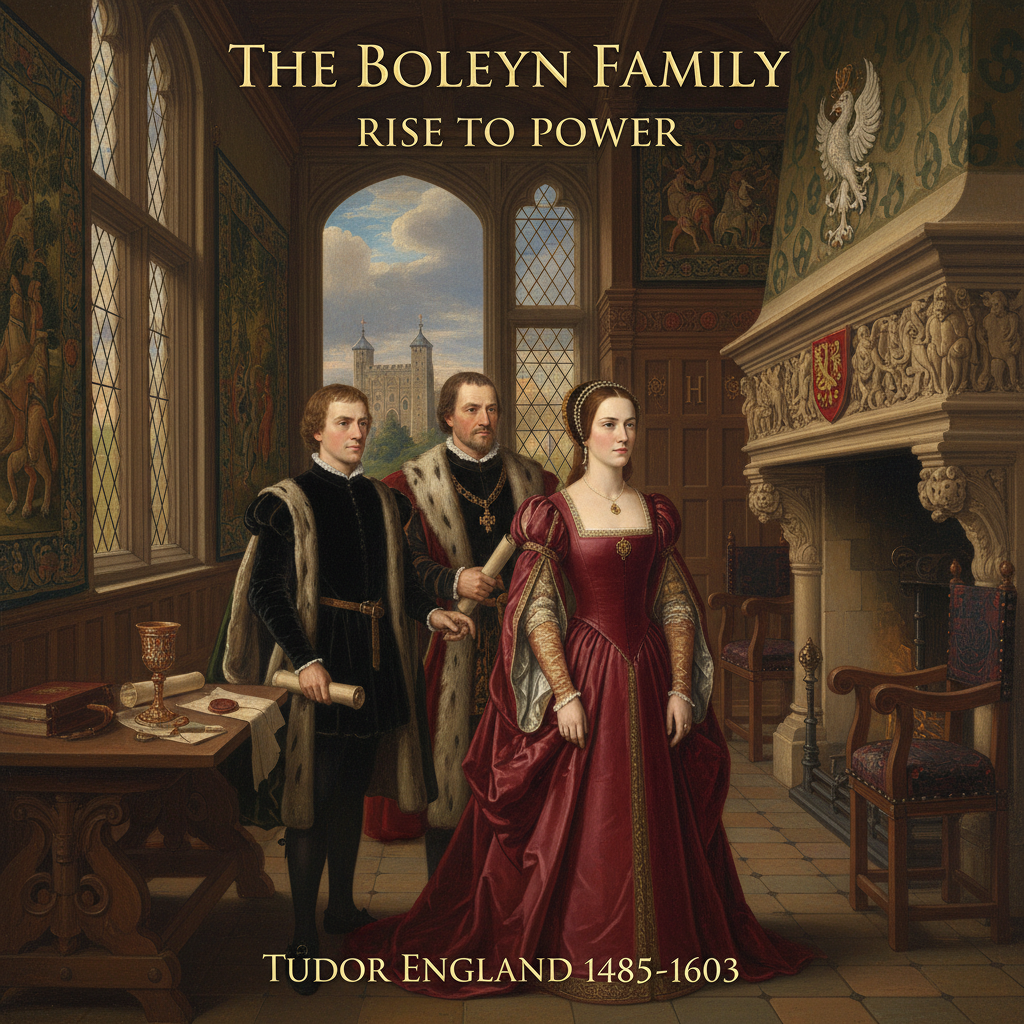
In the grand tapestry of Tudor England, few families rose with such meteoric speed and fell with such devastating consequence as the Boleyns. Their story is not merely one of ambition and royal favour, but a compelling narrative of social mobility, political acumen, and the intricate dance between power and peril that defined the court of Henry VIII. From their humble mercantile origins, the Boleyns carved a path directly to the heart of the English monarchy, forever altering the course of history and leaving an indelible mark on the nation's identity.
The Boleyn Foundations: A Legacy of Ambition
The Boleyn family's ascent began not in the hallowed halls of aristocracy, but in the bustling markets of medieval London. Their patriarch, Sir Geoffrey Boleyn, was a testament to the burgeoning power of the merchant class. A successful mercer, he served as Lord Mayor of London in 1457-58, accumulating significant wealth and, crucially, land. This acquisition of property, particularly Blickling Hall in Norfolk and Hever Castle in Kent, was a strategic move, transforming the family from mere traders into gentry with landed estates – a vital step up the social ladder.
Geoffrey's son, Sir William Boleyn, consolidated this newfound status through judicious marriages. His wife, Margaret Butler, was a co-heiress of the Earl of Ormond, linking the Boleyns to old Anglo-Irish nobility. This union was pivotal, providing their son, Thomas Boleyn, with a pedigree that, while not royal, was certainly respectable and well-connected. It was Thomas who would truly catapult the family into the orbit of kings.
“The Boleyns were a family of considerable wealth, acquired through trade, and their rise was a classic example of the upward mobility possible in late medieval and early Tudor England through a combination of financial success and strategic marriage.”
— Historian David Starkey (paraphrased)
Thomas Boleyn: Architect of Influence
Thomas Boleyn, born around 1477, was a man of considerable intellect, charm, and diplomatic skill. Unlike many of his contemporaries who relied solely on inherited status, Thomas actively cultivated his career at court. He was fluent in French and Latin, a talented musician, and possessed a keen understanding of international politics – qualities highly valued by the young Henry VIII.
His early career saw him undertake numerous diplomatic missions across Europe, serving Henry VII and then Henry VIII with distinction. He represented England in France, the Low Countries, and the Holy Roman Empire, forging crucial alliances and gaining invaluable experience. These roles not only brought him closer to the King but also allowed him to observe and understand the intricate workings of European courts, knowledge that would prove invaluable.
Did You Know?
Thomas Boleyn was a knight of the Bath and a Knight of the Garter, two of the highest honours in England, demonstrating his significant standing and the King's favour long before his daughters became prominent.
Strategic Marriages and Courtly Connections
Thomas further cemented his family's position through his marriage to Elizabeth Howard, daughter of Thomas Howard, 2nd Duke of Norfolk. The Howards were one of England's most powerful aristocratic families, and this alliance brought the Boleyns into the very heart of the English peerage. It was through this union that Thomas and Elizabeth had their famous children: Mary, Anne, and George Boleyn.
The Boleyn children were educated to an exceptionally high standard, a testament to their parents' ambition and foresight. Mary and Anne, in particular, spent formative years at the sophisticated courts of Margaret of Austria in the Netherlands and then the French court of Queen Claude. This exposure to continental culture, languages, and courtly etiquette made them exceptionally accomplished and alluring figures upon their return to England.
The Daughters of Ambition: Mary and Anne
The Boleyn family's true rise to prominence began with the introduction of Thomas's daughters to the English court. Mary Boleyn was the first to catch the King's eye, becoming his mistress for a period in the early 1520s. While her affair with Henry VIII brought the family temporary favour, it was ultimately her younger sister, Anne, who would achieve unprecedented heights.
Anne Boleyn returned to England from France around 1521, a captivating and intelligent woman unlike any other at Henry's court. Her sharp wit, elegant fashion, and refusal to become a mere mistress captivated the King. Henry VIII, already restless in his marriage to Catherine of Aragon and desperate for a male heir, became infatuated with Anne. This infatuation would spark a revolution.
Anne Boleyn and the King's 'Great Matter'
Anne's refusal to succumb to Henry's advances without the promise of marriage was a masterstroke of strategy, or perhaps genuine conviction. It forced Henry to confront the legitimacy of his marriage to Catherine of Aragon, initiating what became known as the 'King's Great Matter' – his quest for an annulment. This period saw the Boleyns' influence soar to unprecedented levels. Thomas Boleyn was elevated to Viscount Rochford and then Earl of Wiltshire and Ormond, receiving vast estates and immense power.
George Boleyn, Anne's brother, also benefited greatly. He became a prominent courtier, diplomat, and close confidant of the King, known for his intelligence and charm. The Boleyn family, once mere gentry, now stood at the pinnacle of English society, their fortunes inextricably linked to Anne's fate and the King's desire.
“The Boleyns were now the most powerful family in England, their rise having been achieved through a combination of astute political maneuvering, diplomatic skill, and the dazzling allure of Anne.”
— Alison Weir, 'The Six Wives of Henry VIII'
The Zenith and the Precipice
Anne Boleyn's coronation as Queen of England in 1533 marked the absolute zenith of the Boleyn family's power. She was not merely a consort but an active participant in court life, influencing policy and promoting religious reform. Her family members held key positions, and their opinions carried significant weight. The Boleyns had achieved what many noble families could only dream of: direct access and influence over the monarch.
However, their spectacular rise also sowed the seeds of their downfall. Their rapid ascent bred resentment among the older nobility, and Anne's strong personality and reformist leanings created powerful enemies. The ultimate blow came when Anne failed to provide Henry with a living male heir, giving birth to a daughter, Elizabeth (the future Elizabeth I), and suffering subsequent miscarriages. The King's passion waned, replaced by a desperate need for a son and a new infatuation with Jane Seymour.
The fall was as swift and brutal as the rise. In May 1536, Anne Boleyn, her brother George, and several other men were arrested on charges of treason, adultery, and incest – charges widely believed to be fabricated. Anne and George were executed, along with their alleged co-conspirators. The Boleyn family, once at the very heart of power, was shattered, their meteoric rise ending in tragedy and infamy.
Legacy of the Boleyns
Despite their dramatic fall, the Boleyn family's impact on English history is undeniable. Their ambition, strategic marriages, and the compelling personality of Anne Boleyn irrevocably changed the religious and political landscape of England. The 'King's Great Matter', driven by Henry's desire for Anne, led directly to the English Reformation, severing ties with Rome and establishing the Church of England.
Furthermore, Anne Boleyn's daughter, Elizabeth, would go on to become one of England's greatest monarchs, Elizabeth I. Thus, the Boleyn bloodline, though seemingly extinguished in the male line and through Anne's execution, ultimately produced a queen who would define an era, ensuring the family's enduring, if complex, legacy.
The story of the Boleyns is a potent reminder of the volatile nature of power in the Tudor court – a place where fortunes could be made and lost in the blink of a king's eye, and where ambition, though it could lead to the throne, could also lead to the scaffold. Their journey from mercantile wealth to the monarch's bedchamber and ultimately to the executioner's block remains one of the most captivating and tragic tales of Tudor England, forever fascinating historians and enthusiasts alike.
TAGS
Discussion
No comments yet
Be the first to share your thoughts on this article!
Related Articles
Catherine Howard: The Tragic 'Rose Without a Thorn'
Explore the tragic story of Catherine Howard, Henry VIII's fifth queen, the 'Rose Without a Thorn,' whose youthful exuberance and hidden past led to her dramatic downfall and execution.
Thomas Cranmer: Architect of the English Reformation
Explore the life of Thomas Cranmer, Archbishop of Canterbury and chief architect of the English Reformation, from his scholarly rise to his enduring legacy and dramatic martyrdom.
The Howard Family: Power, Peril, and Dukes of Norfolk
Explore the dramatic saga of the Howard family, Dukes of Norfolk, from their rise to power and influence in Tudor England to their perilous proximity to the crown and their enduring legacy.