The Howard Family: Power, Peril, and Dukes of Norfolk
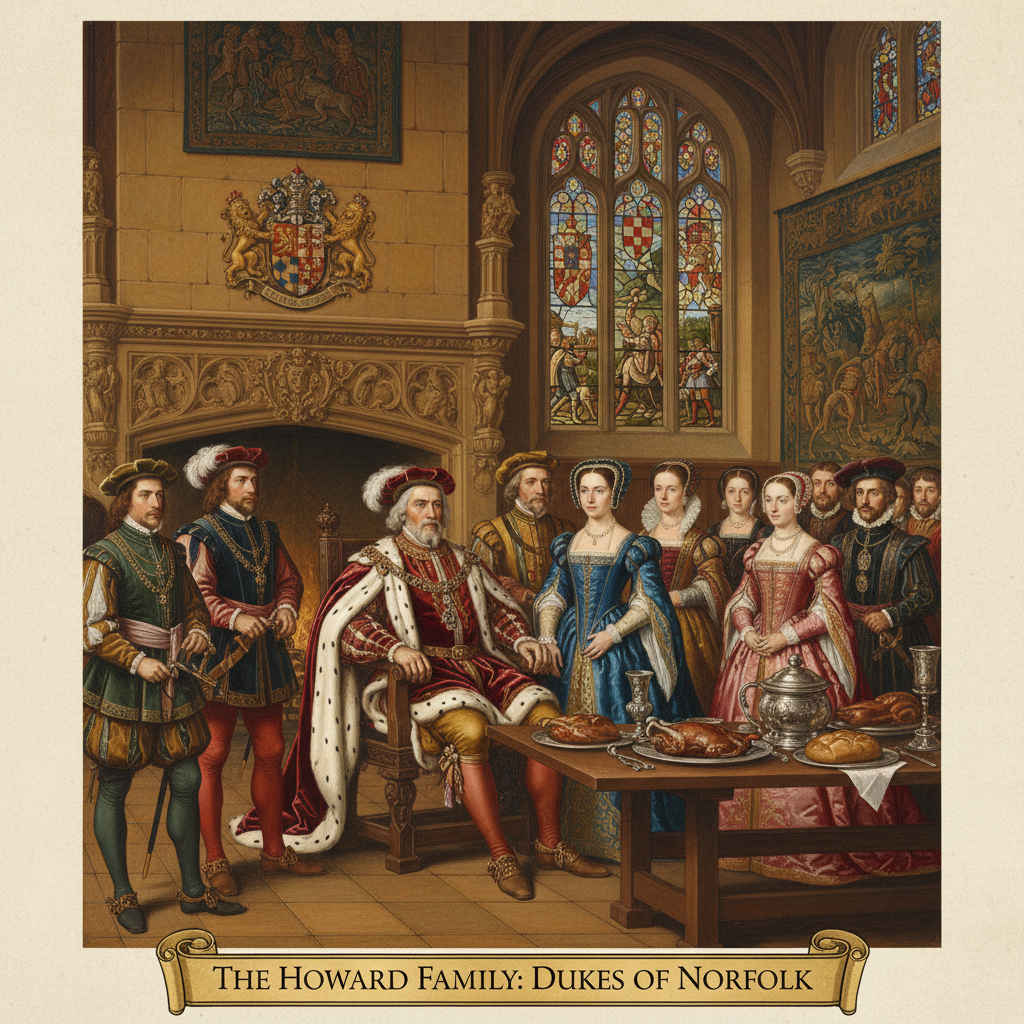
In the tumultuous tapestry of Tudor England, few families wove a thread as prominent, as powerful, and as perilously close to the crown as the Howards, Dukes of Norfolk. For centuries, this ancient aristocratic lineage stood at the very apex of English society, their fortunes inextricably linked to the rise and fall of monarchs. From battlefield triumphs to the chilling shadow of the executioner’s axe, the Howards’ story is a dramatic saga of ambition, loyalty, betrayal, and resilience, offering a unique lens through which to view the grandeur and brutality of the Tudor age.
The Ascent of a Dynasty: From Battlefields to Royal Courts
The Howard family's rise to prominence began long before the Tudors seized the throne. Their foundational power was cemented through military prowess and strategic marriages. Sir Robert Howard’s marriage to Margaret de Mowbray, daughter of Thomas de Mowbray, 1st Duke of Norfolk (of the first creation), laid the groundwork for their eventual claim to the ducal title. It was, however, John Howard who truly elevated the family to the pinnacle of the English peerage.
A staunch supporter of Richard III, John Howard was rewarded for his loyalty with the coveted title of Duke of Norfolk in 1483. This elevation, however, came with a heavy price. Just two years later, he fell alongside his king at the Battle of Bosworth Field, fighting valiantly for the Yorkist cause against Henry Tudor. His death marked a temporary eclipse for the family, but their resilience was undeniable.
“The Howards were a family of great antiquity and estate, whose loyalty to the crown, though sometimes questioned, was often rewarded with high office and immense influence.” – Historian's observation on their early standing.
Did You Know?
The title 'Duke of Norfolk' is the premier dukedom in the Peerage of England, meaning the Duke of Norfolk is the highest-ranking duke, and indeed the highest-ranking peer, in the English peerage system, excluding members of the Royal Family. This often grants them ceremonial roles, such as Earl Marshal, responsible for state ceremonies.
Thomas Howard, 2nd Duke: Navigating the Tudor Storm
It was John's son, Thomas Howard, who masterfully navigated the treacherous waters of the early Tudor court. Imprisoned and attainted after Bosworth, he eventually regained Henry VII's favour through loyal service and military victories, most notably at the Battle of Flodden Field in 1513, where he decisively defeated the invading Scottish army and killed James IV of Scotland. This triumph not only restored his family's honour and lands but also saw him reinstated as Duke of Norfolk by Henry VIII.
The 2nd Duke became a pivotal figure in Henry VIII's court, serving as Lord Treasurer and a trusted advisor. His children, too, rose to great heights. His son, Thomas Howard, 3rd Duke of Norfolk, would become one of the most powerful men in England, while his daughter, Elizabeth Howard, married Thomas Boleyn and became the mother of Anne Boleyn, Henry VIII's second queen.
The Tudor Connection: Queens, Power, and Peril
The Howards' proximity to the throne reached its zenith – and its most dangerous point – through their female members. Two of Henry VIII's six wives were Howard women, a testament to the family's ambition and influence.
- Anne Boleyn: Niece of the 3rd Duke, Anne's marriage to Henry VIII irrevocably changed the course of English history, leading to the English Reformation. Her dramatic fall and execution for treason in 1536 sent shockwaves through the court, and though her immediate family suffered, the Howards as a whole largely weathered the storm.
- Catherine Howard: Another niece of the 3rd Duke, Catherine became Henry VIII's fifth wife. Her youth and vivacity initially charmed the aging king, but her past indiscretions and alleged infidelities led to her swift downfall and execution in 1542. This time, the repercussions for the Howard family were severe, with the 3rd Duke himself narrowly escaping execution.
The 3rd Duke, Thomas Howard, was a master of political survival, serving four Tudor monarchs (Henry VII, Henry VIII, Edward VI, and Mary I). Despite his family's repeated brushes with royal displeasure, he managed to retain his immense wealth and influence for decades. However, his ambition and Catholic leanings eventually brought him into conflict with the Protestant regency council during Edward VI's reign, leading to his imprisonment and attainder. He was only released and restored to his dukedom by the Catholic Queen Mary I.
The 4th Duke and the Elizabethan Challenge
The most tragic figure in the Howard saga is arguably Thomas Howard, 4th Duke of Norfolk. A prominent Catholic nobleman during the reign of Elizabeth I, he found himself caught between his loyalty to the Protestant Queen and his Catholic faith, exacerbated by plots to restore Catholicism in England.
His involvement in the Ridolfi Plot, a scheme to depose Elizabeth, marry Mary, Queen of Scots, and restore Catholicism with Spanish support, proved to be his undoing. Despite his initial denials, evidence mounted against him. Elizabeth, though reluctant to execute such a high-ranking nobleman, ultimately signed his death warrant.
“The Duke of Norfolk, being the first peer of the realm, and a man of great wealth and connections, was a dangerous instrument in the hands of any who sought to disturb the peace of the kingdom.” – Contemporary observation on the 4th Duke’s influence.
Thomas Howard was executed for treason in 1572, the last Duke of Norfolk to suffer such a fate. His execution marked a significant moment in Elizabethan England, demonstrating the Queen's resolve against Catholic threats and further solidifying the Protestant establishment.
Legacy and Enduring Influence
Despite the repeated periods of attainder, imprisonment, and execution, the Howard family persistently recovered. Their resilience is a testament to their deep roots in English aristocracy, their strategic wealth, and their ability to adapt to changing political landscapes.
Today, the Duke of Norfolk remains the premier peer of England, holding the hereditary office of Earl Marshal, responsible for organizing state occasions such as coronations and state funerals. Arundel Castle, their ancestral seat, stands as a magnificent symbol of their enduring legacy, filled with centuries of history, art, and the echoes of a family that shaped, and was shaped by, the very fabric of England.
The story of the Howard Dukes of Norfolk is more than just a chronicle of one family; it is a microcosm of the Tudor era itself – a period defined by ambition, religious upheaval, dynastic struggles, and the ever-present dance between power and peril. Their tale continues to fascinate, reminding us of the human drama that unfolded behind the grand facades of history.
TAGS
Discussion
No comments yet
Be the first to share your thoughts on this article!
Related Articles
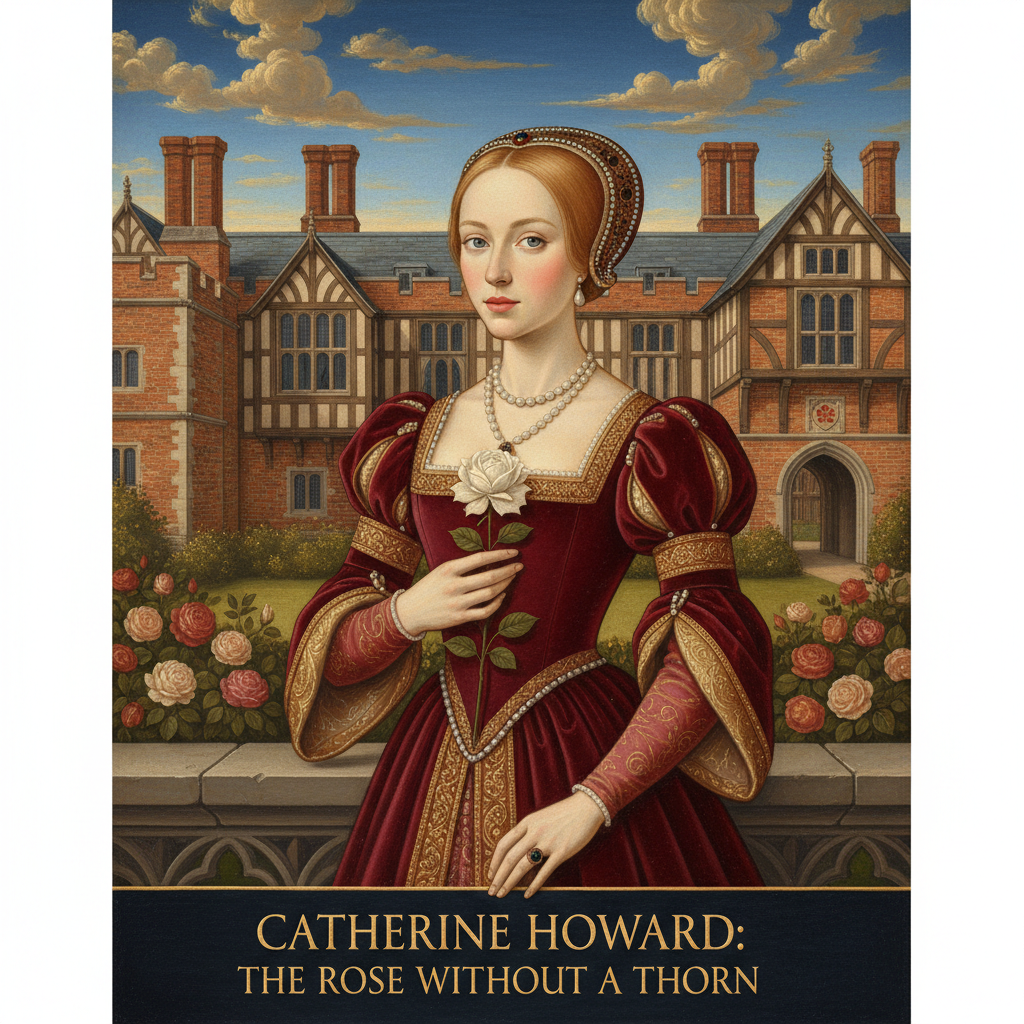
Catherine Howard: The Tragic 'Rose Without a Thorn'
Explore the tragic story of Catherine Howard, Henry VIII's fifth queen, the 'Rose Without a Thorn,' whose youthful exuberance and hidden past led to her dramatic downfall and execution.
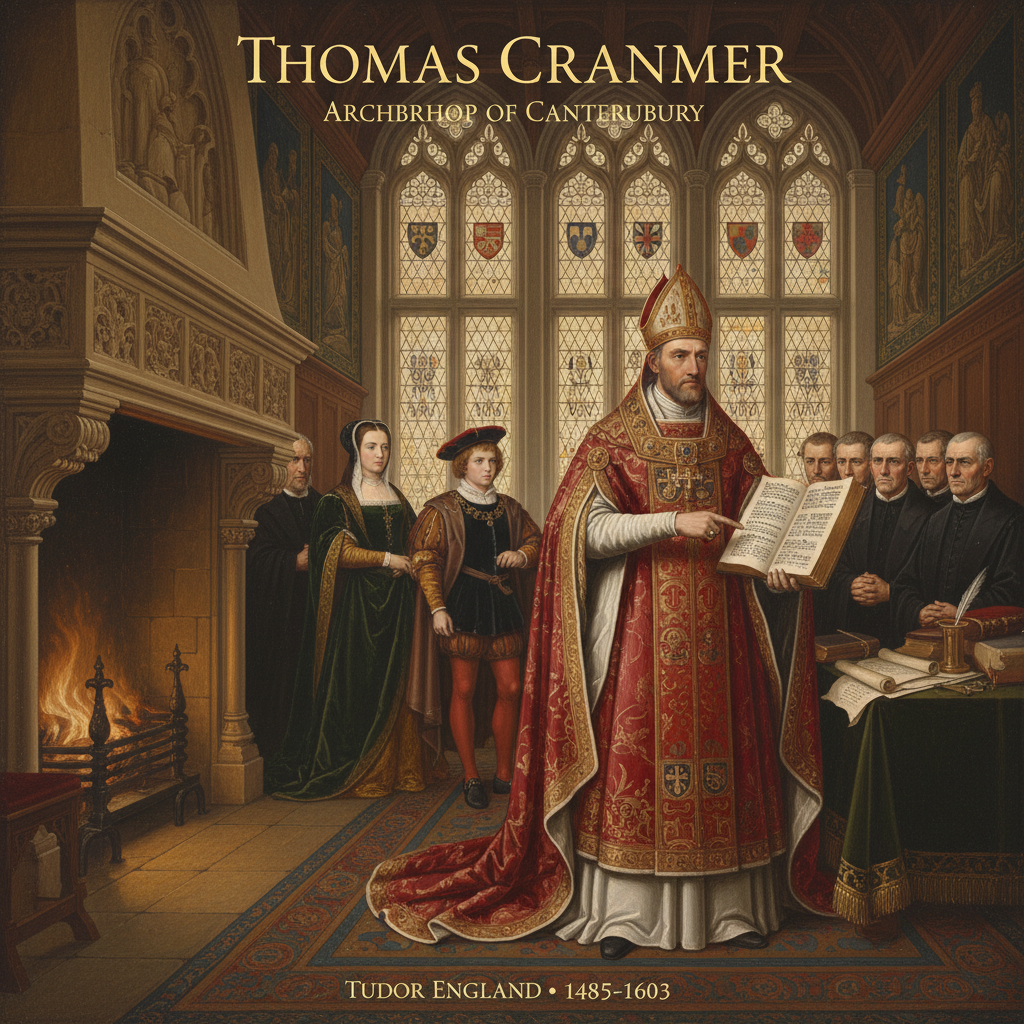
Thomas Cranmer: Architect of the English Reformation
Explore the life of Thomas Cranmer, Archbishop of Canterbury and chief architect of the English Reformation, from his scholarly rise to his enduring legacy and dramatic martyrdom.