Cardinal Wolsey: Architect of Power, Victim of Ambition

In the vibrant tapestry of Tudor England, few figures cast a shadow as long and complex as Thomas Wolsey. From humble beginnings, he ascended to become the most powerful man in England, second only to King Henry VIII himself. His story is a captivating saga of ambition, political genius, and ultimately, a spectacular fall from grace, forever etched into the annals of history as a cautionary tale of power's intoxicating allure and its precarious perch.
The Humble Beginnings of a Tudor Titan
Thomas Wolsey's journey began not in the gilded halls of aristocracy, but in Ipswich, Suffolk, around 1473. The son of a butcher, his origins were a stark contrast to the noble lineage typically associated with high office. Yet, Wolsey possessed an extraordinary intellect and an insatiable drive. He attended Magdalen College, Oxford, at an astonishingly young age, graduating at 15 and becoming a Fellow by 1497. This early academic brilliance laid the foundation for his meteoric rise.
His initial foray into royal service came through Archbishop Deane and Sir Richard Nanfan, the latter recommending him to the young King Henry VIII. Henry, then a vibrant and ambitious monarch, quickly recognized Wolsey's sharp mind, administrative prowess, and tireless work ethic. Wolsey's ability to anticipate the King's desires and execute them with unparalleled efficiency endeared him to the young sovereign.
Did You Know?
Wolsey was ordained a priest in 1498 and quickly accumulated benefices, a common practice for ambitious churchmen of the era. His first significant royal appointment was as Royal Chaplain in 1507, a position that placed him directly in Henry VIII's orbit.
The Zenith of Power: Wolsey's Ascendancy
By 1515, Wolsey had become Archbishop of York and, crucially, Lord Chancellor of England, the King's chief minister. Later that year, Pope Leo X, recognizing his growing influence, elevated him to Cardinal. This dual authority, spiritual and temporal, made Wolsey an unprecedented figure in English history. He effectively governed England, managing both domestic and foreign policy with a firm hand.
Wolsey's foreign policy was characterized by an intricate dance of alliances and rivalries, primarily between France, Spain, and the Holy Roman Empire. He masterminded the Treaty of London in 1518, a grand peace initiative that saw over 20 European powers pledge non-aggression, temporarily positioning England as the arbiter of European peace. This diplomatic triumph was a testament to his strategic genius.
"He was a man of great intellect, and of an insatiable ambition, and of a spirit that could brook no equal." – George Cavendish, Wolsey's gentleman usher and biographer.
Domestically, Wolsey initiated significant reforms. He sought to improve the justice system, establishing the Court of Star Chamber as a powerful instrument to curb the abuses of the nobility and bring justice to the common man. He also took an interest in education, founding Cardinal College (now Christ Church) at Oxford and a grammar school in Ipswich. His administrative reforms, though sometimes unpopular due to their efficiency and his personal enrichment, undeniably strengthened the Crown's authority.
A Glimpse into Wolsey's Lavish Lifestyle
Wolsey lived in a style befitting a king, not a mere subject. His household at Hampton Court Palace, which he later gifted to Henry VIII, was immense, employing hundreds of servants, including his own personal physician, chaplain, and even a fool. His banquets were legendary, designed to impress foreign dignitaries and showcase England's growing prestige. This ostentation, while a symbol of his power, also fueled resentment among the old nobility, who viewed him as an upstart.
The King's 'Great Matter' and Wolsey's Downfall
Wolsey's unparalleled influence rested entirely on Henry VIII's favour. When Henry became obsessed with securing an annulment from Catherine of Aragon to marry Anne Boleyn – the infamous 'King's Great Matter' – Wolsey found himself in an impossible position. The King desperately needed a male heir, and Catherine had failed to provide one. Henry believed his marriage to Catherine, his brother's widow, was incestuous and therefore invalid in God's eyes, citing Leviticus 20:21.
Wolsey, as Papal Legate, was tasked with securing the annulment from Rome. This was a monumental challenge. Pope Clement VII was effectively a prisoner of Emperor Charles V, Catherine's nephew, following the Sack of Rome. Granting an annulment would have been a direct affront to Charles, a risk the Pope was unwilling to take.
Wolsey employed every diplomatic and legal trick in his arsenal, but to no avail. The legatine court held in England in 1529, presided over by Wolsey and Cardinal Campeggio, ultimately failed to deliver a verdict. Henry's patience wore thin. He saw Wolsey's failure not as a reflection of papal intransigence, but as a personal betrayal or incompetence.
The Precipitous Fall from Grace
The King's favour, once Wolsey's greatest asset, now became his undoing. Anne Boleyn and her faction at court, who had long resented Wolsey's power and his perceived obstruction of the annulment, seized the opportunity. In October 1529, Wolsey was stripped of his Lord Chancellorship and forced to surrender his magnificent Hampton Court Palace to the King. His vast wealth and properties were confiscated by the Crown.
He was allowed to retain the Archbishopric of York and retired to his diocese, but his enemies were not finished. In November 1530, he was accused of treason for corresponding with foreign powers, a charge likely fabricated to ensure his complete removal. As he was being brought south to face trial in London, he fell ill and died at Leicester Abbey on November 29, 1530. His last words, as recorded by Cavendish, were a poignant reflection on his life's devotion:
"I pray you, have me heartily commended unto His Royal Majesty, and beseech him, in my behalf, to call to his most gracious remembrance all matters that have passed between us from the beginning, and especially in his great matter; and then to judge whether I have offended him or no." – Cardinal Thomas Wolsey.
Legacy and Lasting Impact
Despite his dramatic downfall, Wolsey's impact on England was profound. He transformed the administration of the realm, centralizing power and laying the groundwork for the modern state. His foreign policy, though often expensive, elevated England's standing on the European stage. His efforts to reform the justice system, though incomplete, demonstrated a commitment to governance beyond personal gain.
- Centralization of Power: Wolsey solidified the monarch's authority, paving the way for Henry VIII's later break with Rome.
- Diplomatic Acumen: His handling of European affairs showcased England as a significant player.
- Educational Patronage: His foundations at Oxford and Ipswich left a lasting mark on English education.
- Hampton Court Palace: A magnificent architectural legacy, still enjoyed today.
Wolsey's story serves as a powerful reminder of the capricious nature of royal favour and the inherent risks of wielding immense power. He was a man of extraordinary talent and ambition, who rose higher than any commoner before him, only to be consumed by the very forces he sought to control. His life bridges the medieval and early modern worlds, a testament to the transformative, and often brutal, politics of the Tudor era. His shadow, though cast by a fall, continues to illuminate the complexities of Henry VIII's reign and the making of modern England. To truly understand the Tudor era, one must first understand the rise and fall of Cardinal Thomas Wolsey.
TAGS
Discussion
No comments yet
Be the first to share your thoughts on this article!
Related Articles
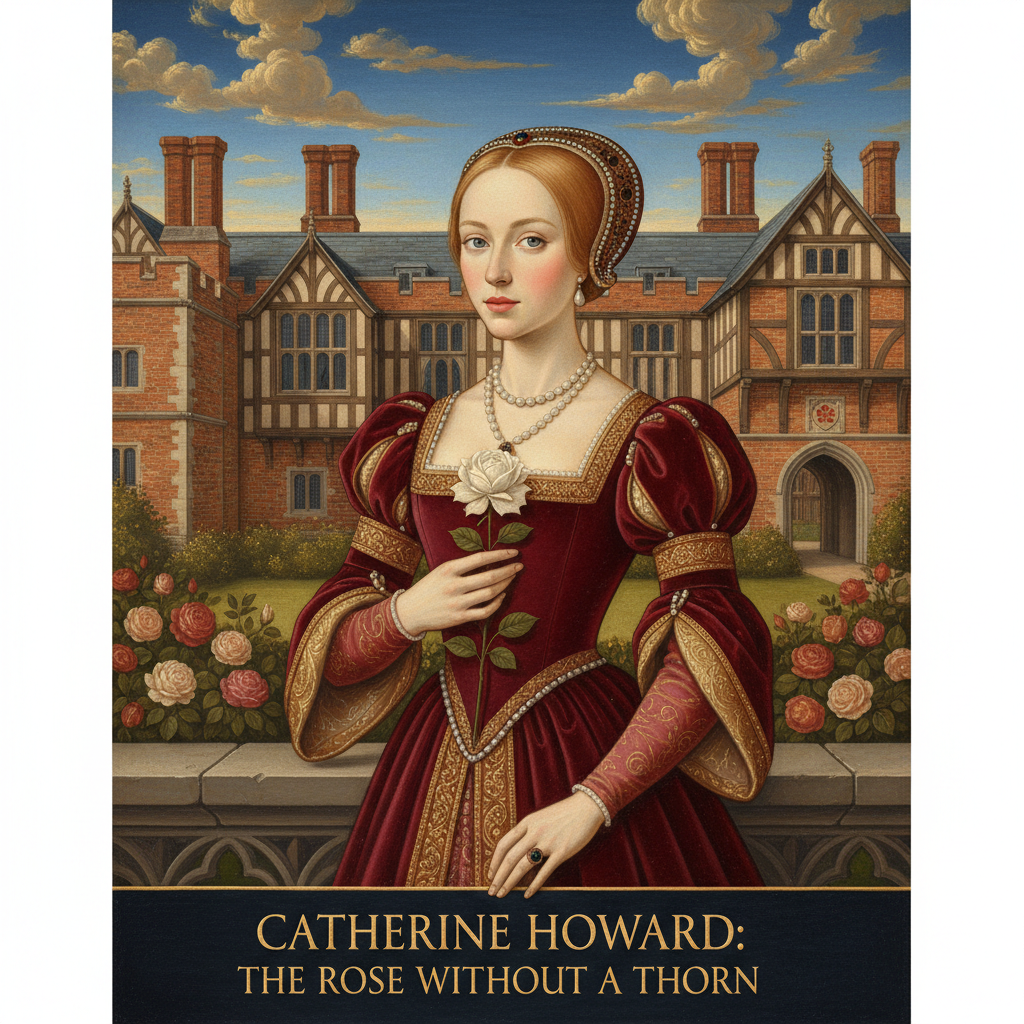
Catherine Howard: The Tragic 'Rose Without a Thorn'
Explore the tragic story of Catherine Howard, Henry VIII's fifth queen, the 'Rose Without a Thorn,' whose youthful exuberance and hidden past led to her dramatic downfall and execution.
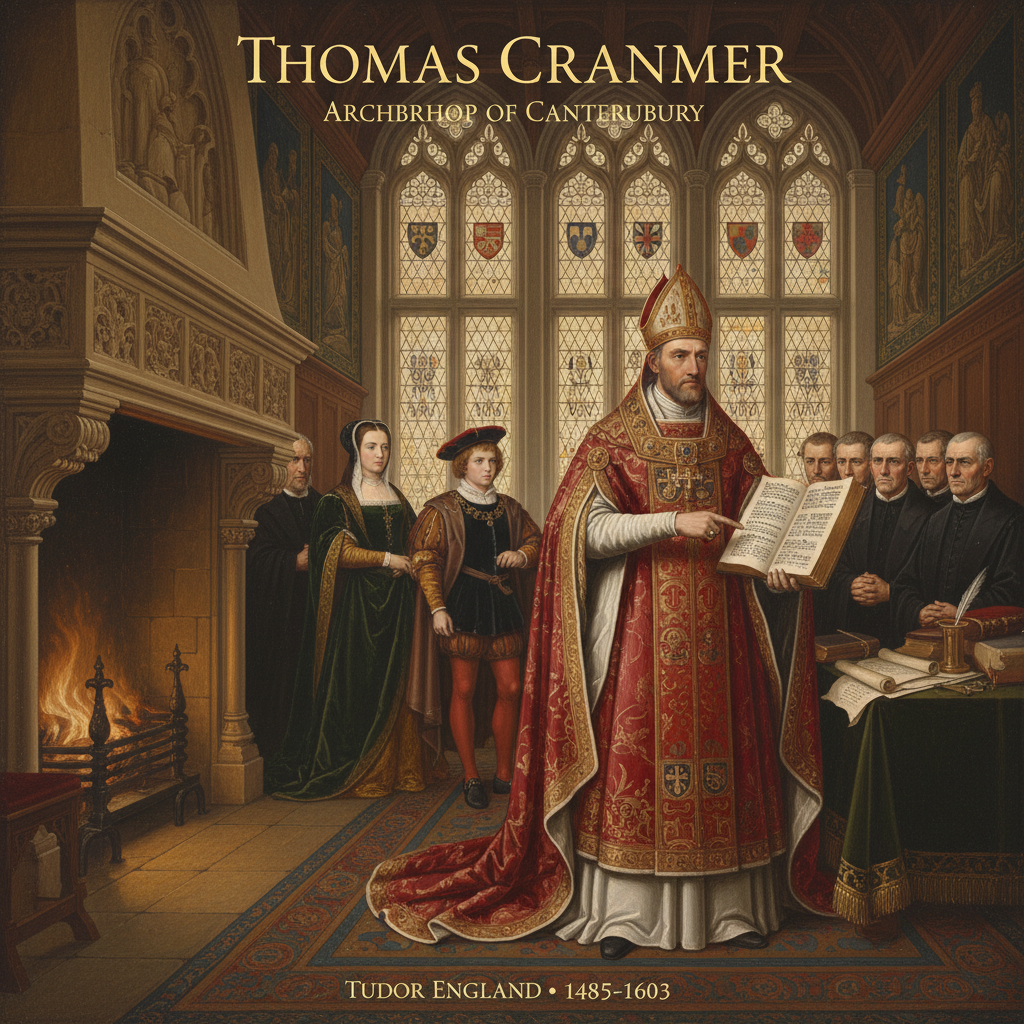
Thomas Cranmer: Architect of the English Reformation
Explore the life of Thomas Cranmer, Archbishop of Canterbury and chief architect of the English Reformation, from his scholarly rise to his enduring legacy and dramatic martyrdom.
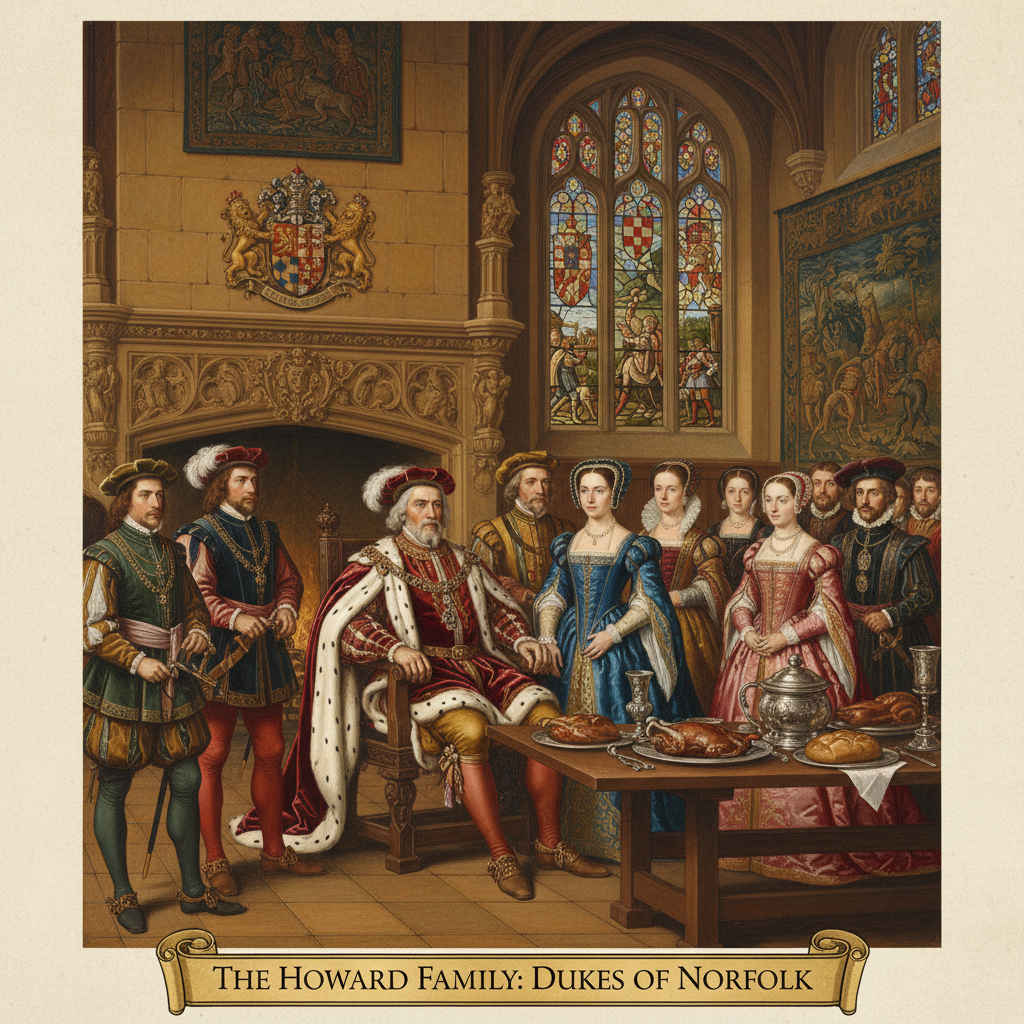
The Howard Family: Power, Peril, and Dukes of Norfolk
Explore the dramatic saga of the Howard family, Dukes of Norfolk, from their rise to power and influence in Tudor England to their perilous proximity to the crown and their enduring legacy.