Woven Wonders: The Splendour of Tudor Tapestries & Textiles
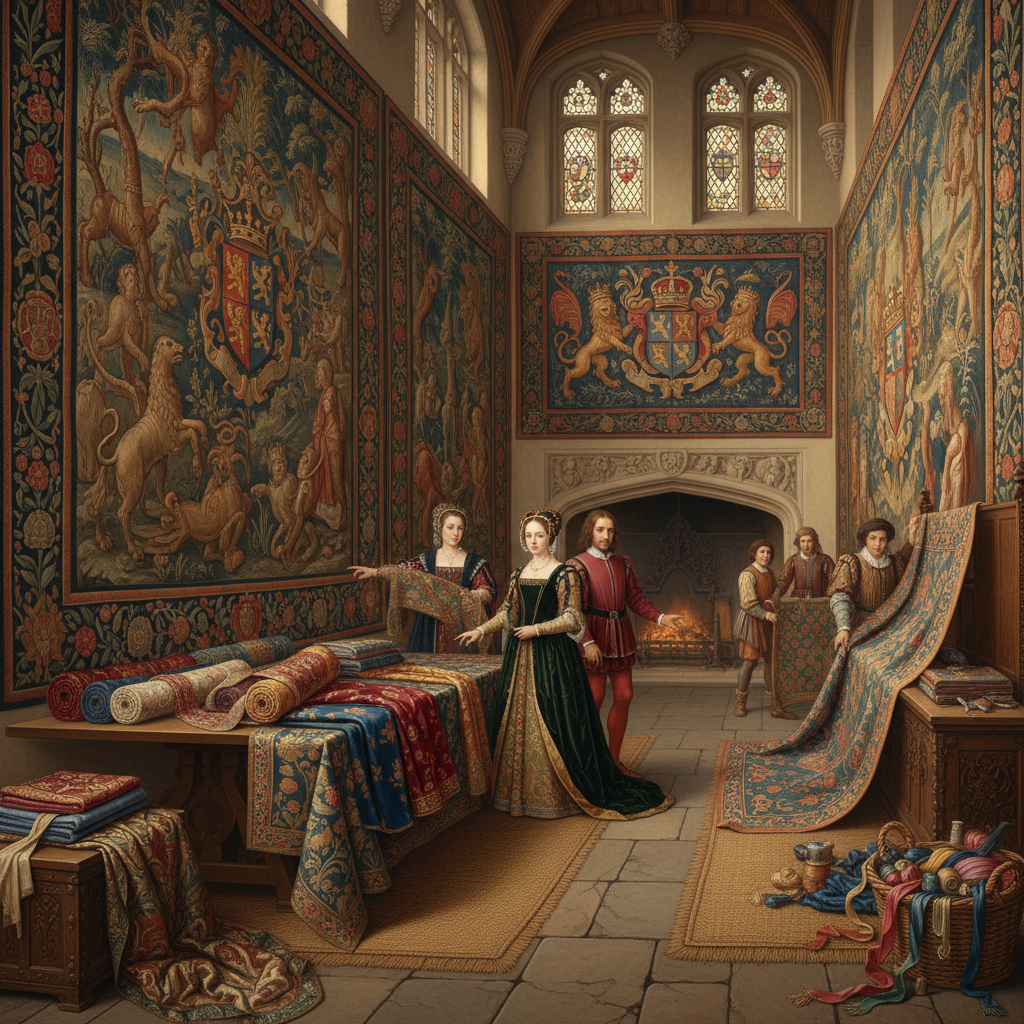
Step into the opulent world of Tudor England, and you are immediately enveloped not just by the grandeur of architecture, but by an astonishing riot of colour, texture, and artistry. Far from being mere decorative items, Tudor tapestries and textiles were central to power, prestige, and daily life, transforming cold stone halls into vibrant, living spaces. They told stories, proclaimed status, and even served as portable wealth, making them some of the most significant and costly possessions of the age. From the dazzling displays of Henry VIII's court to the intricate needlework of noblewomen, the threads of history are richly interwoven with the fabric of Tudor society.
The Grandeur of Tudor Tapestries: Walls That Spoke Volumes
In an era before central heating and wallpaper, tapestries served multiple crucial functions. They insulated draughty castles and palaces, provided acoustic dampening, and most importantly, they were potent symbols of wealth, power, and taste. A large tapestry could cost more than a warship, taking years to weave by skilled artisans, often in Flanders or Arras, the renowned centres of tapestry production.
Henry VIII was arguably the greatest collector of tapestries in English history. His inventory at the time of his death listed over 2,000 pieces, an unparalleled collection that included masterpieces like the 'Abraham Series' and the 'Acts of the Apostles'. These weren't just pretty pictures; they were visual narratives, often depicting biblical scenes, classical mythology, or heroic deeds, designed to educate, entertain, and impress.
“The King’s Majesty hath in his Great Wardrobe, and in his sundry palaces, an infinite number of rich hangings and tapestries, some of gold and silver, some of silk and wool, of diverse stories and fashions, to the great beautifying of his royal houses.”
— From a contemporary account of Henry VIII's possessions
Royal Patronage and Prestige
The acquisition of tapestries was a competitive sport among European monarchs, and Henry VIII spared no expense. He commissioned pieces, often designed by celebrated artists like Bernard van Orley, and purchased others from the dissolved monasteries, further enriching his already vast collection. These tapestries were not static; they travelled with the court, transforming temporary lodgings into royal residences wherever the monarch went. Imagine the logistical challenge of transporting hundreds of heavy, rolled-up tapestries across the country!
Beyond the Walls: Everyday Textiles and Dress
While tapestries adorned the grandest halls, textiles permeated every aspect of Tudor life, from the clothes on one's back to the linens on the bed. The quality and quantity of textiles owned were direct indicators of social standing. Sumptuary laws dictated who could wear what, ensuring that the social hierarchy was visible in every stitch.
- Wool: The backbone of the English economy, used for everything from peasant's tunics to fine broadcloth for the gentry.
- Linen: Essential for undergarments, shirts, smocks, bedsheets, and household items, often bleached to a pristine white.
- Silk: Imported and highly prized, used for luxurious gowns, doublets, hose, and embroidery for the elite.
- Velvet & Damask: Rich, patterned fabrics, often woven with silk, reserved for the highest echelons of society.
- Furs: Used for warmth and status, with ermine and sable reserved for royalty and high nobility.
Embroidered Elegance: The Art of Needlework
Embroidery was a highly esteemed skill, particularly among noblewomen, who often spent hours creating intricate pieces. This was not merely a pastime; it was a demonstration of virtue, patience, and artistic talent. Mary Queen of Scots, during her long imprisonment, was a prolific embroiderer, creating pieces that still survive today, often imbued with personal symbolism and political messages.
Did You Know?
The 'Field of the Cloth of Gold' in 1520, a meeting between Henry VIII and Francis I of France, was named for the sheer amount of gold-threaded fabric and lavish textiles used to decorate tents, clothing, and banners, creating an unprecedented spectacle of wealth.
The Practicalities of Production and Preservation
The creation of these textiles was a monumental undertaking. Tapestries, as mentioned, were often woven on massive looms, requiring teams of weavers. Dyeing was a complex process, using natural pigments from plants (like woad for blue, madder for red, weld for yellow), insects (cochineal for crimson), and minerals. The vibrant colours we see in surviving pieces are a testament to the skill of Tudor dyers.
Preservation was also a constant concern. Textiles were vulnerable to moths, damp, and light. Inventories often detail the condition of pieces, noting repairs or signs of wear. Special chests and wardrobes were used for storage, and tapestries were regularly taken down, cleaned, and aired.
Legacy and Lasting Impact
Today, few Tudor tapestries and textiles survive in their original glory. Many were cut down, re-sewn, or simply perished over time. However, those that remain offer a breathtaking glimpse into the aesthetic sensibilities and material culture of the age. Hampton Court Palace still houses a magnificent collection of tapestries, including some from Henry VIII's original inventory, allowing us to walk in the footsteps of kings and queens, surrounded by the very same woven wonders that once graced their lives.
The study of Tudor textiles continues to reveal fascinating insights into trade routes, artistic influences, social customs, and even the daily lives of the people who created and used them. They are not just historical artifacts; they are vibrant narratives, silently speaking across the centuries, reminding us of the enduring power of art and craftsmanship in shaping human experience.
TAGS
Discussion
No comments yet
Be the first to share your thoughts on this article!
You May Also Like
Continue exploring Tudor history with these related articles

Catherine of Aragon: The Spanish Princess Who Defined the Tudor Era
Explore the life of Catherine of Aragon, the Spanish Infanta whose marriage to Henry VIII and subsequent refusal to accept an annulment triggered the English Reformation and defined the Tudor era.

The Sickening Truth: Medicine and Health in Tudor England
Dive into the precarious world of Tudor medicine, exploring the reliance on the Four Humours, the terrifying reality of the plague, and the often-dangerous treatments used by physicians, surgeons, and apothecaries in 16th-century England.

The Boleyn Ascent: How a Norfolk Family Conquered the Tudor Court
Explore the astonishing three-generation rise of the Boleyn family, from ambitious London merchants to the pinnacle of power, culminating in Anne Boleyn's controversial queenship and the English Reformation.

The Majesty and Mystery of Tudor Gardens and Landscapes
Explore the sophisticated world of Tudor gardens and landscapes, revealing how these meticulously designed spaces served as powerful symbols of status, utility, and Renaissance order during the reigns of Henry VIII and Elizabeth I.