The Boleyn Ascent: How a Norfolk Family Conquered the Tudor Court

The Boleyn Ascent: How a Norfolk Family Conquered the Tudor Court
The name Boleyn is synonymous with tragedy, ambition, and the seismic shift of the English Reformation. Yet, before Anne Boleyn became the ill-fated Queen, the family was merely one of many ambitious gentry families striving for prominence. Their stunning, rapid ascent from respectable landowners to the very pinnacle of Tudor power is one of the most compelling stories of the 16th century.
From Wool Merchants to Landed Gentry: The Foundation
The true architect of the Boleyn dynasty’s rise was Thomas Boleyn’s grandfather, Sir Geoffrey Boleyn (d. 1463). Sir Geoffrey was a successful London mercer and wool merchant who rose through the ranks of the city's guilds, eventually serving as Lord Mayor of London in 1457. His wealth was immense, and crucially, he used it to acquire significant landed estates, most notably Blickling Hall in Norfolk and Hever Castle in Kent. This transformation from 'new money' merchant to landed gentry was the essential first step.
Sir Geoffrey’s son, Sir William Boleyn (d. 1505), solidified this status by marrying Margaret Butler, co-heiress of the Earl of Ormond. This marriage was a masterstroke, linking the Boleyns to one of the most ancient and powerful Anglo-Irish noble families, bringing both prestige and potential claims to vast estates.
“The Boleyns were not simply lucky; they were strategic. They understood that in the Tudor age, money bought land, and land bought influence.” – Dr. John Guy, Historian (Paraphrased)
The Courtier and the Diplomat: Sir Thomas Boleyn
The true political elevation of the family came through Thomas Boleyn (Anne’s father). Born around 1477, Thomas was everything a successful courtier needed to be: intelligent, multilingual, charming, and utterly devoted to the reigning monarch. He married Elizabeth Howard, daughter of Thomas Howard, 2nd Duke of Norfolk. This union with one of England’s premier noble families provided the final necessary social boost.
Thomas Boleyn quickly became indispensable to Henry VII and later, Henry VIII. His talents lay in diplomacy, and he was frequently dispatched across Europe. His missions included:
- Serving as Ambassador to the Low Countries.
- Negotiating treaties with Emperor Maximilian I.
- Acting as Ambassador to France, where he developed crucial relationships with the French court – relationships that would later benefit his daughters, Mary and Anne.
Henry VIII rewarded Thomas lavishly, granting him numerous offices, titles, and estates. By the 1520s, Thomas was Viscount Rochford and a Knight of the Garter, a remarkable achievement for a man whose grandfather had been a merchant.
The Daughters: Mary and Anne
The Boleyn strategy of advancement culminated in the presentation of their daughters at court. The Tudor court was the engine of social mobility, and placing a daughter in the royal household offered unparalleled opportunity.
Mary Boleyn: The King’s Mistress
Mary Boleyn was the first to gain notoriety. After serving in the French court, she returned to England and caught the eye of Henry VIII around 1520. Her relationship with the King was brief but significant. While Mary gained little political power herself, her status as the King’s mistress undoubtedly raised the family’s profile and ensured Henry’s continued favour toward Thomas Boleyn.
Anne Boleyn: The Catalyst
Anne Boleyn’s rise was far more calculated and impactful. Unlike Mary, Anne had spent formative years in the sophisticated courts of Margaret of Austria and Queen Claude of France. She returned to England around 1521, possessing a sharp wit, fashionable French manners, and an intellectual confidence that set her apart from most English ladies.
When Henry VIII became infatuated with Anne around 1526, she employed a tactic that stunned the European courts: refusal. She would not become a mistress; she demanded the crown. This refusal was the pivot point, turning a typical royal liaison into a constitutional crisis.
Anne’s presence at court dramatically accelerated the family’s political power. The King's desire to marry her required him to annul his marriage to Catherine of Aragon, a process known as 'The King's Great Matter'. This pursuit necessitated the break with Rome, the dissolution of the monasteries, and the establishment of the Church of England.
The Zenith and the Fall
As Henry's determination hardened, the Boleyns became the dominant faction at court, replacing the influence of Cardinal Wolsey. In 1532, Thomas Boleyn was created Earl of Wiltshire and Earl of Ormond, titles that finally placed the Boleyns among the highest nobility.
Anne’s coronation in 1533 was the ultimate triumph. A Boleyn was Queen of England, and her father, the grandson of a wool merchant, was now an Earl whose counsel the King relied upon implicitly. The Boleyn family had successfully navigated three generations of strategic marriages, diplomatic service, and calculated risk to achieve supreme power.
The family’s dominance, however, was entirely dependent on Anne’s status and her ability to provide Henry with a male heir. When Anne failed to produce a surviving son, and Henry’s affections waned, the speed of their fall was as breathtaking as their ascent.
In May 1536, Anne, her brother George Boleyn (Viscount Rochford), and several alleged co-conspirators were arrested on charges of treason, adultery, and incest. The precise reasons for the charges remain debated, but the political reality was clear: the Boleyns were expendable once Anne had lost the King’s favour.
Anne and George were executed. Thomas Boleyn, stripped of his political influence, survived the purge, dying peacefully in 1539. While the family suffered a catastrophic blow, their legacy—the birth of Queen Elizabeth I—would ultimately redefine the English monarchy for centuries to come.
Conclusion: A Legacy of Ambition
The Boleyn rise to power is a perfect microcosm of Tudor ambition. It demonstrates how wealth, strategic marriage, diplomatic skill, and, ultimately, the sexual politics of the court could elevate a family from relative obscurity to the throne in just three generations. Their story is a powerful reminder that in the volatile world of the Tudor court, the greatest rewards came with the greatest risks.
Discussion
No comments yet
Be the first to share your thoughts on this article!
You May Also Like
Continue exploring Tudor history with these related articles

Catherine of Aragon: The Spanish Princess Who Defined the Tudor Era
Explore the life of Catherine of Aragon, the Spanish Infanta whose marriage to Henry VIII and subsequent refusal to accept an annulment triggered the English Reformation and defined the Tudor era.

The Sickening Truth: Medicine and Health in Tudor England
Dive into the precarious world of Tudor medicine, exploring the reliance on the Four Humours, the terrifying reality of the plague, and the often-dangerous treatments used by physicians, surgeons, and apothecaries in 16th-century England.
Anne Boleyn: Rise, Reign, & Tragic Fall of a Tudor Queen
Explore the captivating and tragic story of Anne Boleyn, from her sophisticated upbringing and meteoric rise as Henry VIII's second queen to her dramatic downfall and execution, forever changing England's history.
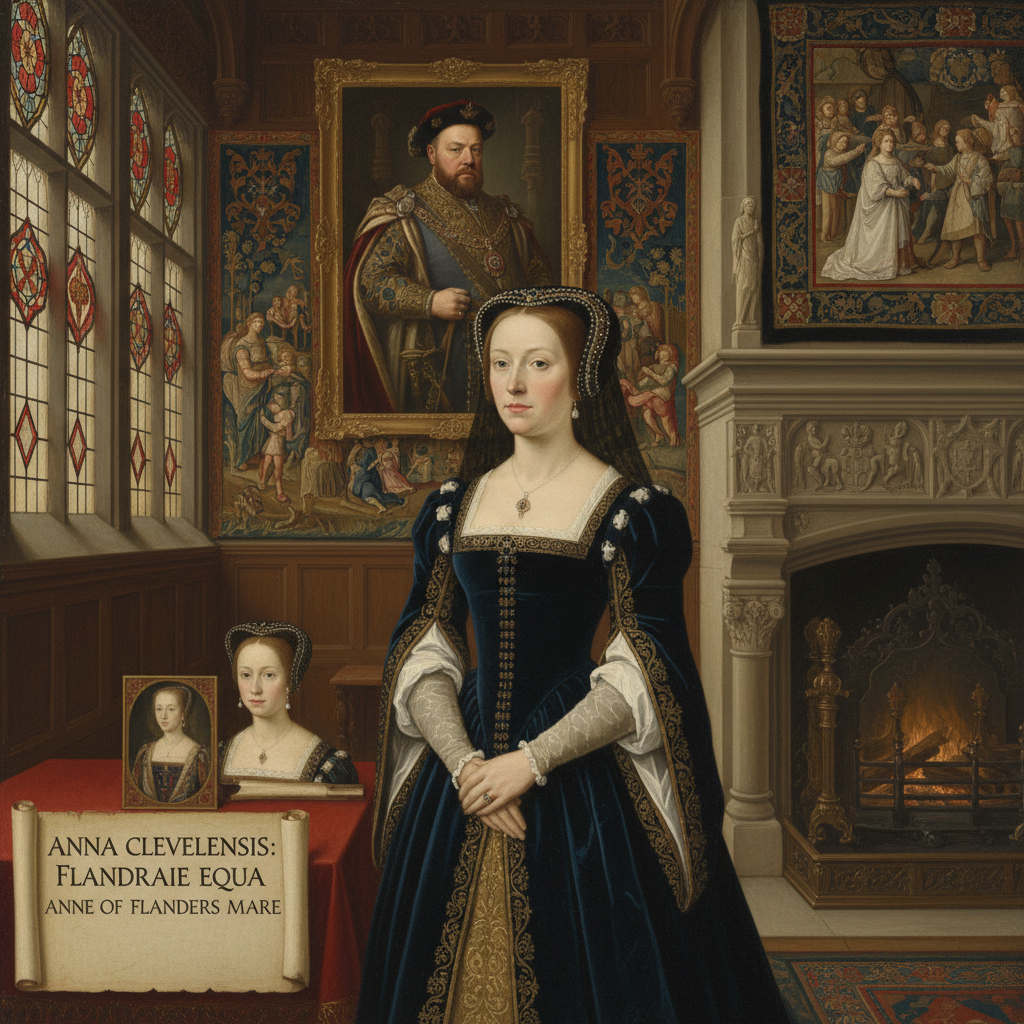
Anne of Cleves: Beyond the 'Flanders Mare' Myth
Explore the true story of Anne of Cleves, Henry VIII's fourth wife, beyond the 'Flanders Mare' myth. Discover her resilience, intelligence, and strategic survival in the Tudor court.