Whitehall Palace: The Epicentre of Tudor Power & Intrigue
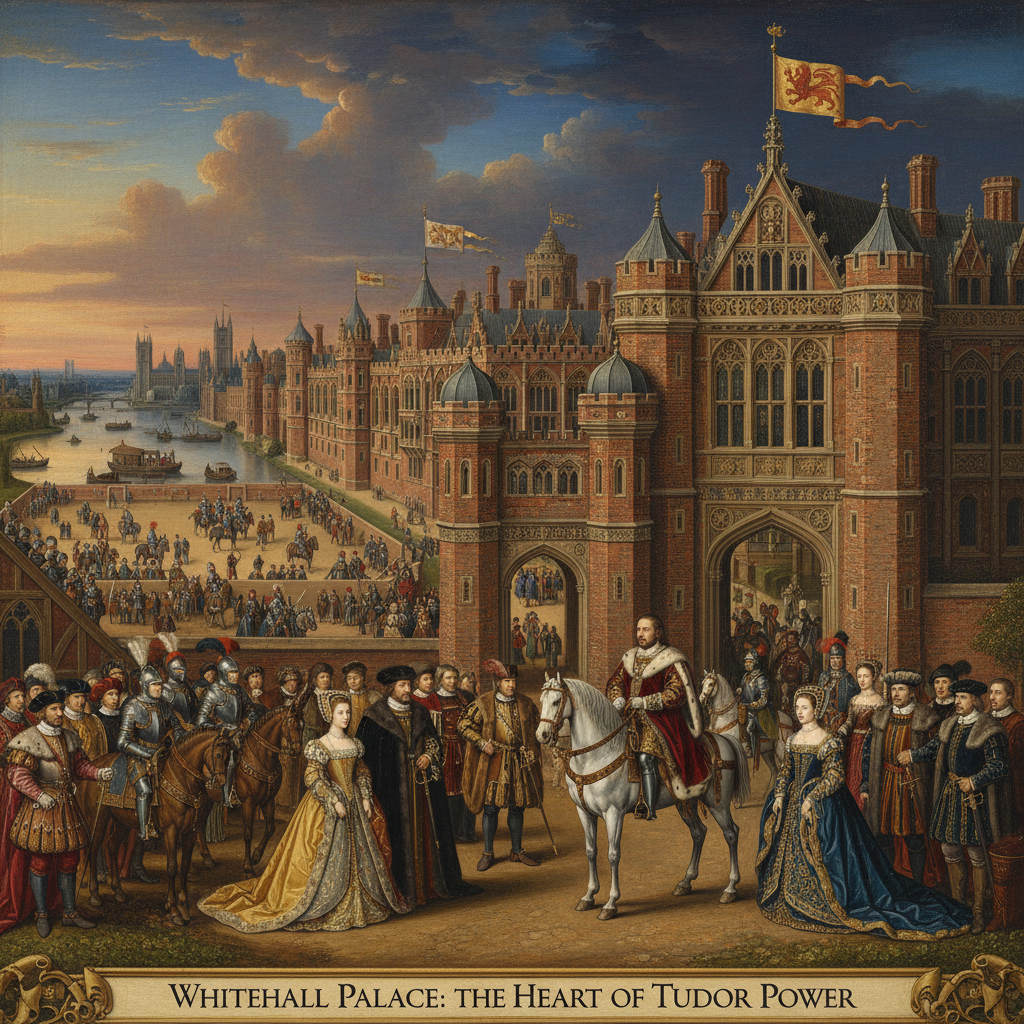
Imagine a sprawling, magnificent complex, a veritable city within a city, stretching along the Thames. This was Whitehall Palace, the beating heart of Tudor England, where monarchs ruled, treaties were signed, and the destinies of nations were forged. Far more than just a royal residence, Whitehall was the stage upon which the grand drama of the Tudor dynasty unfolded, witnessing everything from Henry VIII's dramatic marital upheavals to Elizabeth I's shrewd political manoeuvrings. Its very stones absorbed the ambition, the piety, the scandal, and the sheer power that defined one of England's most iconic eras.
From Humble Beginnings to Royal Grandeur: Henry VIII's Vision
Whitehall's story begins not with royalty, but with a powerful churchman: Cardinal Thomas Wolsey. Originally known as York Place, it was the London residence of the Archbishops of York. Wolsey, Henry VIII's ambitious chief minister, transformed it into a lavish estate, second only to the King's own palaces in splendour. Its opulence, however, would prove to be his undoing. When Wolsey fell from grace in 1529, York Place was seized by Henry VIII, who, with his characteristic grandiosity, immediately set about making it his principal London residence.
Henry VIII renamed it the Palace of Whitehall, and embarked on an unprecedented building campaign. He acquired surrounding land, demolished existing structures, and poured vast sums into its expansion. The palace grew to encompass over 23 acres, making it the largest palace in Europe at the time, boasting over 1,500 rooms. It was a labyrinth of courtyards, galleries, banqueting halls, private apartments, and gardens, designed not just for comfort but to project an image of unparalleled royal power and wealth.
"The King's Majesty, having a perfect desire to have a royal mansion in London, and finding the site of York Place to be most commodious, did cause the same to be enlarged and beautified with such sumptuous buildings as were never before seen in England."
Edward Hall, Chronicler
A Palace of Pleasure and Politics
Whitehall was designed for both the serious business of governance and the lavish entertainments of the court. Henry VIII, a man of immense appetites, ensured the palace catered to his every whim. It housed a tilting yard for jousts and tournaments, tennis courts, bowling alleys, and a cockfighting pit. The Privy Garden, a meticulously designed formal garden, offered a private retreat, while the vast parklands provided space for hunting.
Did You Know?
Whitehall Palace was so large that it was said to have its own internal street system. It was connected by a series of covered galleries and passages, allowing the King and his courtiers to move between different sections without exposure to the elements or the public eye.
But beneath the surface of revelry, Whitehall was a hive of political activity. The Privy Council met here, foreign ambassadors presented their credentials, and petitions were heard. Decisions made within its walls reverberated across England and beyond. It was here that Henry VIII’s fateful decision to break with Rome was solidified, shaping the religious and political landscape of the nation for centuries to come.
The Stage for Dynastic Drama: Marriages, Births, and Deaths
Whitehall was intimately connected with Henry VIII's tumultuous personal life. It was here that he married Anne Boleyn in secret in 1533, and where her coronation procession began. The palace witnessed the birth of Elizabeth I, though not in the grand style one might expect for a future queen, as her mother's position was already precarious.
Later, Catherine Howard, Henry's fifth wife, was arrested at Whitehall on charges of treason. Legend has it that her ghost still runs screaming down the Haunted Gallery, desperately seeking an audience with the King to plead her innocence. While a romantic embellishment, it speaks to the intense drama that unfolded within the palace's walls.
After Henry's death, his children continued to use Whitehall as their primary residence. Edward VI, a devout Protestant, held court here, and it was from Whitehall that his body was carried in a grand procession for burial. Mary I, Henry's Catholic daughter, also favoured Whitehall, using it to stage her magnificent wedding feast to Philip II of Spain, a union that sought to restore England to the Catholic fold.
Elizabeth I: The Virgin Queen's Domain
It was perhaps under Elizabeth I that Whitehall truly solidified its reputation as the heart of English power. The Virgin Queen, a master of political theatre, used the palace to great effect. Her progresses through the palace, her appearances on balconies, and her grand audiences were carefully orchestrated performances designed to project an image of strength, wisdom, and majesty.
Elizabeth held her famous Garter Day ceremonies at Whitehall, and it was the setting for countless masques, banquets, and diplomatic receptions. She often received foreign dignitaries in the Privy Chamber, a space designed to impress with its rich tapestries and ornate decorations. Her presence imbued Whitehall with a unique blend of intellectual vigour and regal splendour.
"Her Majesty, being in her private chamber at Whitehall, did receive the French Ambassador with such grace and dignity as astonished all present, speaking to him in his own tongue with great fluency and wit."
A contemporary account from a courtier
The Palace's Layout and Function
Whitehall was not a single building but a complex of interconnected structures, each serving a specific purpose:
- The Holbein Gate: One of the grand entrances, adorned with statues and heraldry, leading to the main courtyard.
- The Banqueting House: Though the current one is Stuart, Tudor monarchs used earlier versions for grand feasts and entertainments.
- The Privy Gallery: A long, ornate corridor connecting the King's and Queen's apartments, often used for private meetings and promenades.
- The Tilt Yard: The site of spectacular jousting tournaments and other martial displays.
- The Cockpit: A popular venue for betting and entertainment.
- The Royal Chapel: A place of worship where the monarch and court attended daily services.
The sheer scale of Whitehall meant it functioned almost like a small town, with its own kitchens, bakeries, laundries, stables, and administrative offices, employing hundreds of staff to cater to the needs of the monarch and the vast royal household.
The Legacy and Demise of Whitehall
Whitehall continued to be the principal royal residence through the Stuart era, with James I and Charles I adding their own touches, most notably Inigo Jones's magnificent Banqueting House, which still stands today. However, the palace that had witnessed so much Tudor history was largely destroyed by a devastating fire in 1698. Only a few fragments survived, most notably the Banqueting House, which stands as a poignant reminder of the palace's former glory.
Today, the name Whitehall primarily refers to the road in London that houses many government departments, a testament to the area's enduring connection to power. Yet, for those who know its history, the ground beneath these modern edifices still whispers tales of Henry VIII's ambition, Anne Boleyn's tragic fate, and Elizabeth I's indomitable spirit. Whitehall Palace was more than just bricks and mortar; it was the crucible where the Tudor dynasty forged modern England, a place where history was not just made, but lived, breathed, and dramatically performed.
TAGS
Discussion
No comments yet
Be the first to share your thoughts on this article!
You May Also Like
Continue exploring Tudor history with these related articles

Hampton Court Palace: A Tudor Masterpiece and Royal Powerhouse
Explore the history of Hampton Court Palace, the magnificent Tudor residence built by Cardinal Wolsey and seized by Henry VIII. Discover the Great Hall, the Royal Tennis Court, and the dramatic stories of the six queens.

Whitehall Palace: The Lost Heart of Tudor Power
Whitehall Palace, seized by Henry VIII from Cardinal Wolsey, became the largest palace in Europe and the monumental heart of Tudor power, witnessing the Reformation, royal marriages, and political intrigue.
The Tower of London: Tudor England's Grim Fortress
Explore the chilling history of the Tower of London during the Tudor era, a fortress that served as a royal palace, treasury, and most famously, a state prison for figures like Anne Boleyn and Lady Jane Grey. Discover its role in shaping England's tumultuous past.

The Enduring Charm of Tudor Half-Timbered Houses
Explore the iconic half-timbered architecture of the Tudor era. Learn how these distinctive black-and-white houses served as status symbols, reflected the 'Great Rebuilding,' and utilized innovative construction techniques.