The Enduring Charm of Tudor Half-Timbered Houses

When one pictures the Tudor era—the age of Henry VIII, Elizabeth I, and seismic shifts in English history—the accompanying architectural image is almost always the distinctive, black-and-white facade of the half-timbered house. Far from being merely picturesque, these structures represent a profound moment in English building history, blending practicality, available resources, and emerging social status. They are the physical embodiment of the Tudor age, standing today as enduring monuments to the craftsmanship and daily life of the 16th century.
The Anatomy of Half-Timbering: Structure and Style
Half-timbering, or timber-framing, is an architectural method where heavy wooden load-bearing frames are constructed first, and the spaces (known as panels or infill) are later filled with non-structural materials. This technique was not unique to the Tudor period, having roots in medieval construction, but it reached its zenith of complexity and decorative flair during the 15th and 16th centuries.
Why Timber? The Practicality of Materials
The primary reason for the prevalence of half-timbering was the abundance of suitable oak in many parts of England, particularly the Midlands and the South East. Unlike stone, which required extensive quarrying and highly skilled masons, timber was relatively easy to transport and work with. The frames were often constructed off-site and then assembled rapidly, a process known as 'raising the frame,' which was often a community event celebrated with feasting.
- The Frame: Typically made of durable English oak, the structural elements included massive vertical posts, horizontal beams (sills and plates), and diagonal braces for stability.
- The Infill (Infilling): The spaces between the timbers were filled with wattle and daub (woven hazel rods plastered with a mixture of clay, straw, and dung), lath and plaster, or sometimes brick nogging (later in the period).
- The Finish: The iconic black-and-white look is largely a post-Tudor phenomenon. Originally, the exposed oak was left to weather naturally to a silvery grey, and the infill was often painted in earth tones, ochres, or even pale reds. The stark black tarring of the timbers and white washing of the infill became popular much later, during the Victorian era, for preservation and aesthetic uniformity.
“For the most part, the houses of the gentry and yeomanry are now built of timber, strong and well-framed, and covered with slate or tile, or sometimes with thatch, but all very substantial and durable.”
William Harrison, Description of England (1577)
Status Symbols in Wood: Decorative Framing
As England grew wealthier under the Tudors, architecture became a critical means of displaying status. The half-timbered house evolved from a simple, functional structure into an elaborate canvas for wealth and fashion. The more timber used, and the more complex the pattern, the richer the owner was perceived to be.
Jetties and Overhangs
One of the most recognizable features of Tudor half-timbering is the 'jetty'—the projection of an upper floor beyond the one below. While often cited as a space-saving measure on narrow urban streets or a means of dropping waste onto the street below, the primary structural reason was practical: it protected the vulnerable timber sills and foundations of the lower floor from rain runoff. A pronounced jetty also allowed for larger rooms upstairs and became a fashionable architectural flourish.
Ornate Patterns and Carvings
The plain vertical and horizontal framing of early Tudor buildings gave way to highly decorative patterns:
- Close Studding: Characterized by numerous vertical timbers placed very close together, signifying the owner’s ability to afford vast quantities of expensive oak.
- Quatrefoil and Herringbone: Complex geometric patterns used in the infill panels, especially popular in the West Midlands and Cheshire (e.g., Little Moreton Hall).
- Carved Bressumers: The massive horizontal beam supporting the jetty was often richly carved with religious motifs, heraldry, or grotesque figures, serving as a public display of piety or lineage.
Did You Know?
The famous 'Wealden Hall House' style, popular in Kent and Sussex, was a transitional form. It featured half-timbering on the wings but often had a recessed central hall with a massive open roof, reflecting the older medieval communal living arrangements even as private chambers became more common.
The Great Rebuilding and Architectural Transition
The mid-to-late Tudor period, particularly the reign of Elizabeth I, saw what historians term 'The Great Rebuilding.' Following the dissolution of the monasteries and a period of relative peace and prosperity, the gentry and wealthy yeomanry invested heavily in replacing older, medieval halls with modern, comfortable, and stylish homes. Half-timbering was central to this revolution.
These new houses prioritized comfort, light, and privacy. The medieval great hall, where the whole household ate and slept, began to shrink or disappear entirely, replaced by specialized rooms:
- Parlours: Private reception rooms for family use.
- Long Galleries: Essential for exercise during bad weather and for displaying art and portraits.
- Chimneys: A massive shift from open central hearths to multiple brick chimneys, allowing for upper-floor heating and the creation of private bedchambers.
However, the dominance of timber began to wane towards the end of the Tudor era and into the Jacobean period. Increasing deforestation meant timber prices rose sharply. Furthermore, devastating urban fires, such as the frequent blazes in London, highlighted the flammability of half-timbered construction.
“The houses in London and other great cities are mostly built of timber, which is a great danger in case of fire, and the cause of many grievous accidents.”
A contemporary observation on London housing, c. 1600
Enduring Legacies and Modern Preservation
Today, the half-timbered house is perhaps the most romanticized form of Tudor architecture. Towns like Chester, Shrewsbury, and York retain stunning examples, demonstrating the variety and resilience of this building method. These structures offer invaluable insights into Tudor society, reflecting the rise of the middle class and the shift from feudalism to a more mercantile economy.
Preserving these historic buildings is a complex task. The movement inherent in the timber frame, coupled with the differing expansion rates of the timber and the infill materials, requires specialized conservation techniques. Modern attempts to 'fix' these movements often cause more damage than the natural aging process.
The study of these houses allows us to trace the lineage of English domestic architecture. The emphasis on symmetry and large windows—characteristics that would define later Elizabethan and Jacobean mansions—began in the sophisticated half-timbered homes of the prosperous Tudor merchant and yeoman. They are a crucial link between the rough-hewn world of the Middle Ages and the grand, classical styles that would follow.
To walk past a half-timbered house is to touch the very fabric of Tudor England. It is a reminder that even the most functional structures can carry deep cultural and historical significance, telling a story of ambition, craftsmanship, and the enduring human desire to build something beautiful and lasting. We encourage you to explore our resources on Tudor Manor Houses and the Evolution of Elizabethan Architecture to further understand this fascinating period.
Discussion
No comments yet
Be the first to share your thoughts on this article!
You May Also Like
Continue exploring Tudor history with these related articles
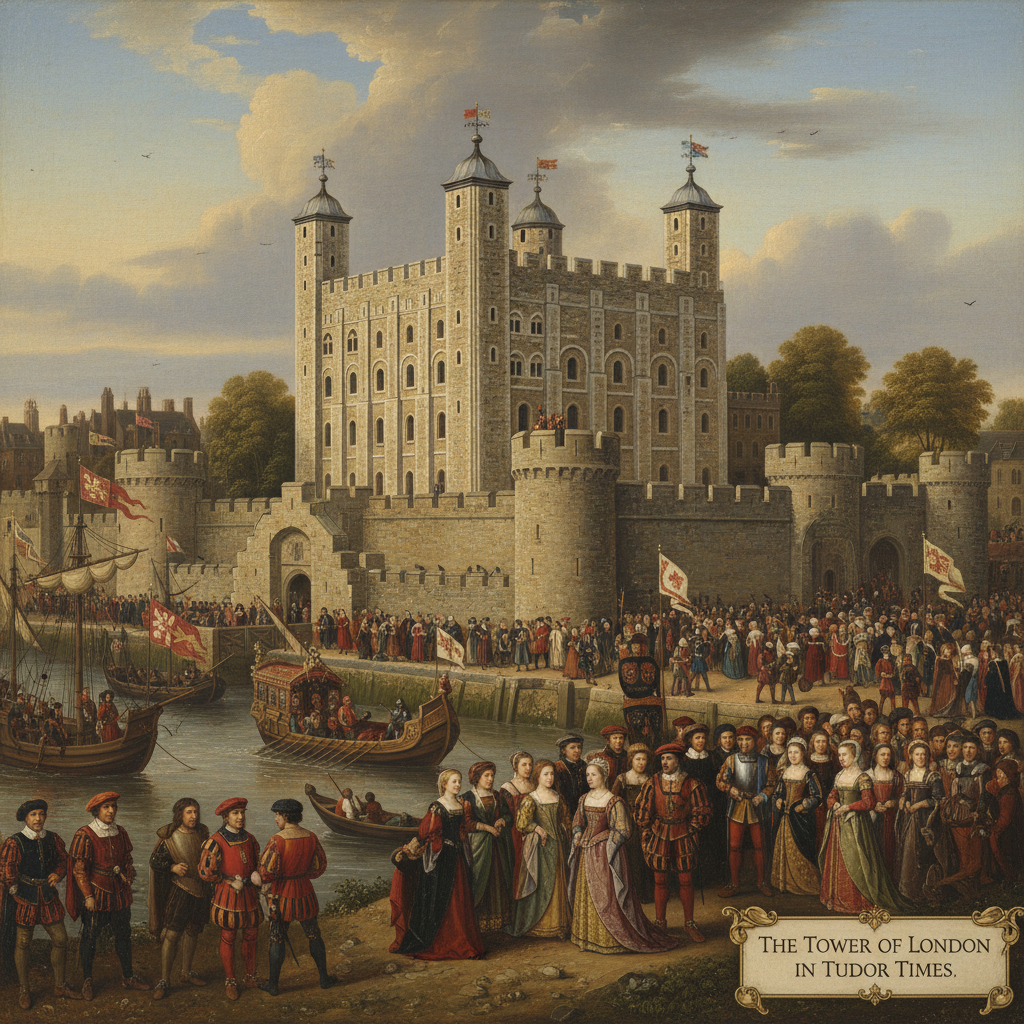
The Tower of London: Tudor England's Grim Fortress
Explore the chilling history of the Tower of London during the Tudor era, a fortress that served as a royal palace, treasury, and most famously, a state prison for figures like Anne Boleyn and Lady Jane Grey. Discover its role in shaping England's tumultuous past.

Hampton Court Palace: A Tudor Masterpiece and Royal Powerhouse
Explore the history of Hampton Court Palace, the magnificent Tudor residence built by Cardinal Wolsey and seized by Henry VIII. Discover the Great Hall, the Royal Tennis Court, and the dramatic stories of the six queens.

Whitehall Palace: The Lost Heart of Tudor Power
Whitehall Palace, seized by Henry VIII from Cardinal Wolsey, became the largest palace in Europe and the monumental heart of Tudor power, witnessing the Reformation, royal marriages, and political intrigue.

The Tower of London: Citadel of Power in the Tudor Era
Explore the Tower of London during the Tudor era (1485–1603), examining its transformation from a royal palace and treasury into the infamous state prison that housed and executed figures like Anne Boleyn and Catherine Howard.