The Tower of London: Citadel of Power in the Tudor Era

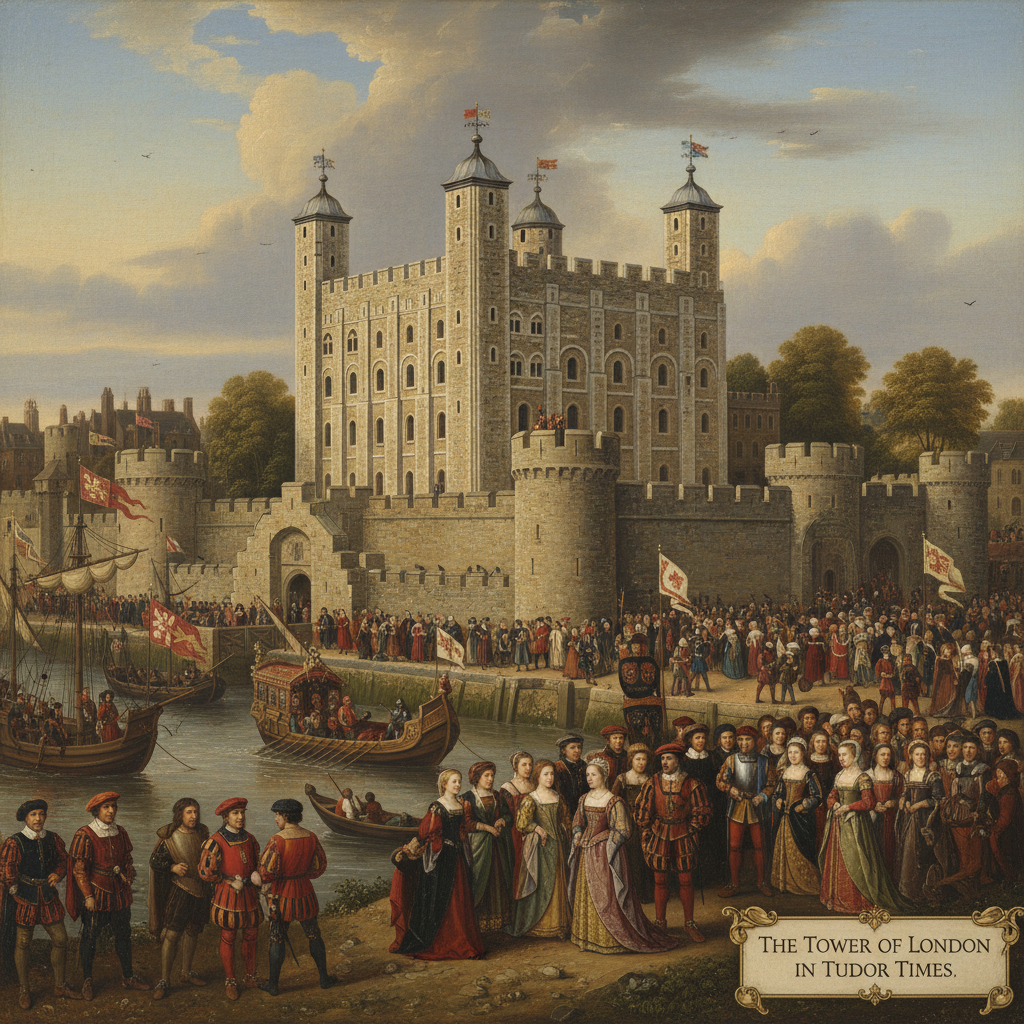
For nearly five centuries, the Tower of London has stood as a silent, imposing witness to the most dramatic events in English history. But during the tumultuous Tudor period (1485–1603), this ancient fortress transcended its role as a mere castle; it became the epicenter of royal power, a treasury, a record office, and, most famously, a terrifying state prison. From the accession of Henry VII to the death of Elizabeth I, the Tower was inextricably linked to the monarchy’s triumphs and tragedies, serving as the stage where the fate of England’s greatest figures was often decided.
The Dual Role: Palace and Prison
While the Tower is best remembered today for its grim history of incarceration and execution, the Tudors initially viewed it as a vital royal residence and administrative hub. Henry VII, securing his throne after the Battle of Bosworth Field, understood the symbolic importance of the Tower. He used it as the traditional starting point for the royal procession before his coronation, a tradition continued by his son, Henry VIII.
The complex was far more than just the White Tower. It housed the Royal Mint, the Ordnance Office, the Jewel House (where the Crown Jewels were kept), and the Public Record Office. The Constable of the Tower was a powerful figure, responsible for the security of the realm's most valuable assets.
The White Tower: Heart of the Fortress
The massive central keep, built by William the Conqueror, remained the strategic and symbolic heart. While the Tudors modernized parts of the inner ward, the White Tower continued to serve as a secure storage facility for arms and armor. Henry VIII, a keen military enthusiast, ensured the Tower's armories were stocked with the latest weaponry.
Did You Know?
Despite its reputation as a dank, inescapable prison, the Tower of London offered varying levels of comfort. Wealthy or high-ranking prisoners, like the Duke of Norfolk, often brought their own servants, furniture, and even wine cellars, turning their confinement into a relatively comfortable house arrest, provided they paid the hefty fees.
The Rise of the State Prison
As the Reformation took hold under Henry VIII, the Tower’s function shifted decisively towards that of a state prison. Religious dissenters, political rivals, and those who fell out of royal favour found themselves sailing through Traitor’s Gate. This infamous water entrance, originally built for the monarch’s use, became the final entry point for those accused of treason.
“The Tower is a place of darkness, where the sun shines not upon the guilty, but where the King’s justice is meted out with a heavy hand.” – Contemporary Chronicle (Attributed)
The Wives of Henry VIII and the Tower's Bloody History
No period cemented the Tower's morbid reputation more than the reign of Henry VIII. Two of his six wives met their end within its walls, setting a terrifying precedent for royal authority.
Anne Boleyn: The Queen’s Tragedy
In May 1536, Queen Anne Boleyn was arrested on charges of adultery, incest, and treason—charges widely believed to be fabricated by Henry and Thomas Cromwell. She was confined in the Queen’s Lodgings, ironically the same apartments she had occupied before her coronation just three years earlier. Her final days were marked by a mixture of terror and dignity.
Anne was not executed publicly on Tower Hill, as was customary for common traitors. Instead, Henry granted her the ‘mercy’ of a private execution within the Tower precincts, on the scaffold erected on Tower Green. Furthermore, she was beheaded by a skilled swordsman from Calais, rather than the common axe, ensuring a swift death.
- Anne Boleyn (1536)
- Catherine Howard (1542)
- George Boleyn, Viscount Rochford (1536)
- Margaret Pole, Countess of Salisbury (1541)
Catherine Howard and the Norfolk Faction
Catherine Howard, Henry’s fifth wife, followed a similar path to the scaffold in 1542. Accused of pre-contract and adultery, she was executed alongside Lady Rochford, who had been complicit in arranging her secret meetings. Their deaths underscored the brutal reality that proximity to the throne offered no guarantee of safety.
The Tower in the Reigns of Mary and Elizabeth
The religious turmoil following Henry VIII’s death ensured the Tower remained busy. Under the short reign of Edward VI, Catholic bishops were imprisoned. But it was under Mary I, known as 'Bloody Mary,' that the Tower saw its most intense period of political incarceration.
Elizabeth I: Prisoner and Queen
Perhaps the most famous Tudor prisoner was Elizabeth, daughter of Henry VIII and Anne Boleyn. In 1554, Mary I, fearing Elizabeth’s popularity and her association with Protestant rebels (specifically Wyatt’s Rebellion), ordered her confinement. Elizabeth entered through Traitor’s Gate in a downpour, famously declaring her innocence.
Elizabeth spent two months in the Bell Tower, fearing daily that she would be taken to the scaffold where her mother had died. Her survival and eventual ascension to the throne in 1558 marked a dramatic reversal of fortune. She returned to the Tower not as a prisoner, but for the traditional coronation procession, symbolically cleansing the site of her suffering.
The Elizabethan Period: Spies and Priests
Under Elizabeth I, the Tower became primarily a holding facility for Catholic recusants and priests, particularly after the Papal Bull Regnans in Excelsis declared Elizabeth illegitimate. Jesuit priests like Edmund Campion were brutally tortured in the dungeons of the Tower, notably in the infamous rack chamber beneath the White Tower, to extract information about Catholic plots against the Crown. The walls of the Beauchamp Tower are still covered with graffiti carved by these unfortunate prisoners, offering poignant evidence of their faith and despair.
Life and Death Within the Walls
The daily life of the Tower was managed by the Yeoman Warders, often called ‘Beefeaters,’ whose duties included guarding the prisoners and the Crown Jewels. Their presence provided a constant reminder of the Crown’s authority.
The Torture and the Scaffold
While torture was officially illegal in England, the Crown often granted special warrants for its use within the Tower to extract confessions from those accused of high treason. The rack and the Scavenger’s Daughter were the most feared instruments. The threat of torture was often enough to break a prisoner’s will.
Execution sites were strictly divided:
- Tower Hill: The public site outside the walls, used for high-profile figures (e.g., Thomas More, Thomas Cromwell) whose deaths were meant to serve as a public spectacle and warning.
- Tower Green: The private site within the walls, reserved for those of royal or noble blood (e.g., Queens Anne Boleyn and Catherine Howard) whose public humiliation the Crown wished to minimize.
The Tower’s records, meticulously kept by the Constables and Lieutenants, provide a chilling ledger of the costs associated with imprisonment—from the price of chains and straw bedding to the fees paid to the executioner.
Conclusion: The Enduring Legacy
By the end of the Tudor dynasty with the death of Elizabeth I, the Tower of London had cemented its place in the national psyche. It was no longer just a Norman fortress; it was a symbol of absolute royal power, a place where ambition met its bloody end, and where the most significant political and religious battles of the age were fought. The stories etched into its cold stone walls—of queens, rebels, priests, and statesmen—continue to draw us in, reminding us of the high stakes played out during England’s most transformative era. To study the Tower in Tudor times is to study the very heart of the Tudor monarchy, a heart that was often as ruthless as it was magnificent.
Discussion
No comments yet
Be the first to share your thoughts on this article!
You May Also Like
Continue exploring Tudor history with these related articles
The Tower of London: Tudor England's Grim Fortress
Explore the chilling history of the Tower of London during the Tudor era, a fortress that served as a royal palace, treasury, and most famously, a state prison for figures like Anne Boleyn and Lady Jane Grey. Discover its role in shaping England's tumultuous past.

Hampton Court Palace: A Tudor Masterpiece and Royal Powerhouse
Explore the history of Hampton Court Palace, the magnificent Tudor residence built by Cardinal Wolsey and seized by Henry VIII. Discover the Great Hall, the Royal Tennis Court, and the dramatic stories of the six queens.

Whitehall Palace: The Lost Heart of Tudor Power
Whitehall Palace, seized by Henry VIII from Cardinal Wolsey, became the largest palace in Europe and the monumental heart of Tudor power, witnessing the Reformation, royal marriages, and political intrigue.

The Enduring Charm of Tudor Half-Timbered Houses
Explore the iconic half-timbered architecture of the Tudor era. Learn how these distinctive black-and-white houses served as status symbols, reflected the 'Great Rebuilding,' and utilized innovative construction techniques.