Tudor Portraiture: Holbein's Legacy & Beyond
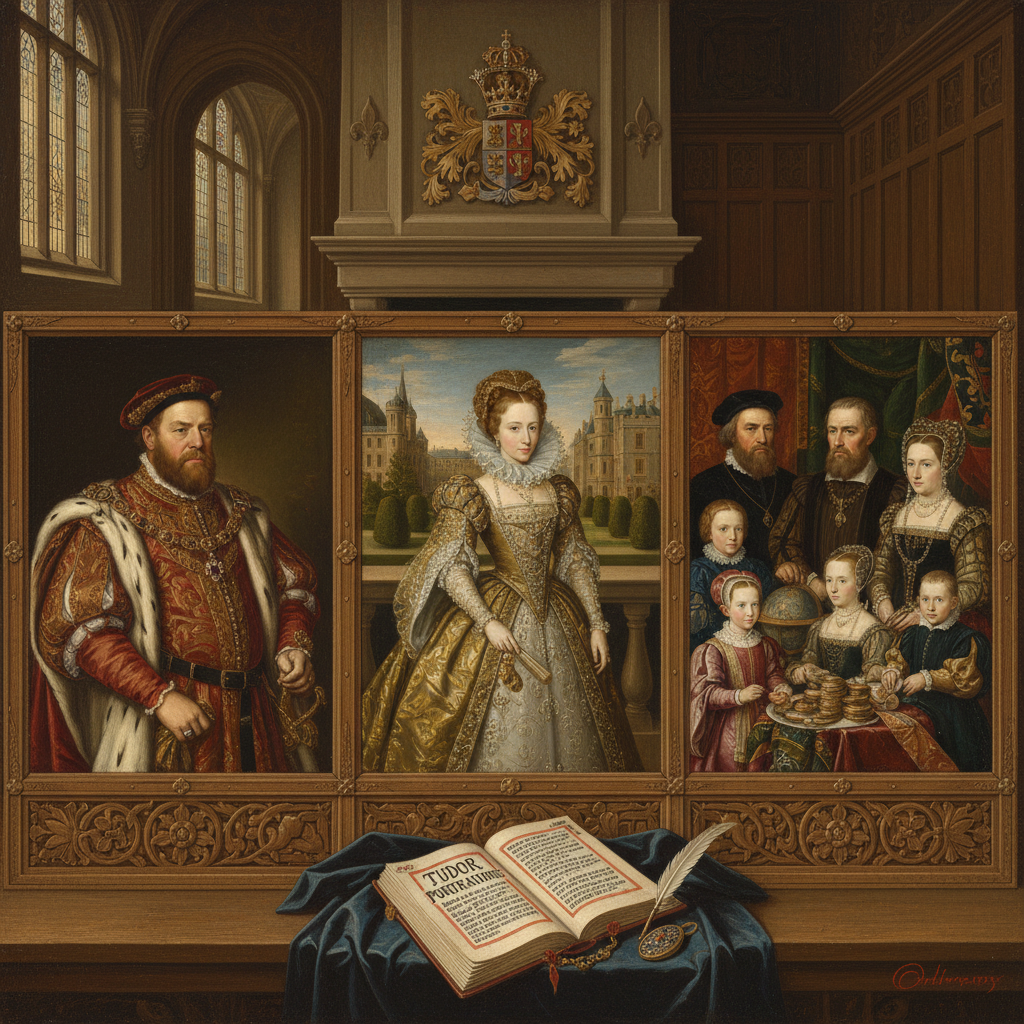
The Tudor era, a period of immense political and religious upheaval, was also a golden age for art, particularly portraiture. Before the Tudors, painted images were often stiff, symbolic, and focused on religious themes. However, with the rise of a powerful monarchy and an increasingly wealthy gentry, the demand for realistic, flattering, and enduring likenesses soared. This shift marked a profound change in how individuals were perceived and remembered, transforming portraiture from a mere record into a powerful tool of propaganda, status, and personal identity. It was an art form that captured the very essence of a dynasty and its people, leaving behind a visual chronicle of one of England's most fascinating periods.
Hans Holbein the Younger: The Master of Tudor Likeness
No discussion of Tudor portraiture can begin without acknowledging the towering figure of Hans Holbein the Younger. Arriving in England in 1526, initially with a letter of introduction from Erasmus to Sir Thomas More, Holbein quickly established himself as the preeminent artist of the Tudor court. His genius lay in his unparalleled ability to capture not just the physical features but also the psychological depth of his sitters. His portraits are characterized by their meticulous detail, vibrant colours, and an almost photographic realism, which was revolutionary for its time.
Holbein’s most famous patron was, of course, King Henry VIII. His portraits of the monarch, such as the iconic Whitehall mural fragment, solidified Henry’s image as a formidable and absolute ruler. Holbein’s skill in portraying texture – the sheen of silk, the glint of jewels, the intricate embroidery of clothing – was unmatched. These details were not merely decorative; they conveyed wealth, status, and power, crucial elements in the self-fashioning of the Tudor elite.
“The King found in Holbein a master who could give him the image he desired: one of power, majesty, and unwavering authority.”
– John Rowlands, Holbein: The Paintings of Hans Holbein the Younger
Beyond Henry, Holbein painted many key figures of the court, including Anne of Cleves (whose portrait was famously sent to Henry as part of marriage negotiations), Jane Seymour, Thomas Cromwell, and Sir Thomas More. His preparatory drawings, often executed in chalks and ink, are masterpieces in their own right, revealing his profound understanding of human anatomy and expression. These drawings allowed him to work quickly and efficiently, capturing a likeness before transferring it to panel.
Did You Know?
Holbein's portrait of Anne of Cleves is often blamed for Henry VIII's disappointment, but contemporary accounts suggest it was a remarkably accurate depiction. Henry's aversion likely stemmed from her personality or other political factors, not solely the painting's veracity.
The Evolution of Holbein's Style
Holbein’s early works in England show a clear influence of Northern Renaissance realism, but he adapted his style to suit the English court’s demands. He mastered the art of flattering his sitters while maintaining an undeniable truthfulness. His use of strong outlines, subtle shading, and a focus on the sitter’s gaze created an immediate and engaging presence. His portraits were not just records; they were statements. His untimely death from the plague in 1543 left a void that no other artist of the era could truly fill.
Beyond Holbein: The Next Generation of Tudor Artists
After Holbein’s death, the English court struggled to find an artist of comparable talent. While no single figure achieved his level of mastery, a new generation of painters, many of whom were foreign-born, continued to shape Tudor portraiture. These artists often adopted and adapted Holbein's techniques, though their work sometimes lacked his profound psychological insight.
- Gerlach Flicke: A German painter active in England, known for his detailed and somewhat stiff portraits, such as his notable self-portrait with his friend, the merchant Hermann Wedigh.
- Antonis Mor: A Dutch portraitist who worked for Mary I. His portraits, such as that of Queen Mary, are characterized by their elegance, rich colours, and a more formal, almost regal, presentation.
- Hans Eworth: Another Flemish artist who rose to prominence during the reigns of Mary I and Elizabeth I. Eworth’s work often features intricate allegorical elements and elaborate costumes, reflecting the growing theatricality of Elizabethan court culture. His portrait of Elizabeth I with Juno, Minerva, and Venus (the 'Judgement of Paris' portrait) is a prime example of his allegorical approach.
These artists, though perhaps less individually brilliant than Holbein, collectively contributed to the evolving visual language of the Tudor court. Their work reflects the changing fashions, political landscapes, and personal preferences of their royal patrons.
Elizabethan Portraiture: Symbolism and Spectacle
The reign of Elizabeth I saw a dramatic transformation in portraiture. With no male heir and a need to project an image of strength, purity, and divine right, Elizabeth's portraits became highly symbolic and increasingly elaborate. The Queen herself was a master of self-presentation, and her artists were tasked with creating images that reinforced her carefully constructed persona.
Elizabethan portraits are often characterized by:
- Flatness and Symbolism: Unlike Holbein’s realism, many Elizabethan portraits are less concerned with anatomical accuracy and more with symbolic meaning. The Queen’s face often appears ageless and serene, almost mask-like, while her body is adorned with rich fabrics, jewels, and allegorical objects.
- Iconography: Artists incorporated a wealth of symbols – pearls for purity, serpents for wisdom, globes for imperial ambition, sieves for chastity – to convey specific messages about the Queen’s virtues and power. The 'Ditchley Portrait' and the 'Armada Portrait' are prime examples, showcasing her as a powerful, divinely appointed ruler.
- Elaborate Costumes: Clothing in Elizabethan portraits became incredibly ornate, reflecting the era’s love for luxury and display. Ruffs, intricate embroidery, and dazzling jewels were not just fashion statements; they were indicators of status and wealth, often meticulously rendered to emphasize the sitter's importance.
Artists like Nicholas Hilliard, though primarily a miniaturist, also contributed significantly to Elizabethan portraiture. His delicate, jewel-like miniatures captured the intimate likenesses of the Queen and her courtiers, often worn as personal tokens of affection or loyalty. Hilliard's work, though small in scale, perfectly encapsulated the intricate beauty and symbolic depth of the Elizabethan aesthetic.
The Power of the Image in Tudor England
Tudor portraits were far more than decorative items; they were powerful tools of communication. They served to:
- Legitimise Rule: Henry VIII and Elizabeth I used portraits to project an image of unshakeable authority and divine favour.
- Secure Alliances: Portraits were exchanged during marriage negotiations, offering a visual introduction between potential spouses.
- Display Status: For the nobility and gentry, a commissioned portrait was a clear sign of wealth, influence, and social standing.
- Preserve Memory: In an age before photography, a painted likeness was the only way to immortalise an individual for posterity.
The meticulous detail, the symbolic language, and the sheer volume of portraits produced during the Tudor period speak volumes about the era's fascination with identity, power, and legacy. From Holbein’s penetrating realism to the symbolic grandeur of Elizabethan works, Tudor portraiture remains a captivating window into the hearts and minds of a dynasty that forever shaped England.
Conclusion: A Lasting Legacy
The legacy of Tudor portraiture is profound. It not only provided a visual record of a pivotal period in English history but also laid the groundwork for future developments in British art. Holbein’s influence, though not always directly replicated, set a standard for realism and psychological insight that artists would aspire to for centuries. The Elizabethan era, with its emphasis on symbolism and spectacle, demonstrated the power of art to shape public perception and reinforce political ideologies. These portraits, whether grand oil paintings or exquisite miniatures, continue to fascinate and inform us, offering a direct gaze into the world of kings, queens, and courtiers who defined the Tudor age. They are not merely paintings; they are historical documents, artistic masterpieces, and enduring testaments to the human desire to be seen and remembered.
TAGS
Discussion
No comments yet
Be the first to share your thoughts on this article!
You May Also Like
Continue exploring Tudor history with these related articles

Ink and Intrigue: The Golden Age of Tudor Literature and Poetry
Explore the vibrant literary world of the Tudor dynasty, from the dangerous courtly poetry of Wyatt and Surrey, who introduced the sonnet and blank verse to England, to the national epic ambitions of Edmund Spenser under Elizabeth I. Discover how literature reflected and shaped Tudor politics, identity, and the English language.

Shakespeare's Tudor World: Drama, Power, and Politics
Explore how William Shakespeare’s life and works were profoundly shaped by the political volatility, religious upheaval, and cultural vibrancy of the Tudor era under Queen Elizabeth I.
The Golden Age of Words: Tudor Literature & Poetry
Explore the vibrant world of Tudor literature and poetry, from humanist prose to the birth of the English sonnet, and discover how this era shaped the language and laid the foundation for future literary greatness.
The Golden Age of Words: Tudor Literature & Poetry
Explore the Golden Age of Tudor literature and poetry, from courtly verses and Reformation prose to the dramatic genius of Shakespeare, shaping English language and culture.