The Golden Age of Words: Tudor Literature & Poetry
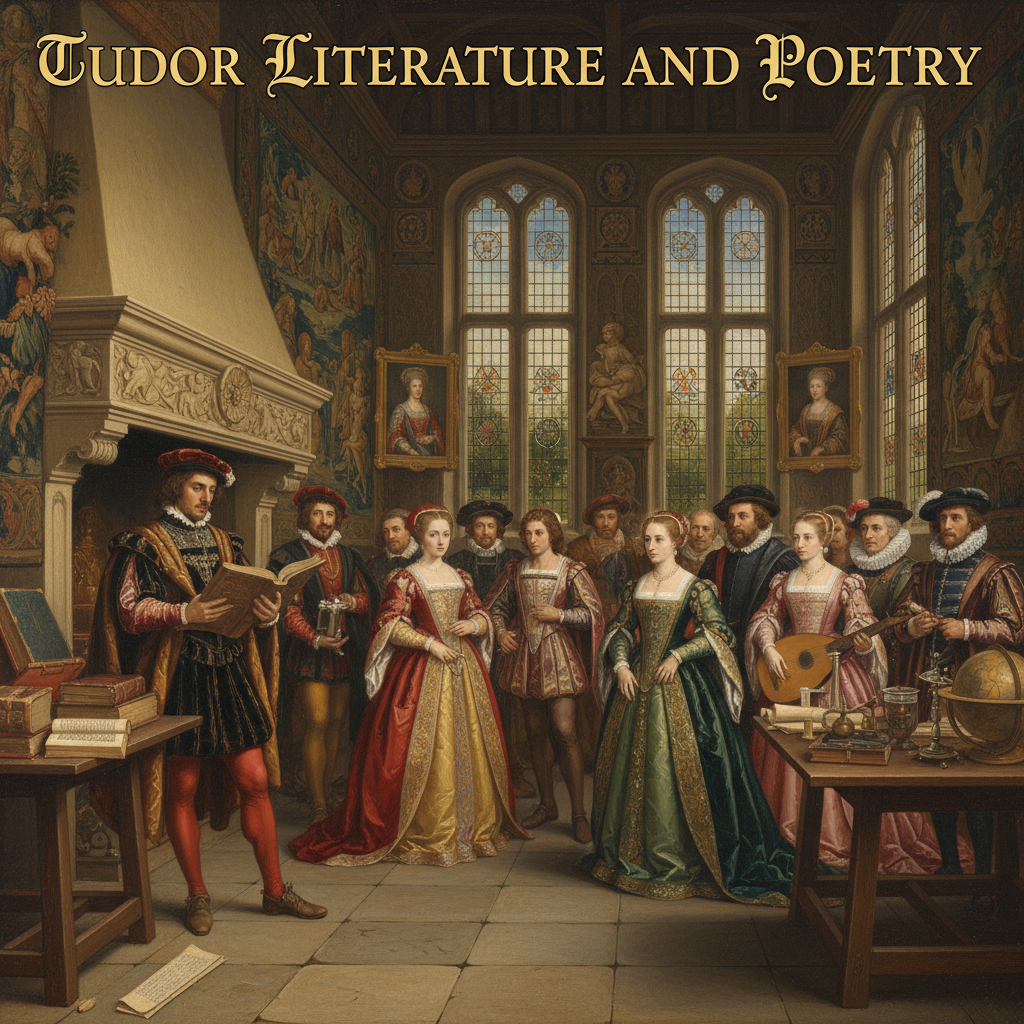
The Tudor era, a period often defined by its powerful monarchs, religious upheaval, and dramatic political shifts, was also a crucible for profound literary development. Far from being a mere backdrop to royal machinations, the sixteenth century in England witnessed an explosion of creativity in language, laying the foundations for what would become some of the greatest works in the English canon. From the courtly verses of Henry VIII's circle to the burgeoning drama that would culminate in Shakespeare, Tudor literature offers a vibrant window into the minds, anxieties, and aspirations of a nation in flux. It was an age where the written word transformed from a monastic pursuit into a powerful tool for influence, entertainment, and self-expression, shaping the very identity of English culture.
The Dawn of English Humanism and Courtly Verse
The seeds of Tudor literary brilliance were sown in the late 15th and early 16th centuries with the arrival of Renaissance humanism from Italy. Scholars like Thomas More and John Colet championed the study of classical texts, emphasizing rhetoric, history, and moral philosophy. This intellectual awakening encouraged a more sophisticated and nuanced approach to writing in English, moving beyond purely religious or chivalric themes.
At the heart of early Tudor literary innovation was the royal court itself. Henry VIII, a surprisingly accomplished musician and poet, fostered an environment where wit and learning were prized. It was here that two pivotal figures, Sir Thomas Wyatt and Henry Howard, Earl of Surrey, revolutionized English poetry. They introduced forms and techniques borrowed from Italian poets like Petrarch, most notably the sonnet.
“Whoso list to hunt, I know where is an hind,
Sir Thomas Wyatt, “Whoso List to Hunt”
But as for me, alas, I may no more.
The vain travail hath wearied me so sore,
I am of them that farthest cometh behind.”
Wyatt’s poetry, often reflecting his tumultuous relationship with Anne Boleyn, brought a new psychological depth and personal voice to English verse. Surrey, in turn, refined Wyatt’s innovations and is credited with inventing blank verse – unrhymed iambic pentameter – which would become the dominant form in English drama. Their work marked a decisive break from the medieval tradition, ushering in a more modern, expressive poetic style.
Did You Know?
Sir Thomas More's 'Utopia', published in Latin in 1516, created a new literary genre. The word 'utopia' itself, coined by More, means 'no place' or 'good place' and describes an imagined perfect society, inspiring countless works of speculative fiction.
The Reformation's Literary Impact
The seismic shifts of the English Reformation profoundly influenced the literary landscape. The break with Rome and the establishment of the Church of England led to a surge in religious prose and polemic. Figures like Thomas Cranmer, Archbishop of Canterbury, played a crucial role in shaping the English language through his liturgical works.
“Almighty and everlasting God, who art always more ready to hear than we to pray, and art wont to give more than either we desire, or deserve: Pour down upon us the abundance of thy mercy; forgiving us those things whereof our conscience is afraid, and giving us those good things which we are not worthy to ask, but through the merits and mediation of Jesus Christ thy Son our Lord.”
Thomas Cranmer, Collect for the Twelfth Sunday after Trinity, Book of Common Prayer
The publication of the `Book of Common Prayer` (1549, revised 1552) provided a standardized liturgy in English, its eloquent prose becoming deeply embedded in the national consciousness. Similarly, the various English translations of the Bible, culminating in the Geneva Bible (1560) and later the King James Bible (1611), not only democratized scripture but also profoundly influenced English vocabulary, idiom, and literary style for centuries to come. The accessibility of these texts fostered a more literate populace and provided a common linguistic and cultural reference point.
Elizabethan Golden Age: Poetry, Prose, and the Rise of Drama
The reign of Elizabeth I is often hailed as the 'Golden Age' of English literature, a period of unparalleled flourishing. With relative political stability and a monarch who cultivated a sophisticated court, creativity thrived. This era saw the consolidation of English as a powerful literary language, capable of expressing the full range of human experience.
Poetry's Pinnacle: Sidney, Spenser, and the Sonnet Craze
Elizabethan poetry reached new heights of sophistication and beauty. Sir Philip Sidney, the quintessential Renaissance courtier, embodied the ideal of the scholar-soldier-poet. His sonnet sequence `Astrophil and Stella` (c. 1582) explored themes of unrequited love with dazzling wit and emotional intensity, sparking a sonnet craze that swept through England.
Edmund Spenser, on the other hand, embarked on an epic ambition with `The Faerie Queene` (published 1590, 1596). This allegorical masterpiece, dedicated to Queen Elizabeth, blended Arthurian romance, classical epic, and Protestant theology. Its rich language and intricate narrative established Spenser as one of England's greatest poets, influencing generations of writers with his unique 'Spenserian stanza'.
- Key Poetic Forms: Sonnets (Petrarchan and Shakespearean), blank verse, Spenserian stanza, lyrical ballads.
- Prominent Themes: Love (courtly, unrequited, spiritual), virtue, morality, patriotism, classical mythology, pastoral ideals.
- Notable Poets: Sir Philip Sidney, Edmund Spenser, Christopher Marlowe, Walter Raleigh, Mary Sidney Herbert (Countess of Pembroke).
Prose and Pamphlets: Shaping Public Opinion
While poetry soared, Tudor prose also developed significantly. The demand for printed materials grew, leading to a proliferation of pamphlets, historical chronicles, and early novels. Writers like John Lyly, with his ornate and highly stylized prose in `Euphues` (1578), influenced courtly speech and writing for a time. Historical accounts, such as Raphael Holinshed's `Chronicles` (1577), provided rich source material for playwrights, including Shakespeare.
The era also saw the emergence of powerful political and religious tracts, shaping public discourse. Debates over religious doctrine, monarchical power, and social order were fought not just on battlefields but also in print, demonstrating the growing power of the written word to influence and persuade.
The Birth of English Drama: From Morality Plays to Masterpieces
Perhaps the most enduring legacy of Tudor literature is the rise of English drama. What began as medieval mystery and morality plays evolved rapidly into a sophisticated art form, culminating in the unparalleled genius of William Shakespeare.
Early Drama and the University Wits
In the early Tudor period, plays were often performed in churchyards or guild halls, focusing on religious instruction or moral allegories. However, by the mid-16th century, secular themes and classical influences began to appear. The 'University Wits' – a group of educated playwrights including Christopher Marlowe, Robert Greene, and Thomas Kyd – laid the groundwork for Shakespeare. They introduced complex characters, dramatic structure, and powerful language to the stage.
Christopher Marlowe, with plays like `Doctor Faustus` and `Tamburlaine the Great`, showcased the dramatic potential of blank verse, creating towering, ambitious characters and exploring themes of power, ambition, and damnation. His work directly influenced Shakespeare, demonstrating the commercial and artistic viability of professional theatre.
Shakespeare and the Zenith of Tudor Drama
Of course, no discussion of Tudor literature is complete without William Shakespeare. Emerging in the latter part of Elizabeth's reign, Shakespeare synthesized the dramatic innovations of his predecessors, elevating them to an extraordinary level. His plays – histories, comedies, and tragedies – captured the full spectrum of human experience, from the highest nobility to the lowest commoner, with unparalleled psychological insight and linguistic brilliance.
The Globe Theatre and other playhouses became vibrant centers of public life, drawing audiences from all social strata. Shakespeare's mastery of language, his creation of memorable characters, and his profound exploration of universal themes ensured that Tudor drama would not only entertain but also endure as a cornerstone of world literature.
- Key Playwrights: William Shakespeare, Christopher Marlowe, Ben Jonson (though more Jacobean, his early work began in the late Tudor period), Thomas Kyd, Robert Greene.
- Popular Genres: History plays, comedies, tragedies, morality plays, masques.
- Themes Explored: Power, ambition, love, revenge, morality, fate vs. free will, national identity.
The Enduring Legacy of Tudor Words
The Tudor period, spanning just over a century, was a transformative era for English literature and poetry. It began with the tentative steps of humanism and courtly verse, navigated the tumultuous waters of the Reformation, and culminated in the dazzling brilliance of the Elizabethan age. The foundations laid by Wyatt and Surrey, the linguistic richness of Cranmer's prayers, the epic scope of Spenser, and the dramatic genius of Marlowe and Shakespeare collectively forged a literary tradition that remains vibrant and influential today.
The words penned during this dynamic century not only entertain and enlighten but also offer an invaluable portal into the past, allowing us to understand the hearts and minds of people who lived in a world both distant and surprisingly familiar. To delve into Tudor literature is to witness the birth of modern English literary expression, a legacy that continues to resonate in our language, our stories, and our cultural identity.
TAGS
Discussion
No comments yet
Be the first to share your thoughts on this article!
You May Also Like
Continue exploring Tudor history with these related articles

Ink and Intrigue: The Golden Age of Tudor Literature and Poetry
Explore the vibrant literary world of the Tudor dynasty, from the dangerous courtly poetry of Wyatt and Surrey, who introduced the sonnet and blank verse to England, to the national epic ambitions of Edmund Spenser under Elizabeth I. Discover how literature reflected and shaped Tudor politics, identity, and the English language.

Shakespeare's Tudor World: Drama, Power, and Politics
Explore how William Shakespeare’s life and works were profoundly shaped by the political volatility, religious upheaval, and cultural vibrancy of the Tudor era under Queen Elizabeth I.
The Golden Age of Words: Tudor Literature & Poetry
Explore the vibrant world of Tudor literature and poetry, from humanist prose to the birth of the English sonnet, and discover how this era shaped the language and laid the foundation for future literary greatness.

Ink, Ideas, and Revolution: The Printing Press in Tudor England
Explore the revolutionary impact of the printing press in Tudor England, from its arrival with William Caxton to its pivotal role in the Reformation and the Crown's attempts at censorship.