The English Reformation: A Royal Revolution
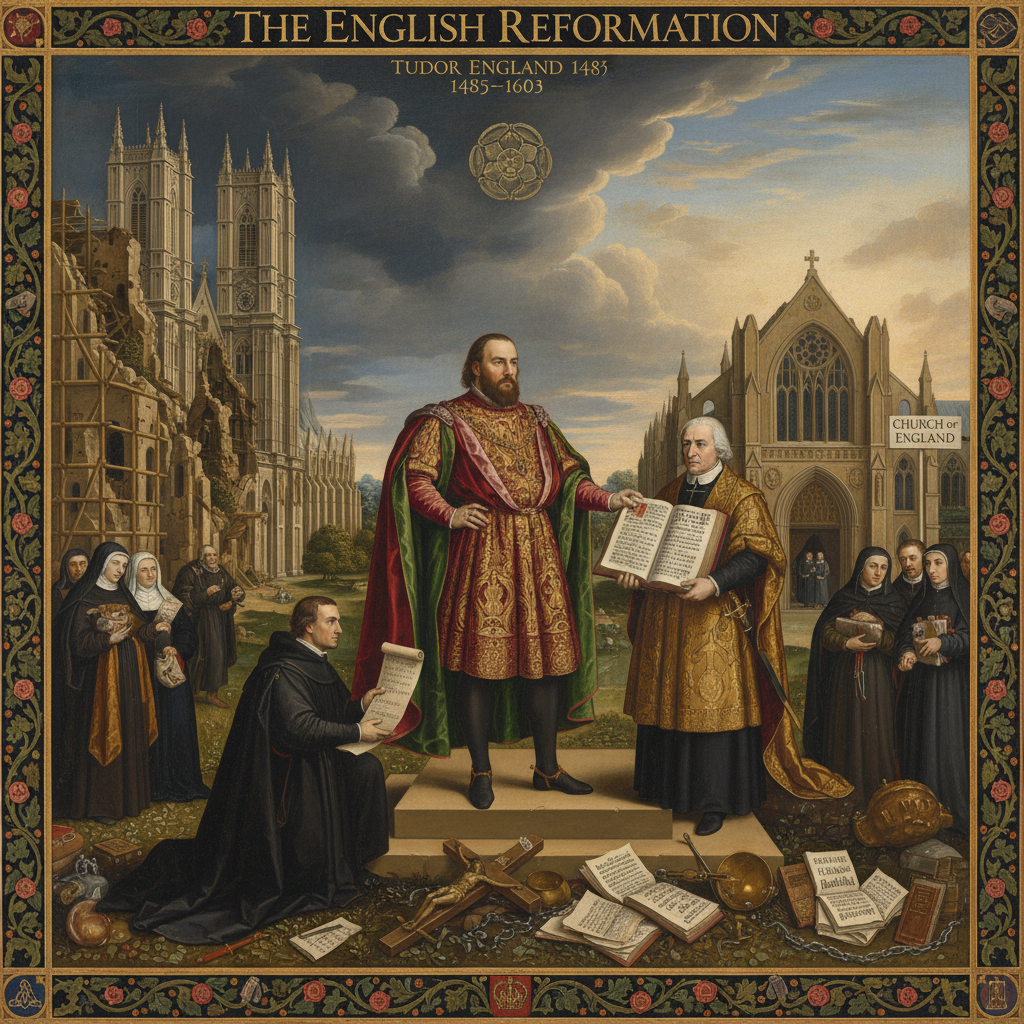
The 16th century in England was a cauldron of change, a period where the tectonic plates of faith, power, and national identity shifted dramatically. At the heart of this seismic upheaval was the English Reformation, a complex and often brutal transformation that severed England's ties with the Roman Catholic Church and fundamentally reshaped its religious, political, and social landscape. Far from being a purely theological movement, the English Reformation was a unique blend of royal ambition, burgeoning nationalism, and genuine religious dissent, setting England on a distinct path that would define its future for centuries to come.
The King's Great Matter: Genesis of the Schism
The catalyst for England's break from Rome is famously attributed to King Henry VIII's desperate desire for a male heir and his subsequent 'Great Matter' – the annulment of his marriage to Catherine of Aragon. After two decades of marriage, Catherine had only produced one surviving child, Princess Mary, and Henry was convinced that his union was cursed by God, citing Leviticus 20:21 which forbade marrying a brother's widow (Catherine had briefly been married to Henry's elder brother, Arthur).
Pope Clement VII, however, was in a precarious position. Catherine's nephew, Emperor Charles V, held him captive after the Sack of Rome in 1527, making it politically impossible for the Pope to grant Henry's request without alienating the most powerful monarch in Europe. What began as a personal dynastic crisis for Henry soon escalated into a profound constitutional and religious struggle.
"The King's conscience was troubled, not by the marriage itself, but by the lack of a male heir, which he interpreted as God's judgment upon an unlawful union."
— A contemporary chronicler's observation on Henry VIII's dilemma
Cranmer, Cromwell, and the Assertion of Royal Supremacy
Frustrated by papal intransigence, Henry turned to his ambitious advisors, Thomas Cranmer and Thomas Cromwell. These men, with their differing motivations – Cranmer leaning towards Protestant theology, Cromwell a master of political maneuvering – provided Henry with the intellectual and legal framework to achieve his goals. They argued that the King, not the Pope, was the supreme head of the Church in England.
A series of parliamentary acts systematically dismantled papal authority. The Act in Restraint of Appeals (1533) declared that England was an empire, and its king possessed supreme authority, preventing appeals to Rome. This paved the way for Cranmer, now Archbishop of Canterbury, to declare Henry's marriage to Catherine null and void, and his subsequent marriage to Anne Boleyn valid. The Act of Supremacy (1534) solidified this, proclaiming Henry as the "Supreme Head of the Church of England."
The consequences were swift and severe. Those who refused to acknowledge the King's supremacy, such as Sir Thomas More and Bishop John Fisher, were executed for treason, becoming martyrs for their Catholic faith. This period, often called the 'Henrician Reformation,' was primarily a political and administrative break, with much of the doctrine and liturgy remaining largely Catholic.
Did You Know?
The dissolution of the monasteries, initiated by Thomas Cromwell, was not just about seizing wealth. It also served to eliminate centers of papal loyalty and provide funds for Henry VIII's wars and lavish lifestyle, fundamentally altering England's land ownership and social structure.
The Shifting Sands of Faith: Edward VI and Mary I
Henry VIII's death in 1547 ushered in a more overtly Protestant phase under his young son, Edward VI. Guided by his regents, particularly Edward Seymour, Duke of Somerset, and later John Dudley, Duke of Northumberland, England moved rapidly towards Protestantism. The Latin Mass was replaced by the English Book of Common Prayer (1549, revised 1552), images were removed from churches, and Catholic doctrines like transubstantiation were challenged.
- **1547:** Injunctions against images and for English Bible readings.
- **1549:** First Act of Uniformity and introduction of the first Book of Common Prayer.
- **1552:** Second Act of Uniformity and a more radically Protestant Book of Common Prayer.
- **1553:** Forty-Two Articles of Religion, outlining Protestant doctrine.
However, Edward's reign was short-lived. His death in 1553 brought his half-sister, Mary I, to the throne. A devout Catholic, Mary immediately sought to reverse the Reformation, earning her the moniker "Bloody Mary." She restored papal supremacy, reinstated Catholic doctrine, and began persecuting Protestants, burning nearly 300 at the stake, including Archbishop Thomas Cranmer.
"When I am dead and opened, you shall find 'Calais' lying in my heart."
— Queen Mary I, lamenting the loss of England's last continental possession, but also reflecting her deep-seated Catholic loyalties and failures.
Mary's reign, though brutal, ultimately failed to permanently restore Catholicism. The confiscation of monastic lands had created a powerful new class of landowners with a vested interest in the Protestant settlement, and the public burnings often generated sympathy for the Protestant martyrs rather than fear.
Elizabeth's Middle Way: The Elizabethan Religious Settlement
The accession of Elizabeth I in 1558 marked the final, enduring phase of the English Reformation. Elizabeth, a shrewd politician, understood the need for religious stability and sought a 'middle way' – a compromise that would satisfy the majority of her subjects without alienating either extreme.
Her solution, the Elizabethan Religious Settlement, was enshrined in the Acts of Supremacy and Uniformity of 1559. The Act of Supremacy re-established the monarch as the "Supreme Governor" of the Church of England (a slightly softer title than "Supreme Head"), while the Act of Uniformity mandated the use of a revised Book of Common Prayer, blending elements of the 1549 and 1552 versions. This prayer book was deliberately ambiguous on certain theological points, allowing for both Catholic-leaning and Protestant interpretations.
The Enduring Legacy of the Reformation
The English Reformation was not a single event but a protracted process spanning decades, driven by a complex interplay of personal ambition, political necessity, and genuine religious conviction. It fundamentally altered the course of English history, leading to:
- **National Identity:** England became a Protestant nation, distinct from Catholic continental Europe, fostering a strong sense of national identity.
- **Monarchical Power:** The monarch's authority was significantly enhanced, becoming supreme over both church and state.
- **Religious Conflict:** While Elizabeth's settlement brought a degree of peace, it also sowed the seeds for future religious conflicts, notably with Puritan dissenters and Catholic recusants.
- **Cultural Shift:** The dissolution of monasteries, the translation of the Bible into English, and the shift in church aesthetics had profound cultural and social impacts.
The echoes of the English Reformation resonate even today, in the structure of the Church of England, the constitutional role of the monarch, and the enduring national character. It was a royal revolution that began with a king's desire for a son and ended with the birth of a new, distinctly English, religious and political order.
TAGS
Discussion
No comments yet
Be the first to share your thoughts on this article!
You May Also Like
Continue exploring Tudor history with these related articles

The English Reformation: How Henry VIII Changed England Forever
Explore the dramatic political and religious upheaval of the English Reformation, driven by Henry VIII's quest for a male heir. Discover how the break with Rome, the dissolution of monasteries, and the subsequent religious swings under Edward VI, Mary I, and Elizabeth I fundamentally reshaped England's culture, economy, and national identity.

The Eye of the Queen: Francis Walsingham's Tudor Spy Network
Explore the shadowy world of Tudor espionage under Queen Elizabeth I. Discover how Sir Francis Walsingham, the 'Queen's Spymaster,' built the most sophisticated intelligence network in Europe, utilizing codebreakers, double agents, and foreign informers to thwart Catholic plots, secure the execution of Mary, Queen of Scots, and pave the way for the defeat of the Spanish Armada.

The Pilgrimage of Grace: A Tudor Rebellion Unveiled
Explore the Pilgrimage of Grace, the massive 1536 Tudor rebellion against Henry VIII's religious reforms and the dissolution of monasteries. Discover its causes, key figures, and brutal suppression.
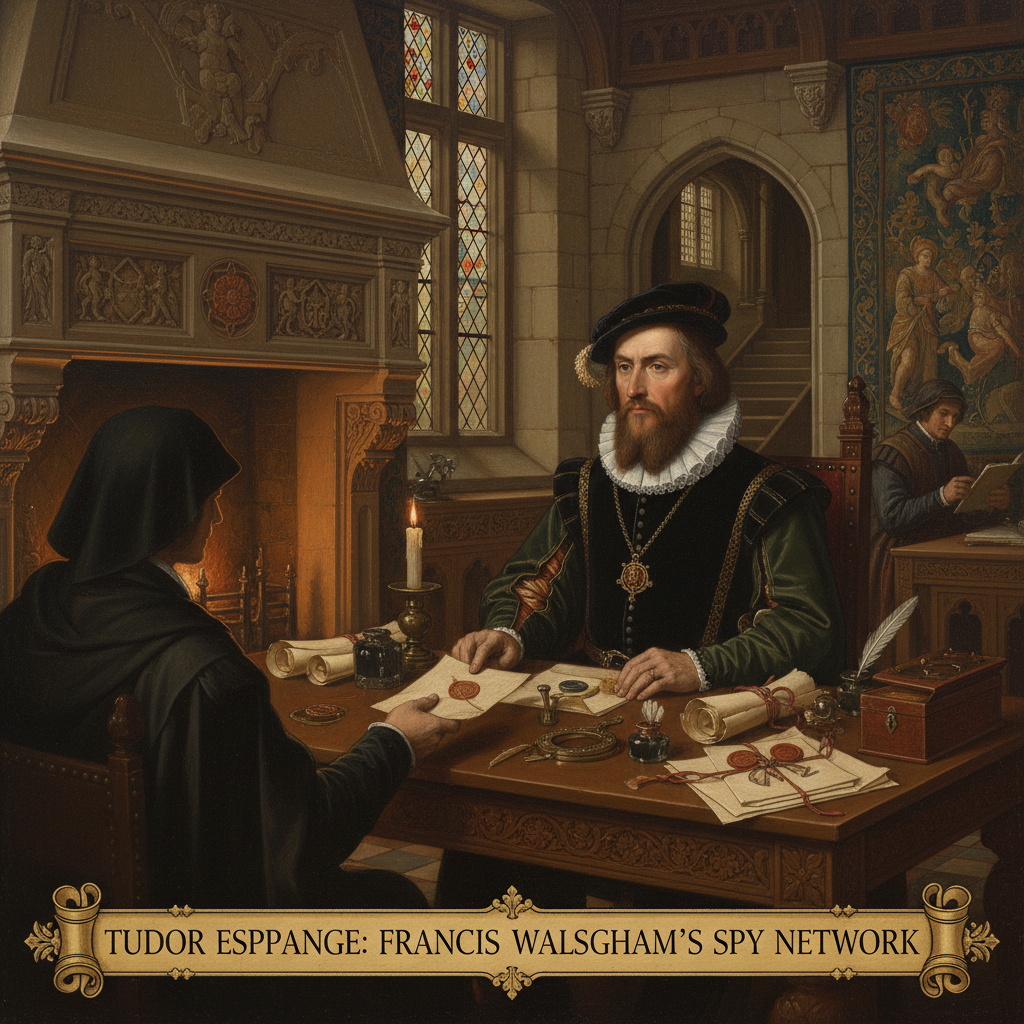
Shadows and Secrets: Walsingham's Tudor Spy Network
Dive into the shadowy world of Tudor espionage with Sir Francis Walsingham, Queen Elizabeth I's spymaster. Discover how his intricate network of agents, codebreakers, and double agents protected England from countless plots and conspiracies, ensuring the Queen's survival and the stability of the realm.