Shakespeare & The Tudors: A Golden Age of Drama
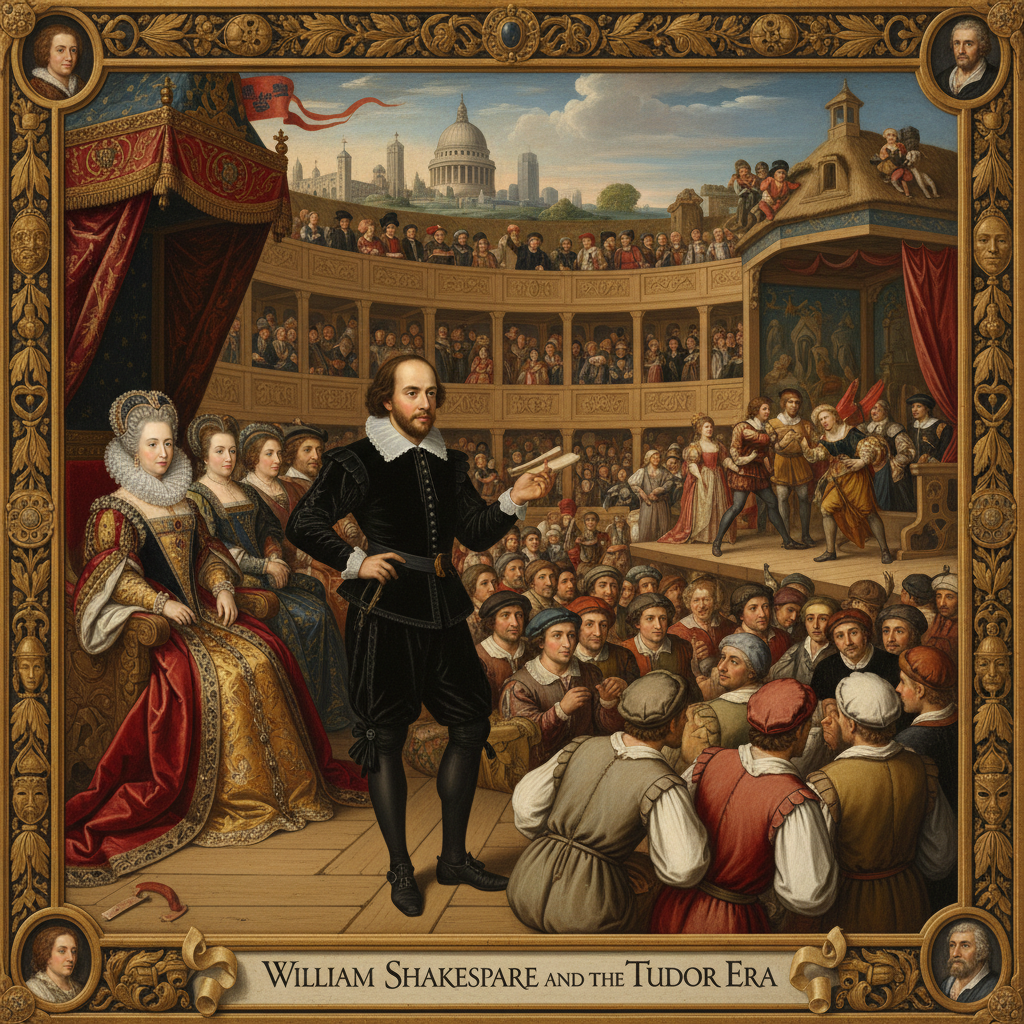
While William Shakespeare's literary zenith primarily occurred during the Jacobean era, his formative years and the foundational works that cemented his legacy were undeniably shaped by the vibrant, tumultuous, and intellectually fertile period of Tudor England. Born in 1564, just six years into Queen Elizabeth I's reign, Shakespeare was a child of the Tudor age, witnessing firsthand the cultural shifts, political intrigues, and societal transformations that would later breathe life into his unparalleled dramatic narratives. To truly understand the Bard, one must first appreciate the rich tapestry of the Tudor world that nurtured his genius.
The Tudor Tapestry: Shakespeare's World
Stratford-upon-Avon, a bustling market town in Warwickshire, was where William Shakespeare's journey began. His father, John Shakespeare, was a prominent glove-maker, wool dealer, and civic official, providing young William with a solid, if not aristocratic, upbringing. The England of his youth was one of profound change. The religious upheavals initiated by Henry VIII, the brief but brutal reign of Mary I, and the subsequent establishment of the Protestant Church of England under Elizabeth I had left an indelible mark on the national psyche. These events, alongside the burgeoning sense of English national identity, provided a fertile ground for historical narratives and explorations of power, morality, and destiny – themes that would become central to Shakespeare's plays.
The Elizabethan era, in particular, fostered an environment where the arts could flourish. The Queen herself was a patron of the arts, enjoying plays, music, and poetry. This royal endorsement, coupled with a growing urban population eager for entertainment, created a demand for professional theatre. London, the beating heart of the kingdom, became a magnet for ambitious young men like Shakespeare, offering opportunities unimaginable in provincial towns.
Did You Know?
During Shakespeare's lifetime, London's population exploded, growing from around 60,000 in 1520 to over 200,000 by 1600. This rapid urbanisation fueled the demand for public entertainment, including the thriving theatre scene.
Education and Early Influences
Shakespeare's formal education at the King's New School in Stratford would have been steeped in classical texts. Latin, rhetoric, and classical literature – particularly the works of Ovid, Virgil, and Seneca – formed the core curriculum. These early exposures to classical drama, epic poetry, and rhetorical devices undoubtedly honed his linguistic skills and provided models for dramatic structure and character development. The moral dilemmas and tragic fates explored by Seneca, for instance, resonate deeply in plays like Hamlet and Titus Andronicus.
“All the world's a stage, and all the men and women merely players; They have their exits and their entrances; And one man in his time plays many parts.”
— William Shakespeare, As You Like It
Beyond formal schooling, Shakespeare would have been immersed in the rich oral traditions of Tudor England: folk tales, ballads, sermons, and the vibrant language of everyday life. The King James Bible, though published after Elizabeth's death, drew heavily on earlier Tudor translations, and its linguistic grandeur reflects the era's appreciation for powerful prose. This blend of classical learning and vernacular richness is a hallmark of Shakespeare's style.
The Stage is Set: Theatre in Tudor London
When Shakespeare arrived in London in the late 1580s, the theatrical landscape was undergoing a revolution. Permanent playhouses, such as The Theatre (1576) and The Curtain (1577), had begun to appear, moving performances from inn-yards and guildhalls to dedicated structures. These public theatres, often located just outside the city limits to bypass restrictive city regulations, were democratic spaces, attracting audiences from all social strata – from groundlings standing in the yard to wealthy patrons in the galleries.
The Lord Chamberlain's Men, the acting company Shakespeare joined and for whom he wrote, became one of the most successful troupes of the era. Their patron, Henry Carey, Lord Hunsdon, and later King James I himself (when they became the King's Men), provided crucial protection and legitimacy in a society that often viewed actors with suspicion. The company's success was intertwined with Shakespeare's prolific output, as he penned plays specifically tailored to their talents and the demands of the Elizabethan audience.
The Globe Theatre: A Tudor Icon
Perhaps the most iconic symbol of Tudor theatre, the Globe Theatre, was built in 1599 by the Lord Chamberlain's Men, largely with funds from Shakespeare and his fellow actors. This open-air, polygonal structure, with its thrust stage and capacity for thousands, epitomized the dynamic nature of Elizabethan drama. Plays were performed in daylight, with minimal scenery, relying instead on elaborate costumes, sound effects, and the sheer power of language to transport the audience.
The Globe was not just a venue; it was a cultural hub, reflecting the energy and ambition of late Tudor England. It was here that many of Shakespeare's greatest works, including Julius Caesar, Hamlet, and Othello, first captivated audiences, shaping the English language and dramatic tradition for centuries to come.
Shakespeare's Tudor Legacy: Echoes in His Works
Shakespeare's plays are saturated with the spirit of the Tudor age, even those set in ancient Rome or distant lands. His historical plays, such as Richard III, Henry IV, and Henry V, directly engage with the Wars of the Roses, a period of civil strife that the Tudors had brought to an end. These plays often served as subtle propaganda, legitimizing the Tudor dynasty by portraying the chaos that preceded their rule and the strong, unifying monarchs who followed.
“Uneasy lies the head that wears a crown.”
— William Shakespeare, Henry IV, Part 2
Beyond history, the social anxieties and beliefs of Tudor England permeate his tragedies and comedies. The fear of witchcraft (Macbeth), the rigid social hierarchy, the importance of honour and reputation, the burgeoning interest in human psychology, and the clash between old traditions and new ideas are all vividly portrayed. Even his comedies, like A Midsummer Night's Dream, often feature elements of English folklore and rural life familiar to his contemporary audience.
Language and Identity
Shakespeare's contribution to the English language is immeasurable. He coined thousands of words and phrases that are still in common use today. This linguistic innovation was part of a broader Tudor trend towards standardizing and enriching the English language, moving away from Latin and French as the primary languages of learning and government. His plays, performed across social classes, played a crucial role in shaping a national vernacular and fostering a shared cultural identity.
The Tudor era was a period of intense self-reflection for England, as it forged its own path politically, religiously, and culturally. Shakespeare, the ultimate chronicler of the human condition, captured this moment with unparalleled insight, creating characters and stories that continue to resonate because they speak to universal truths, filtered through the unique lens of his Tudor world.
Conclusion: The Enduring Tudor Bard
William Shakespeare was more than just a playwright; he was a product and a profound interpreter of the Tudor era. His life spanned the latter half of Elizabeth I's reign, a period of relative peace and prosperity that allowed for an explosion of artistic and intellectual endeavour. The political stability, the religious landscape, the educational systems, and the burgeoning theatrical industry of Tudor England all converged to create the perfect environment for a genius like Shakespeare to thrive.
His plays, whether set in ancient Rome, medieval England, or mythical forests, are infused with the values, anxieties, and aspirations of the Tudor people. They offer us a window into the minds of those who lived through this transformative period, giving voice to their triumphs, their fears, and their enduring humanity. As we delve into the rich tapestry of Shakespeare's works, we are not just exploring timeless literature; we are engaging directly with the heart and soul of Tudor England, forever immortalized by its greatest literary son.
TAGS
Discussion
No comments yet
Be the first to share your thoughts on this article!
You May Also Like
Continue exploring Tudor history with these related articles

Ink and Intrigue: The Golden Age of Tudor Literature and Poetry
Explore the vibrant literary world of the Tudor dynasty, from the dangerous courtly poetry of Wyatt and Surrey, who introduced the sonnet and blank verse to England, to the national epic ambitions of Edmund Spenser under Elizabeth I. Discover how literature reflected and shaped Tudor politics, identity, and the English language.

Shakespeare's Tudor World: Drama, Power, and Politics
Explore how William Shakespeare’s life and works were profoundly shaped by the political volatility, religious upheaval, and cultural vibrancy of the Tudor era under Queen Elizabeth I.

Ink, Ideas, and Revolution: The Printing Press in Tudor England
Explore the revolutionary impact of the printing press in Tudor England, from its arrival with William Caxton to its pivotal role in the Reformation and the Crown's attempts at censorship.

The Revolutionary Impact of the Printing Press in Tudor England
Explore how the printing press revolutionized Tudor England, from democratizing knowledge and fueling the Reformation to shaping national identity and literacy.