Hampton Court Palace: A Tudor Masterpiece Unveiled
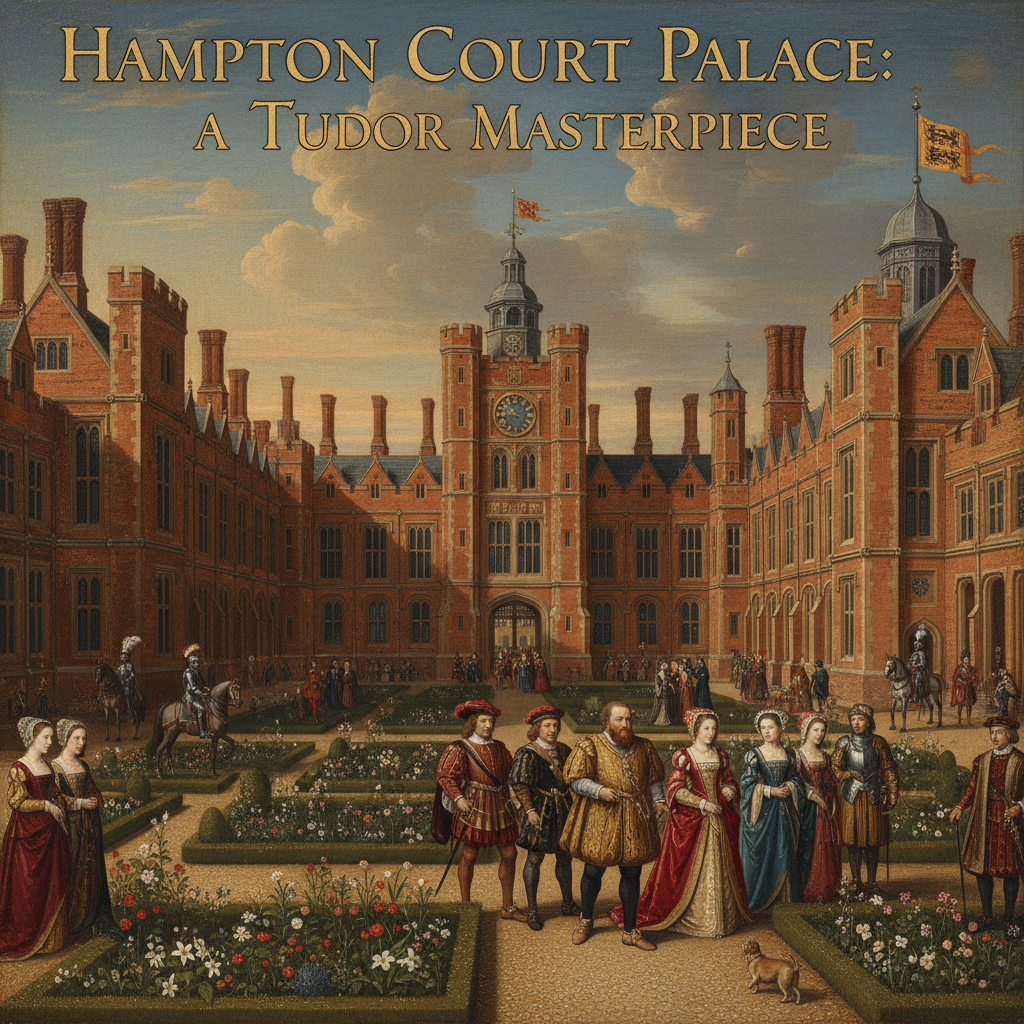
Nestled by the serene River Thames, Hampton Court Palace stands as a monumental testament to the grandeur and ambition of the Tudor era. More than just a royal residence, it was a stage for power, passion, and political intrigue, a living canvas painted with the lives of kings, queens, and courtiers. From its humble beginnings as a cardinal's lavish abode to its transformation into Henry VIII's ultimate pleasure palace, Hampton Court embodies the very essence of Tudor magnificence, offering a captivating glimpse into a world of opulence, drama, and enduring legacy.
Cardinal Wolsey's Grand Vision: The Palace's Genesis
Hampton Court's story begins not with a king, but with a cardinal – Thomas Wolsey, Henry VIII's chief minister and one of the most powerful men in England. In 1514, Wolsey began transforming a modest manor house into a palace befitting his immense status. He spared no expense, importing the finest materials and employing the most skilled craftsmen. His vision was clear: to create a residence that would rival any in Europe, a symbol of his wealth, influence, and devotion to the King.
Wolsey's Hampton Court was a marvel of early Tudor architecture, characterized by its distinctive red brick and intricate chimneys. It boasted lavish apartments, a magnificent Great Hall, and extensive gardens. However, its sheer opulence eventually became Wolsey's undoing. As his political fortunes waned, particularly after his failure to secure Henry VIII's divorce from Catherine of Aragon, the palace became a symbol of his perceived arrogance.
"And when the King had been there a certain season, and seen the costly buildings, and the sumptuous furniture thereof, he demanded of me, if I had made no provision for him to have the like, 'Yea, forsooth, Sire,' quoth I, 'if it please your Grace to take it, for I have made it all for you.'"
— George Cavendish, The Life and Death of Cardinal Wolsey
In 1529, sensing his imminent downfall, Wolsey 'gifted' Hampton Court to Henry VIII, hoping to appease the monarch. It was a gesture of desperation, but one that ultimately sealed the palace's destiny as a royal residence.
Did You Know?
Cardinal Wolsey installed England's first flushing toilets at Hampton Court Palace, known as 'garderobes,' which were flushed by rainwater collected from the roof!
Henry VIII's Playground: Power, Pleasure, and Politics
Upon acquiring Hampton Court, Henry VIII immediately embarked on an ambitious expansion program, transforming Wolsey's grand residence into an even grander royal palace. For Henry, Hampton Court was not just a home; it was a statement of his power, a setting for lavish entertainments, and a backdrop for crucial political decisions.
The Great Hall and Kitchens: Feasting and Festivities
Henry's most significant additions included the magnificent Great Hall, completed in 1532, with its spectacular hammer-beam roof adorned with carved angels and royal emblems. This was the heart of the palace, where banquets, masques, and plays unfolded. Imagine hundreds of courtiers feasting on roasted meats, exotic fruits, and fine wines, entertained by musicians and jesters.
Beneath the Great Hall lay the vast Tudor Kitchens, a bustling hub of activity where an army of cooks, scullions, and turnspits prepared up to 1,000 meals a day for the King and his court. These kitchens were state-of-the-art for their time, featuring enormous fireplaces, spits turned by dogs, and vast larders. The sheer scale of food preparation highlights the immense logistical effort required to sustain the royal household.
- Over 60 staff worked in the kitchens daily.
- A typical royal banquet could involve 100 courses.
- Beer was the staple drink, with thousands of gallons consumed annually.
The Royal Apartments and the Six Wives
Hampton Court witnessed the personal dramas of Henry VIII and his six wives. Anne Boleyn, Jane Seymour, Anne of Cleves, Catherine Howard, and Catherine Parr all resided here, each leaving their mark on the palace's history. It was here that Henry learned of Anne Boleyn's alleged infidelities, leading to her tragic downfall. It was also here that Jane Seymour gave birth to Henry's longed-for male heir, Edward VI, only to die shortly after, plunging the King into profound grief.
Legend has it that the ghost of Catherine Howard, Henry's fifth wife, still roams the Haunted Gallery, shrieking as she did when she was dragged back to her apartments after attempting to plead with the King for her life. These stories add a chilling, human dimension to the palace's grand history.
Beyond Henry VIII: Stuart Splendour and Georgian Grandeur
While Hampton Court is synonymous with Henry VIII, its story did not end with him. Subsequent monarchs continued to use and adapt the palace, reflecting changing tastes and architectural styles.
The Stuarts and the English Civil War
James I and Charles I both enjoyed Hampton Court, adding to its art collection and gardens. Charles I, however, would find himself a prisoner here during the English Civil War, held captive by Parliament before his eventual execution. The palace briefly became a barracks during the Commonwealth period under Oliver Cromwell, who surprisingly preserved much of its royal character.
William and Mary's Baroque Transformation
The most significant post-Tudor transformation came with William III and Mary II in the late 17th century. Desiring a palace that rivaled Versailles, they commissioned Sir Christopher Wren to rebuild large sections in the fashionable Baroque style. Wren's additions, including the Fountain Court and the King's and Queen's Apartments, introduced a new level of classical elegance, creating a striking contrast with the older Tudor sections.
This blend of architectural styles is one of Hampton Court's most captivating features, allowing visitors to walk through centuries of royal history within a single complex. The intricate juxtaposition of Tudor brickwork and Wren's classical facades tells a compelling story of continuity and change.
Hampton Court Today: A Living Museum
Today, Hampton Court Palace is a treasure trove of history, meticulously preserved and brought to life for millions of visitors. It offers an unparalleled opportunity to step back in time and immerse oneself in the world of the Tudors and beyond.
Gardens of Delight and the Maze
Beyond the palace walls lie acres of stunning gardens, each reflecting different historical periods. The Privy Garden, meticulously restored to its 17th-century glory, offers formal elegance, while the Great Vine, planted in 1768, continues to produce grapes. The famous Hampton Court Maze, planted around 1700, remains a delightful challenge for visitors of all ages.
Art, Artifacts, and the Royal Collection
The palace houses an extensive collection of art and artifacts, including masterpieces from the Royal Collection. Visitors can explore the State Apartments, marvel at the tapestries, and imagine the lives of those who once walked these hallowed halls. Costumed interpreters often roam the palace, providing an immersive experience and answering questions about Tudor life.
Conclusion: The Enduring Legacy of a Royal Icon
Hampton Court Palace is more than just a collection of buildings; it is a narrative woven through centuries, a silent witness to the triumphs and tragedies of English monarchy. From Wolsey's ambition to Henry VIII's extravagance, and from Stuart elegance to Wren's Baroque grandeur, the palace stands as a magnificent testament to power, artistry, and the relentless march of history.
Its enduring appeal lies in its ability to transport us, to allow us to touch the past, and to feel the echoes of royal footsteps. Whether you are a dedicated Tudor enthusiast or a curious traveler, Hampton Court Palace offers an unforgettable journey into the heart of England's rich and vibrant heritage. It truly is a Tudor masterpiece, eternally captivating and forever inviting us to explore its secrets.
TAGS
Discussion
No comments yet
Be the first to share your thoughts on this article!
You May Also Like
Continue exploring Tudor history with these related articles

Hampton Court Palace: A Tudor Masterpiece and Royal Powerhouse
Explore the history of Hampton Court Palace, the magnificent Tudor residence built by Cardinal Wolsey and seized by Henry VIII. Discover the Great Hall, the Royal Tennis Court, and the dramatic stories of the six queens.
The Tower of London: Tudor England's Grim Fortress
Explore the chilling history of the Tower of London during the Tudor era, a fortress that served as a royal palace, treasury, and most famously, a state prison for figures like Anne Boleyn and Lady Jane Grey. Discover its role in shaping England's tumultuous past.

Whitehall Palace: The Lost Heart of Tudor Power
Whitehall Palace, seized by Henry VIII from Cardinal Wolsey, became the largest palace in Europe and the monumental heart of Tudor power, witnessing the Reformation, royal marriages, and political intrigue.

The Tower of London: Citadel of Power in the Tudor Era
Explore the Tower of London during the Tudor era (1485–1603), examining its transformation from a royal palace and treasury into the infamous state prison that housed and executed figures like Anne Boleyn and Catherine Howard.