Hampton Court Palace: A Tudor Masterpiece Unveiled
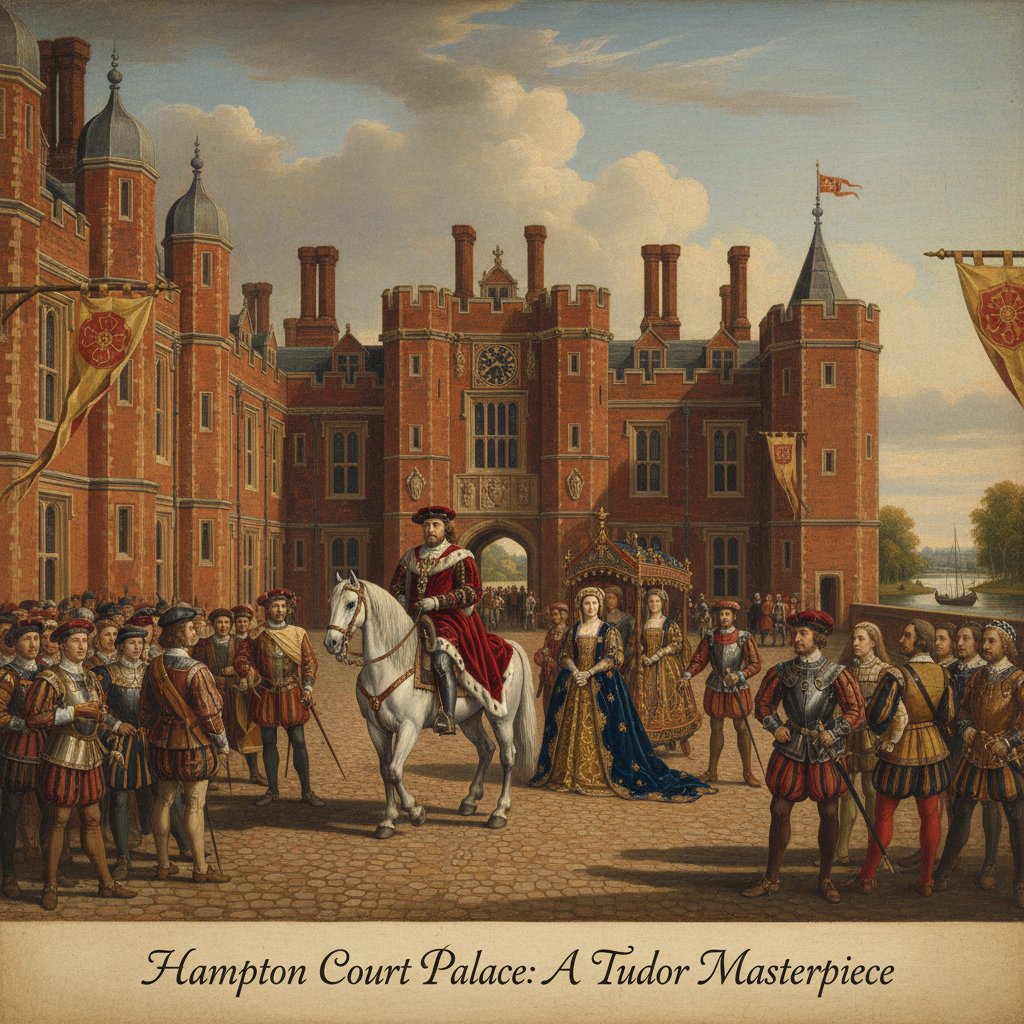
Nestled beside the River Thames, Hampton Court Palace stands as a monumental testament to the grandeur, ambition, and tumultuous drama of the Tudor era. More than just a royal residence, it was a stage for power plays, a canvas for artistic expression, and a crucible where the fate of England was often forged. From its humble beginnings as a cardinal's ambitious project to its transformation into Henry VIII's ultimate pleasure palace, Hampton Court encapsulates the very essence of Tudor history, inviting us to step back in time and walk in the footsteps of kings and queens.
Cardinal Wolsey's Grand Vision: The Birth of a Palace
Before it became synonymous with Henry VIII, Hampton Court was the brainchild of Thomas Wolsey, the ambitious and powerful Cardinal Archbishop of York. Wolsey, a man of humble origins who rose to become Henry VIII's chief minister, sought to create a residence befitting his immense status and wealth. Construction began around 1515, transforming a modest manor house into a sprawling, magnificent palace designed to impress both domestic and international visitors.
Wolsey spared no expense, employing the finest craftsmen and materials. The palace boasted luxurious apartments, vast kitchens capable of feeding hundreds, and an impressive astronomical clock. His aim was not merely comfort but a clear demonstration of his influence and the King's favour. The lavishness of Hampton Court, however, eventually became a double-edged sword.
“The Cardinal was so much inflated with pride and vainglory that he thought himself equal with the King, and by his presumptuous mind and behaviour, he showed himself to be above the King.”
— Edward Hall, Hall's Chronicle
The sheer opulence of Hampton Court, coupled with Wolsey's increasing power, began to stir jealousy and suspicion, particularly within the King's court. Henry VIII, a monarch who tolerated no rivals, cast an increasingly wary eye on his minister's magnificent dwelling.
From Cardinal to King: Henry VIII's Acquisition
By 1529, Wolsey's star was rapidly falling. His failure to secure Henry VIII's annulment from Catherine of Aragon, combined with his immense wealth and perceived arrogance, led to his downfall. To appease the King and perhaps to save himself, Wolsey 'gifted' Hampton Court to Henry VIII. While presented as a generous offering, it was effectively a forced surrender, a desperate attempt to retain royal favour.
Henry VIII, ever keen on grandeur and possessing an insatiable appetite for magnificent residences, readily accepted. He immediately embarked on an ambitious expansion program, transforming Wolsey's already splendid palace into an even grander royal seat, reflecting his own colossal ego and vision for England. It became one of his most cherished and frequently visited palaces.
The Heart of Tudor Power: Henry VIII's Hampton Court
Under Henry VIII, Hampton Court truly became a symbol of Tudor monarchy. The King poured vast resources into its development, adding the Great Hall, the Royal Tennis Court, and the magnificent kitchens, which were among the largest in Europe. The palace was designed not just for living, but for entertaining, impressing, and projecting power.
- The Great Hall: Completed in 1533, this architectural marvel with its hammer-beam roof was the setting for banquets, masques, and theatrical performances. It showcased Henry's wealth and power to all who entered.
- The Kitchens: A vast complex capable of feeding 600 people twice a day, these kitchens were a hive of activity, employing hundreds of staff and consuming enormous quantities of food and drink.
- The Chapel Royal: A place of worship and political theatre, where Henry's religious reforms played out, and where his children, including Edward VI, were baptised.
- The Royal Tennis Court: One of the oldest surviving tennis courts in the world, still in use today, where Henry VIII and later monarchs played 'real tennis'.
Hampton Court was the backdrop for many pivotal moments in Henry VIII's reign, particularly concerning his tumultuous marital life. It was here that he courted Anne Boleyn, celebrated the birth of his longed-for son Edward VI, and where his third wife, Jane Seymour, tragically died shortly after childbirth. Catherine Howard, his fifth wife, was famously apprehended here, her desperate dash through the Haunted Gallery a poignant and chilling legend.
Did You Know?
The Great Vine at Hampton Court Palace, planted in 1768, is the largest grape vine in the world and still produces an annual crop of Black Hamburg grapes!
The palace was a self-sufficient city, teeming with courtiers, servants, and officials. Life here was a carefully orchestrated performance, with strict protocols and hierarchies. The King's presence dictated the rhythm of the court, from lavish feasts to hunting expeditions in the surrounding parks.
Beyond Henry VIII: Hampton Court Through the Ages
While Hampton Court is indelibly linked with Henry VIII, its story did not end with his death. Subsequent monarchs continued to use and adapt the palace, each leaving their own mark.
Edward VI, Mary I, and Elizabeth I
Henry's children all spent time at Hampton Court. Edward VI was born and baptised here. Mary I and Philip II of Spain spent their honeymoon at the palace, and it was a significant residence for Elizabeth I, who enjoyed its gardens and hunting grounds. Elizabeth, ever the shrewd politician, used the palace for state occasions, reinforcing her image as a powerful and legitimate ruler.
The Stuart and Georgian Eras
James I hosted the Hampton Court Conference here in 1604, a significant event in religious history. Charles I and his family were held captive at the palace during the English Civil War. Later, William III and Mary II commissioned Sir Christopher Wren to undertake a massive rebuilding project, transforming parts of the Tudor palace into a Baroque masterpiece, giving it the distinctive mix of architectural styles we see today. George I and George II were the last monarchs to reside there, after which it ceased to be a primary royal residence, though it remained a grace and favour home.
A Living Museum: Hampton Court Today
Today, Hampton Court Palace is managed by Historic Royal Palaces and remains one of the UK's most popular historic attractions. Visitors can explore the magnificent Tudor Great Hall, wander through the vast kitchens, marvel at the Chapel Royal, and get lost in the famous Maze. The State Apartments, both Tudor and Baroque, offer a glimpse into the lives of the monarchs who once walked these corridors.
The palace also houses an extensive art collection, including works by Holbein and Mantegna, and its gardens are a horticultural delight, featuring the Privy Garden, the Pond Gardens, and the Great Fountain Garden. Interpretive displays, costumed guides, and special events bring the history of Hampton Court to life, allowing visitors to immerse themselves fully in the Tudor world and beyond.
Hampton Court Palace is more than just bricks and mortar; it is a repository of stories, a stage for historical drama, and a tangible link to a pivotal period in English history. Its walls whisper tales of ambition, love, betrayal, and power, inviting every visitor to become a part of its ongoing narrative. To walk through its gates is to step into the very heart of the Tudor dynasty, a truly unforgettable experience for any history enthusiast.
TAGS
Discussion
No comments yet
Be the first to share your thoughts on this article!
You May Also Like
Continue exploring Tudor history with these related articles

Hampton Court Palace: A Tudor Masterpiece and Royal Powerhouse
Explore the history of Hampton Court Palace, the magnificent Tudor residence built by Cardinal Wolsey and seized by Henry VIII. Discover the Great Hall, the Royal Tennis Court, and the dramatic stories of the six queens.

Whitehall Palace: The Lost Heart of Tudor Power
Whitehall Palace, seized by Henry VIII from Cardinal Wolsey, became the largest palace in Europe and the monumental heart of Tudor power, witnessing the Reformation, royal marriages, and political intrigue.
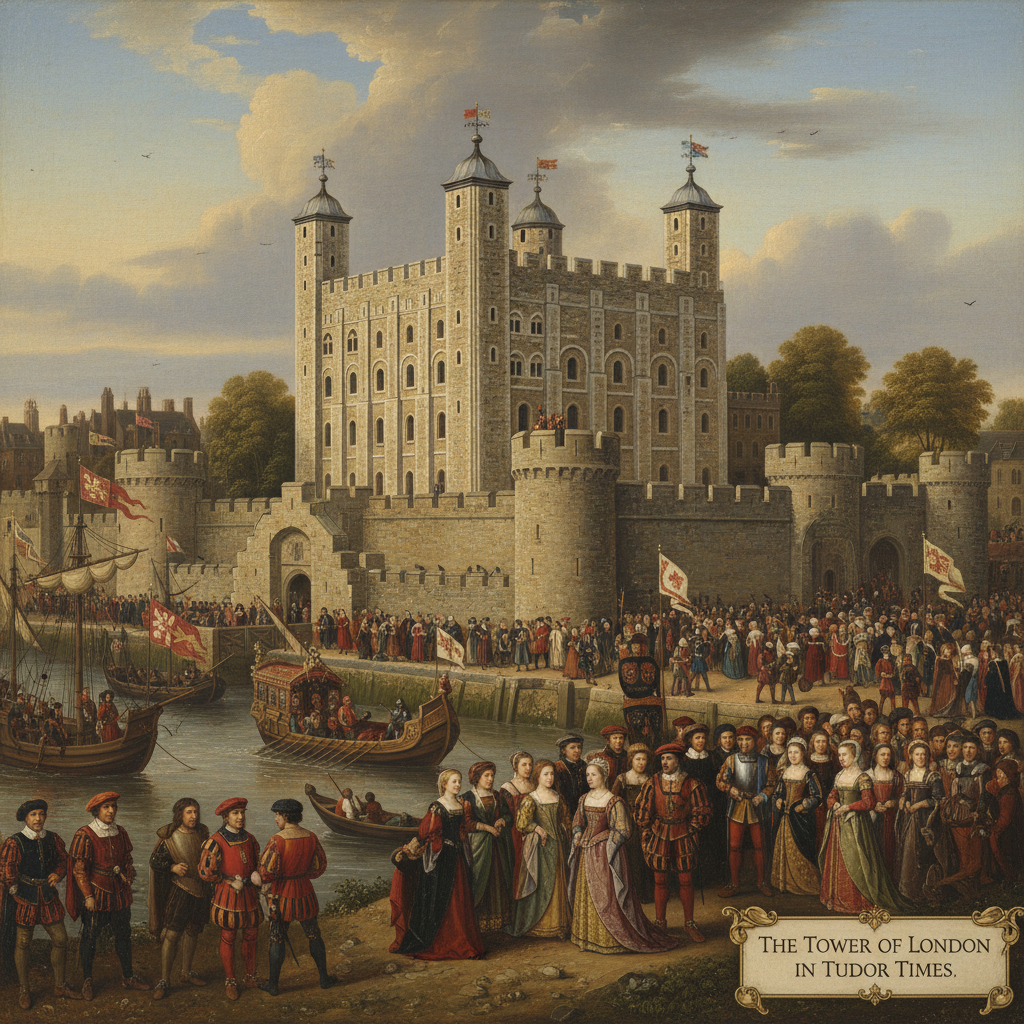
The Tower of London: Tudor England's Grim Fortress
Explore the chilling history of the Tower of London during the Tudor era, a fortress that served as a royal palace, treasury, and most famously, a state prison for figures like Anne Boleyn and Lady Jane Grey. Discover its role in shaping England's tumultuous past.

The Tower of London: Citadel of Power in the Tudor Era
Explore the Tower of London during the Tudor era (1485–1603), examining its transformation from a royal palace and treasury into the infamous state prison that housed and executed figures like Anne Boleyn and Catherine Howard.