The Splendor of Tudor Gardens: A Landscape of Power & Pleasure
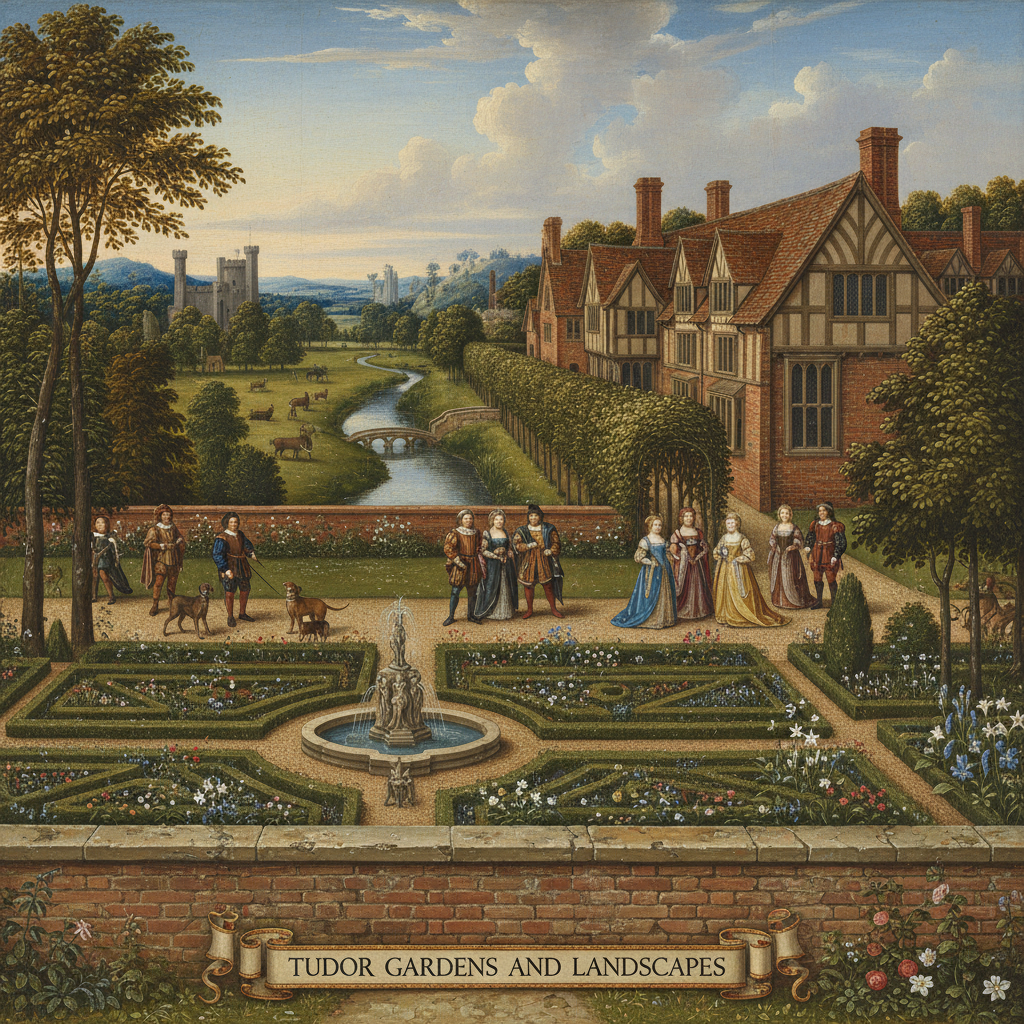
Step through the gates of time and imagine yourself in a Tudor garden. Far from the wild, untamed landscapes of earlier centuries, these were spaces meticulously designed, brimming with symbolism, utility, and breathtaking artistry. More than just pretty plots of land, Tudor gardens were living tapestries, reflecting the wealth, power, and intellectual curiosity of their owners. They were stages for courtly love, places of quiet contemplation, and vital sources of sustenance, embodying the very essence of the Tudor age.
The Philosophy Behind Tudor Garden Design: Order, Status, and Utility
Tudor gardens were not merely aesthetic indulgences; they were carefully conceived extensions of the grand houses they adorned, mirroring the hierarchical and ordered society of the time. The prevailing philosophy was one of control over nature, transforming wildness into geometric precision and symbolic arrangements. This desire for order was a direct reflection of the Renaissance humanism sweeping across Europe, which emphasized reason, balance, and classical ideals.
For the Tudors, a garden was a powerful status symbol. The larger and more elaborate the garden, the greater the owner's wealth and influence. Royal gardens, such as those at Hampton Court Palace or Nonsuch Palace, set the benchmark for aristocratic aspirations. They were designed to impress foreign dignitaries, entertain the monarch, and provide a lavish backdrop for courtly life. Every clipped hedge, every exotic plant, and every intricate knot garden spoke volumes about the owner's taste, education, and social standing.
Beyond aesthetics and status, utility was paramount. Tudor gardens were productive spaces, providing food, medicine, and materials for the household. Kitchen gardens, orchards, and physic gardens were integral components, ensuring self-sufficiency and demonstrating practical management. The blend of beauty and practicality was a hallmark of Tudor design, a testament to a society that valued both grandeur and groundedness.
“For a garden is not only a place of pleasure, but also of profit, yielding fruits and herbs for the table, and flowers for delight.”
Thomas Tusser, 'Five Hundred Points of Good Husbandry', 1557
Did You Know?
Many Tudor gardens incorporated 'mounts' – artificial hills often topped with a small pavilion or seat. These provided elevated views over the entire garden, allowing the owner to survey their meticulously ordered domain and enjoy panoramic vistas.
Key Features and Elements: A Symphony of Greenery and Stone
Tudor gardens were characterized by a distinct set of features, each contributing to their unique charm and functionality. The geometric precision that defined the era was evident in almost every aspect of their layout.
- Knot Gardens: Perhaps the most iconic feature, knot gardens were intricate patterns formed by low-growing, clipped hedges (often boxwood or lavender) interlaced to resemble knots in a rope. The spaces between the hedges were filled with contrasting colored gravel, sand, or fragrant herbs and flowers, creating a stunning visual effect.
- Parterres: Similar to knot gardens but often larger and more elaborate, parterres featured broader beds laid out in decorative patterns, sometimes incorporating turf, gravel, and flowers, enclosed by low hedging.
- Mazes and Labyrinths: Designed for entertainment and playful diversion, mazes, particularly hedge mazes, became popular. They offered a delightful challenge for guests and a chance for private conversations away from prying ears.
- Fountains and Water Features: Water was a vital element, not just for irrigation but for its aesthetic and symbolic value. Elaborate fountains, often featuring classical statuary, provided soothing sounds and reflected light, adding to the garden's allure. Ponds and canals were also common.
- Arbours and Pergolas: These shaded walkways and seating areas, often covered with climbing roses, honeysuckle, or grapevines, offered respite from the sun and intimate spots for conversation or reading.
- Orchards and Kitchen Gardens: Beyond the ornamental sections, large areas were dedicated to fruit trees (apples, pears, cherries, plums) and vegetables. These provided fresh produce for the household throughout the year.
- Physic Gardens: Dedicated to medicinal plants and herbs, these gardens were essential for health and well-being, often maintained by the lady of the house or a resident physician.
The Human Element: Gardeners, Tools, and Techniques
Creating and maintaining these elaborate gardens required immense labour and skill. A large estate would employ a team of gardeners, often led by a head gardener, who possessed considerable horticultural knowledge. These individuals were responsible for everything from planting and pruning to managing water systems and pest control.
Tools were relatively simple compared to today's machinery but effective. Spades, hoes, rakes, pruning knives, and shears were the main implements. The art of topiary – shaping shrubs and trees into decorative forms – was highly prized and demanded great precision and patience. Gardeners also had to be adept at grafting fruit trees, cultivating delicate herbs, and propagating new plants from seeds or cuttings.
The introduction of new plant species from abroad, brought back by explorers and merchants, further enriched Tudor gardens. Exotics like tulips (though more popular in the later Jacobean period), carnations, and various roses found their way into English soil, adding splashes of vibrant colour and new textures to the established palette of native flora.
Royal Gardens: Hampton Court and Nonsuch Palace
No discussion of Tudor gardens would be complete without mentioning the magnificent royal estates. Henry VIII, in particular, was a passionate garden enthusiast, investing vast sums in creating landscapes that would reflect his power and prestige.
Hampton Court Palace: Henry VIII's acquisition and expansion of Hampton Court saw the creation of some of the most impressive gardens in England. The Privy Garden, designed for the King's private use, was a masterpiece of geometric design, featuring knot gardens, fountains, and exotic plants. The Great Vine, planted in 1768, is a later addition, but the site's history as a productive and ornamental garden stretches back to Tudor times. The King's Beasts, carved heraldic animals, adorned the bridge over the moat, leading to the grand entrance, setting a tone of royal majesty even before one entered the palace itself.
Nonsuch Palace: Sadly, Nonsuch Palace, built by Henry VIII and completed by Queen Mary, no longer stands, but contemporary accounts describe its gardens as unparalleled. Its name, meaning 'none such' or 'without equal,' extended to its grounds. The gardens were renowned for their elaborate fountains, gilded statues, and complex parterres, designed to dazzle and impress. It epitomized the Tudor desire to create a paradise on earth, a testament to human ingenuity and royal magnificence.
“The gardens of Nonsuch were of a most exquisite beauty, adorned with many fountains, statues, and curious works, so that no place in England could be compared to it.”
John Speed, 'The Theatre of the Empire of Great Britaine', 1611 (referring to earlier descriptions)
The Enduring Legacy of Tudor Gardens
While few Tudor gardens survive in their original form, their influence is undeniable. The principles of order, symmetry, and the integration of utility and beauty laid the groundwork for subsequent garden styles in England. The love for knot gardens, topiary, and water features continued into the Jacobean and Stuart periods, evolving into the grand Baroque landscapes of the 17th century.
Today, historical reconstructions and archaeological findings allow us to glimpse the grandeur of these lost landscapes. Visiting places like Hampton Court Palace, Hatfield House, or even smaller manor houses with recreated Tudor-style gardens offers a tangible connection to this fascinating aspect of Tudor life. These gardens were not just places of beauty; they were vital social spaces, symbols of power, and testaments to a sophisticated understanding of horticulture and design.
The Tudor garden, in all its ordered splendour, remains a powerful symbol of an age that sought to master both nature and destiny, leaving behind a legacy that continues to inspire and enchant. They invite us to ponder the intricate relationship between humanity, nature, and the pursuit of perfection, a pursuit that defined the extraordinary era of the Tudors.
TAGS
Discussion
No comments yet
Be the first to share your thoughts on this article!
You May Also Like
Continue exploring Tudor history with these related articles

Catherine of Aragon: The Spanish Princess Who Defined the Tudor Era
Explore the life of Catherine of Aragon, the Spanish Infanta whose marriage to Henry VIII and subsequent refusal to accept an annulment triggered the English Reformation and defined the Tudor era.

The Sickening Truth: Medicine and Health in Tudor England
Dive into the precarious world of Tudor medicine, exploring the reliance on the Four Humours, the terrifying reality of the plague, and the often-dangerous treatments used by physicians, surgeons, and apothecaries in 16th-century England.
Anne Boleyn: Rise, Reign, & Tragic Fall of a Tudor Queen
Explore the captivating and tragic story of Anne Boleyn, from her sophisticated upbringing and meteoric rise as Henry VIII's second queen to her dramatic downfall and execution, forever changing England's history.

The Boleyn Ascent: How a Norfolk Family Conquered the Tudor Court
Explore the astonishing three-generation rise of the Boleyn family, from ambitious London merchants to the pinnacle of power, culminating in Anne Boleyn's controversial queenship and the English Reformation.