The Howard Family: Power, Intrigue, and Tudor Destiny
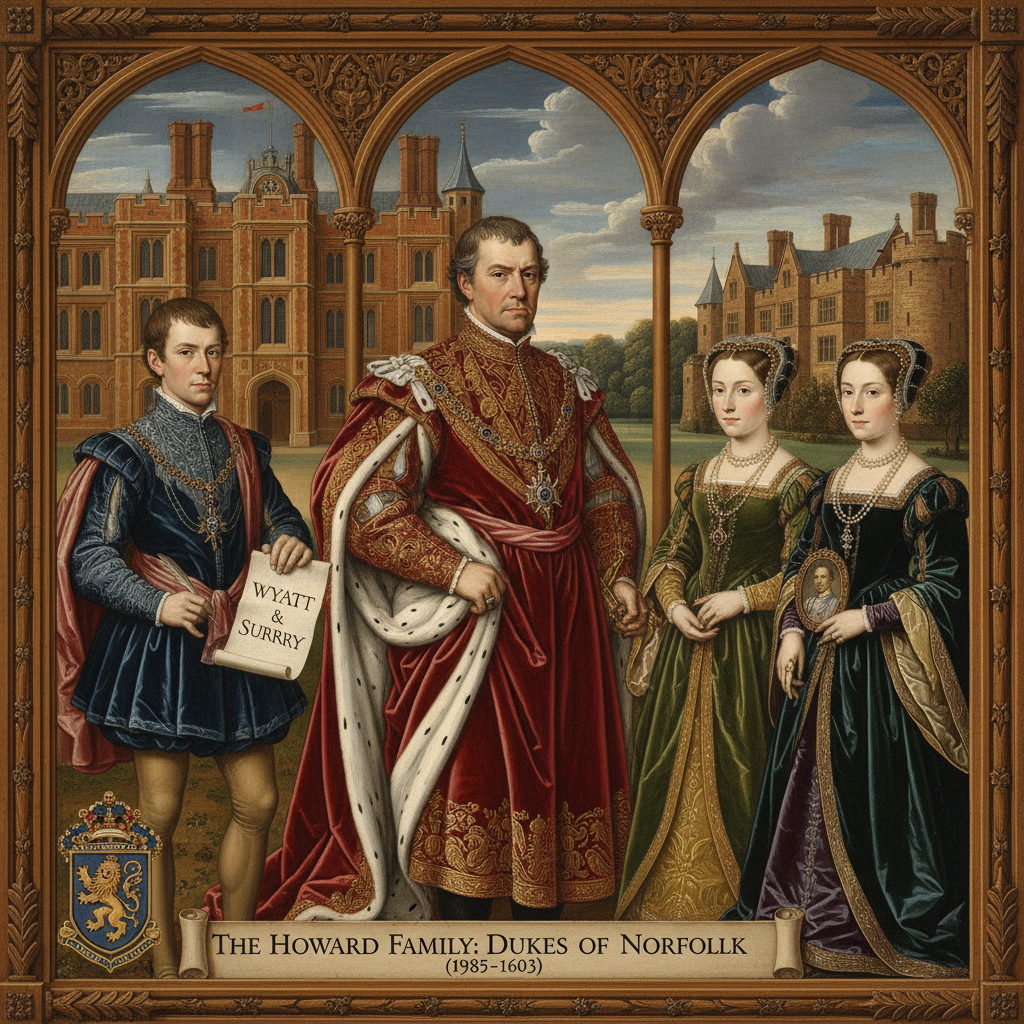
In the tumultuous tapestry of Tudor England, few families wove themselves into the fabric of power, scandal, and ultimate destiny quite like the Howards. As Dukes of Norfolk, they were not merely courtiers but titans, whose fortunes rose and fell with the tides of royal favour, their lineage intertwined with some of the most pivotal moments in English history. From the battlefields of Bosworth to the gilded cages of the Tower, the Howards' story is one of ambition, sacrifice, and an enduring, often perilous, proximity to the crown.
The Ascent of the Howards: From Gentry to Dukes
The Howard family's journey to the pinnacle of the English aristocracy began not with ancient royal blood, but with shrewd ambition and military prowess. Their rise truly accelerated in the late 15th century. John Howard, a staunch supporter of Richard III, was rewarded for his loyalty with the coveted title of Duke of Norfolk in 1483. This elevation, however, came with a heavy price.
The Battle of Bosworth Field in 1485 proved to be both the zenith and nadir of John Howard's career. Fighting valiantly for his king, he met his end on the battlefield, alongside Richard III. His son, Thomas Howard, Earl of Surrey, was captured and attainted, stripped of his titles and lands. Yet, in a testament to the family's resilience and political acumen, Thomas managed to not only survive but thrive under the new Tudor regime. His military genius, particularly at the Battle of Flodden in 1513, where he decisively defeated the Scottish forces, earned him the restoration of his dukedom and cemented the Howards' place as indispensable to the early Tudors.
"The Howards, by their valour and wisdom, did not only retrieve their ancient honours, but added new lustre to their family, which had been for some time under a cloud." - Charles Brandon, Duke of Suffolk (attributed)
Thomas Howard, 2nd Duke of Norfolk: The Architect of Survival
Thomas Howard, the 2nd Duke, was a master of political survival. Having fought against Henry VII at Bosworth, he skillfully navigated the treacherous waters of the new court, proving his loyalty through service rather than birthright. His military victories, especially Flodden, were crucial for England's security and Henry VIII's prestige. Beyond the battlefield, he was a key figure in government, serving as Lord Treasurer and Lord Marshal. He ensured his family's continued influence through strategic marriages, laying the groundwork for future generations to wield immense power.
The Howard Connection to Henry VIII's Queens
Perhaps the most famous, or infamous, aspect of the Howard family's history is their direct connection to two of Henry VIII's six wives: Anne Boleyn and Catherine Howard. These relationships brought the family unprecedented influence but also catastrophic downfall.
Anne Boleyn: The Queen Who Challenged a Dynasty
Anne Boleyn, daughter of Thomas Boleyn (later Earl of Wiltshire), was the niece of Thomas Howard, 3rd Duke of Norfolk. Her ascent to Queen Consort was a seismic event, triggering the English Reformation and irrevocably altering the course of English history. The Howards, particularly the 3rd Duke, initially championed her cause, seeing it as an opportunity to solidify their power. However, Anne's independent spirit and failure to produce a male heir ultimately led to her execution in 1536. This event, while a blow, did not immediately cripple the family, largely due to the 3rd Duke's ability to distance himself from his niece's fate.
Catherine Howard: The Rose Without a Thorn
Just a few years after Anne's demise, another Howard woman, Catherine, niece of the 3rd Duke, caught Henry VIII's eye. Young, vivacious, and seemingly innocent, Catherine became Henry's fifth wife in 1540. Her marriage briefly restored the Howards to the zenith of royal favour. The 3rd Duke, along with his ambitious sister, Agnes Howard, the Dowager Duchess of Norfolk, played significant roles in promoting her. However, Catherine's past indiscretions and alleged infidelities while Queen led to her swift and brutal execution in 1542. This time, the fallout was far more severe for the family. The 3rd Duke himself was attainted, narrowly escaping execution only by Henry VIII's death the day before his scheduled beheading.
Did You Know?
The 3rd Duke of Norfolk, Thomas Howard, was so powerful that he was considered a potential rival to Henry VIII. He was imprisoned in the Tower of London and sentenced to death, but Henry VIII died the night before his execution was scheduled, saving him. He was eventually released by Queen Mary I.
Turbulence and Resilience: The Later Tudor Howards
The reigns of Edward VI, Mary I, and Elizabeth I continued to test the Howard family's mettle. Despite repeated brushes with treason and the scaffold, the family's wealth, influence, and sheer number of connections ensured their survival, albeit with significant losses.
Thomas Howard, 4th Duke of Norfolk: The Catholic Conspirator
The 4th Duke, another Thomas Howard, was a prominent figure during Elizabeth I's reign. A leading Catholic nobleman, he became entangled in plots to overthrow Elizabeth and replace her with Mary, Queen of Scots. The most notable of these was the Ridolfi Plot. His ambition and religious convictions ultimately led to his execution for treason in 1572, marking the last time a Duke of Norfolk would be executed for treason. His death was a stark warning to the Catholic nobility and a testament to Elizabeth's ruthless determination to secure her throne.
"The Duke of Norfolk, for all his greatness, was but a man, and a man easily swayed by flatterers and the promise of a crown." - William Cecil, Lord Burghley
The Enduring Legacy
Despite the repeated executions, attainders, and imprisonments, the Howard family endured. Their vast landholdings, strategic marriages, and sheer number of prominent members meant that even when one branch fell, another was often there to rise. They consistently held positions of power, serving as Earl Marshals, Lord Treasurers, and Privy Councillors. Their story is a microcosm of the Tudor era itself: a period of immense change, ruthless politics, and the constant struggle for power and survival.
- **Key Howard Figures:**
- John Howard, 1st Duke of Norfolk (d. 1485) - Loyal to Richard III, died at Bosworth.
- Thomas Howard, 2nd Duke of Norfolk (1443-1524) - Victor of Flodden, survived Henry VII, served Henry VIII.
- Thomas Howard, 3rd Duke of Norfolk (1473-1554) - Uncle to Anne Boleyn and Catherine Howard, powerful statesman, narrowly escaped execution.
- Henry Howard, Earl of Surrey (1517-1547) - Poet, executed under Henry VIII.
- Catherine Howard (c. 1523-1542) - Fifth Queen of Henry VIII.
- Thomas Howard, 4th Duke of Norfolk (1536-1572) - Executed for treason under Elizabeth I.
The Howards' tale is one of extraordinary highs and devastating lows. They were a family that dared to dream of royal connections, paid the ultimate price for ambition, yet always found a way to reclaim their place at the heart of English power. Their story reminds us that in the Tudor court, proximity to the crown was a double-edged sword, offering immense power but also the constant threat of destruction. To delve into the history of the Howards is to understand the very essence of Tudor politics, ambition, and the enduring allure of power.
TAGS
Discussion
No comments yet
Be the first to share your thoughts on this article!
You May Also Like
Continue exploring Tudor history with these related articles

Catherine of Aragon: The Spanish Princess Who Defined the Tudor Era
Explore the life of Catherine of Aragon, the Spanish Infanta whose marriage to Henry VIII and subsequent refusal to accept an annulment triggered the English Reformation and defined the Tudor era.

The Sickening Truth: Medicine and Health in Tudor England
Dive into the precarious world of Tudor medicine, exploring the reliance on the Four Humours, the terrifying reality of the plague, and the often-dangerous treatments used by physicians, surgeons, and apothecaries in 16th-century England.
Anne Boleyn: Rise, Reign, & Tragic Fall of a Tudor Queen
Explore the captivating and tragic story of Anne Boleyn, from her sophisticated upbringing and meteoric rise as Henry VIII's second queen to her dramatic downfall and execution, forever changing England's history.

The Boleyn Ascent: How a Norfolk Family Conquered the Tudor Court
Explore the astonishing three-generation rise of the Boleyn family, from ambitious London merchants to the pinnacle of power, culminating in Anne Boleyn's controversial queenship and the English Reformation.