Greenwich Palace: Birthplace of Kings & Queens
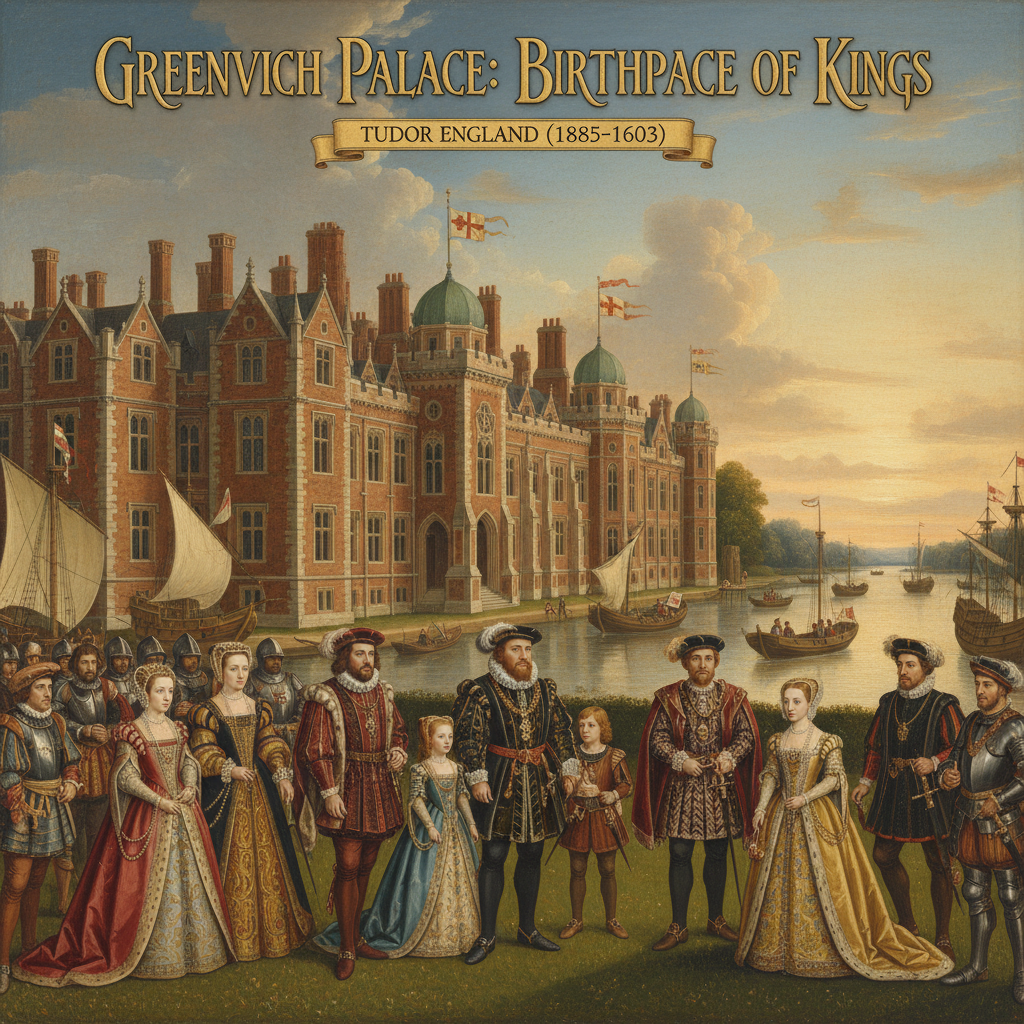
Nestled on the banks of the River Thames, the Royal Palace of Placentia at Greenwich was once the beating heart of Tudor England. More than just a grand residence, Greenwich was a stage for some of the most pivotal moments in English history, a place where monarchs were born, marriages were forged, and destinies were shaped. It was here, amidst its opulent halls and sprawling gardens, that the Tudor dynasty truly blossomed, earning Greenwich the enduring moniker: 'Birthplace of Kings'.
The Royal Nursery: Greenwich's Formative Years
Before it became synonymous with Tudor power, the site at Greenwich held a royal manor, first acquired by Humphrey, Duke of Gloucester, in the 15th century. He named it Placentia, meaning 'a pleasant place', a fitting description for its riverside location and verdant surroundings. Upon his death, it reverted to the Crown and was significantly developed by Henry VII, the first Tudor monarch. Henry VII saw the strategic and symbolic value of Greenwich, investing heavily in its expansion and beautification. It was under his patronage that the palace began to take on the grandeur that would define its Tudor era.
But it was his son, Henry VIII, whose life was inextricably linked with Greenwich from his very first breath. Born in the palace on 28 June 1491, the future king spent much of his childhood here, learning, playing, and developing the athletic prowess that would later define his early reign. Greenwich was not merely a residence; it was a home where the young prince could indulge in hunting, jousting, and revelry, activities he cherished throughout his life.
“The King’s Grace was born at Greenwich, and there brought up, and there took his first wife, and there his daughters were born, and there he held his most solemn feasts.” – Edward Hall, Chronicle
Did You Know?
Greenwich Palace was one of Henry VIII's favourite residences, and he spent more time there than at any other palace, including Hampton Court or Whitehall, especially in the early years of his reign.
A Stage for Dynasty: Births, Baptisms, and Betrayals
Greenwich’s role as the 'Birthplace of Kings' was cemented with the arrival of Henry VIII's children. On 18 February 1516, his first surviving child, Princess Mary (the future Mary I), was born within its walls. Her baptism, a lavish affair, took place in the Friars' Church nearby, signaling the hope and expectation placed upon this royal heir. The palace continued to be a hub of royal activity, hosting tournaments, masques, and diplomatic receptions that dazzled European envoys.
However, it was the birth of another princess, Elizabeth (the future Elizabeth I), at Greenwich on 7 September 1533, that would forever alter the course of English history. Her arrival, following Henry VIII's controversial marriage to Anne Boleyn and the break with Rome, was met with a mix of joy and bitter disappointment by the King, who desperately desired a male heir. The irony, of course, is that this 'disappointment' would grow to become one of England's most celebrated monarchs.
The Queen's Apartments and Royal Nurseries
The layout of Greenwich Palace, like many Tudor residences, was designed to accommodate the monarch's extensive household and provide distinct apartments for the King and Queen. The Queen's apartments, particularly during pregnancies, would have been a hive of activity, staffed by midwives, nurses, and ladies-in-waiting. These private quarters were where the intimate moments of royal birth unfolded, shielded from the public eye but central to the dynastic aspirations of the Tudors.
“The Queen was delivered of a fair daughter, and the King was greatly pleased, hoping for a son next time.” – Imperial Ambassador Eustace Chapuys on Elizabeth's birth
Festivities, Diplomacy, and the Royal Court
Beyond births, Greenwich was a vibrant centre for court life. Henry VIII, known for his love of spectacle, frequently held grand tournaments (jousts and mêlées) in the palace grounds, often participating himself. These events were not merely entertainment; they were powerful displays of royal might, wealth, and martial prowess, designed to impress both domestic subjects and foreign dignitaries.
- New Year's Day Celebrations: Lavish banquets, masques, and gift-giving were customary.
- Royal Marriages: Henry VIII married Anne of Cleves at Greenwich in 1540.
- Diplomatic Receptions: Ambassadors from across Europe were regularly received here.
- Performances: The palace boasted a Great Hall that served as a theatre for plays and musical performances.
The palace's strategic location on the Thames also made it easily accessible by barge from London, facilitating the movement of the court and its vast retinue. This accessibility, combined with its pleasant environment, made Greenwich a preferred royal residence for much of the Tudor period.
The Decline and Legacy of Placentia
After the death of Henry VIII, his children, Edward VI, Mary I, and Elizabeth I, continued to use Greenwich, though perhaps with less frequency than their father. Elizabeth I, in particular, enjoyed the palace, often spending summers there and hosting entertainments. However, the palace began to show its age by the early 17th century. James I and Charles I made some attempts at renovation, but the English Civil War sealed its fate.
During the Commonwealth, the palace fell into disrepair and was eventually demolished by Charles II, who envisioned a grander, more modern palace on the site, though his plans were never fully realised. Today, nothing remains of the original Tudor Palace of Placentia. Its footprint is now occupied by the Old Royal Naval College, designed by Sir Christopher Wren, and the Queen's House, a magnificent example of early English Palladian architecture.
Yet, the spirit of Tudor Greenwich endures. The ground where Henry VIII first drew breath, where Mary and Elizabeth were born, and where Anne Boleyn made her ill-fated debut as queen, remains hallowed ground. While the physical structure is gone, the stories, the echoes of royal celebrations, and the profound historical significance of Greenwich Palace continue to captivate. It stands as a powerful reminder of the Tudor dynasty's enduring legacy and its indelible mark on English history, forever etched as the 'Birthplace of Kings'.
TAGS
Discussion
No comments yet
Be the first to share your thoughts on this article!
You May Also Like
Continue exploring Tudor history with these related articles

Catherine Parr: The Survivor Queen and Royal Reformer
Catherine Parr, the sixth and final wife of Henry VIII, was a scholar, reformer, and political survivor. Discover how she navigated the treacherous Tudor court, escaped execution, and profoundly influenced the education of the future Elizabeth I and Edward VI.

Greenwich Palace: The Lost Cradle of Tudor Royalty
Discover the lost grandeur of Greenwich Palace (Placentia), the primary residence and crucial birthplace of the Tudor dynasty. This comprehensive article explores how Henry VII established the palace, the spectacular court life under Henry VIII, and its vital role as the birthplace of Henry VIII, Mary I, and Elizabeth I, before its eventual replacement by the Old Royal Naval College.

Edward VI: The Tragic Reign of the Boy King
Edward VI, the only son of Henry VIII and Jane Seymour, ascended the throne at age nine. His brief but transformative reign (1547–1553) saw the radical acceleration of the English Reformation, fundamentally shaping the religious identity of England despite his tragic early death.

Bosworth Field: How Henry VII Won the Crown and Began the Tudor Dynasty
Explore the dramatic Battle of Bosworth Field (1485), where Henry Tudor, the unlikely challenger, defeated Richard III, ending the Wars of the Roses and ushering in the powerful and enduring Tudor dynasty.