Cardinal Wolsey: Architect of Power, Victim of Ambition
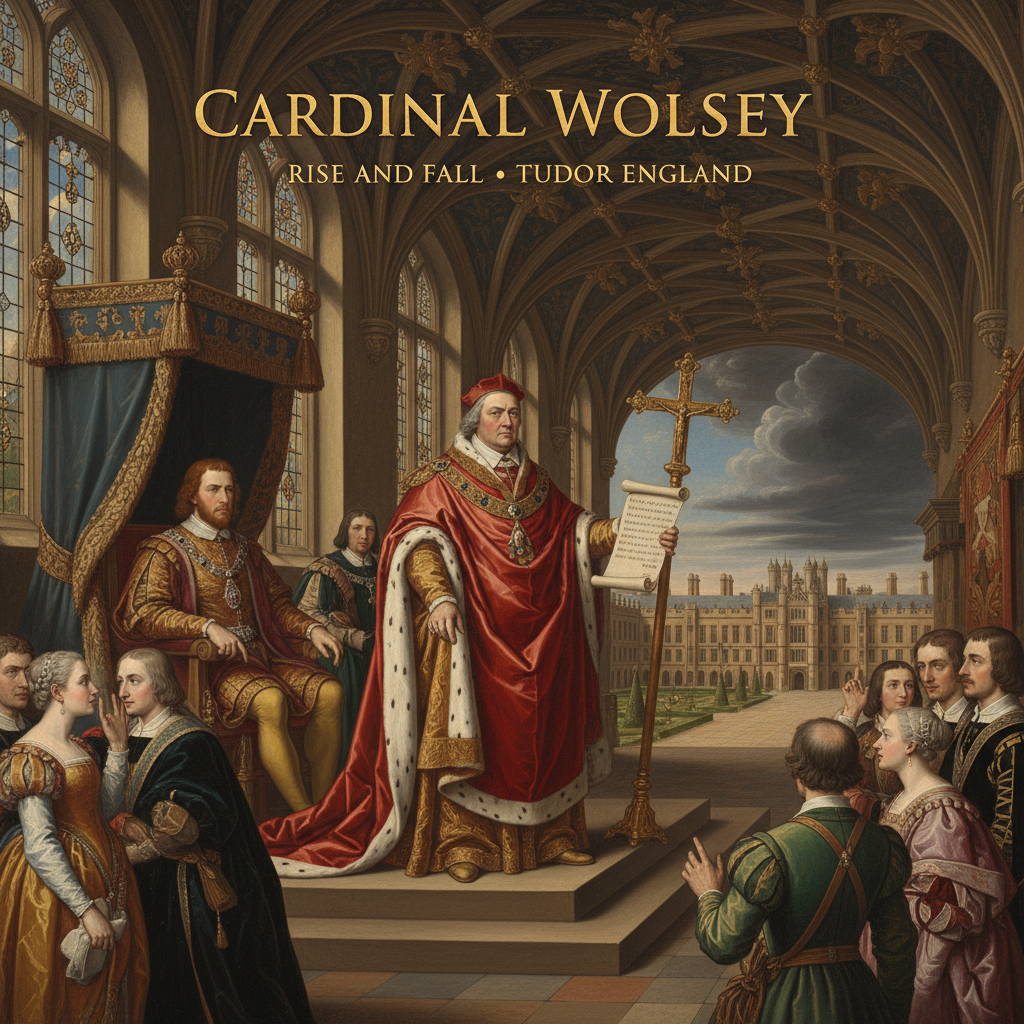
In the vibrant, tumultuous court of King Henry VIII, few figures shone as brightly or fell as dramatically as Thomas Wolsey. From humble beginnings, he ascended to become the most powerful man in England, second only to the King himself, wielding immense influence over both church and state. His story is a captivating tapestry woven with threads of ambition, political genius, extravagant wealth, and ultimately, a catastrophic downfall that forever altered the course of English history. Join us as we delve into the meteoric rise and tragic demise of the man who shaped early Tudor England.
From Butcher's Son to King's Confidant: Wolsey's Ascent
Born around 1473 in Ipswich, Suffolk, to a seemingly modest family (though the 'butcher's son' label was often used by his detractors to highlight his perceived low birth), Thomas Wolsey displayed prodigious intellect from an early age. He attended Magdalen College School and Magdalen College, Oxford, graduating at the remarkably young age of 15. His early career saw him serve as chaplain to the Archbishop of Canterbury and later as secretary to Sir Richard Nanfan, Deputy of Calais. These roles honed his administrative skills and brought him into contact with influential figures.
Wolsey's true opportunity arrived when he entered the service of the young King Henry VIII in 1509. Henry, a monarch eager to make his mark on the European stage, quickly recognized Wolsey's exceptional talent, tireless work ethic, and uncanny ability to deliver results. Wolsey became the King's almoner, a position that granted him daily access to Henry. He swiftly mastered the art of court politics, understanding Henry's desires and anticipating his needs. He was not merely an administrator; he was a fixer, a strategist, and a confidant.
"He was a man of great intellect and ambition, and he possessed an extraordinary capacity for work. He quickly gained the King's favour, and it was not long before he became the most powerful man in England."
– George Cavendish, The Life and Death of Cardinal Wolsey
His rise was swift and unprecedented. By 1515, he was appointed Lord Chancellor, the highest judicial office in England, and simultaneously made a cardinal by Pope Leo X. The following year, he became Papal Legate, giving him supreme authority over the English Church, effectively making him the King's vicegerent in ecclesiastical matters. This accumulation of secular and spiritual power was unprecedented and made him a formidable force.
Did You Know?
Cardinal Wolsey's household was one of the largest and most lavish in England, rivalling even the King's. It comprised over 500 servants, including gentlemen, chaplains, physicians, and even a master of the horse, reflecting his immense wealth and status.
The Architect of Power: Wolsey's Domestic and Foreign Policies
As Henry VIII's chief minister, Wolsey dominated English politics for over a decade. His domestic policies aimed at centralizing power and reforming the legal system. He actively used the Star Chamber to enforce justice, particularly against the nobility, and established the Court of Requests to provide justice for the poor. While these reforms were often driven by a desire to assert royal authority and his own influence, they also demonstrated a genuine concern for good governance.
However, it was in foreign policy that Wolsey truly shone, earning him the moniker 'the other king'. He envisioned England as a major player on the European stage, mediating between the great powers of France and the Holy Roman Empire. His diplomatic masterpiece was the Treaty of London in 1518, a non-aggression pact signed by over 20 European states, which briefly positioned England as the arbiter of peace. This was a triumph of diplomacy, showcasing Wolsey's strategic brilliance.
- **Key Diplomatic Achievements:**
- Treaty of London (1518): A pan-European peace initiative.
- Field of the Cloth of Gold (1520): An extravagant summit between Henry VIII and Francis I of France, orchestrated by Wolsey.
- Alliance with Spain and the Holy Roman Empire against France.
Wolsey's lavish lifestyle and immense wealth were legendary. He built Hampton Court Palace, a magnificent testament to his power and taste, which he later 'gifted' to Henry VIII. His ambition was matched only by his ostentation, which, while impressive, also bred resentment among the old nobility who viewed him as an upstart.
The King's 'Great Matter' and Wolsey's Catastrophe
Wolsey's downfall was inextricably linked to King Henry VIII's desperate desire for a male heir and his subsequent 'Great Matter' – the annulment of his marriage to Catherine of Aragon. Henry believed his marriage was cursed, based on a passage in Leviticus, and sought to marry Anne Boleyn. As Papal Legate and the King's most trusted advisor, Wolsey was tasked with securing the annulment from Pope Clement VII.
This task proved to be Wolsey's undoing. The Pope, held captive by Emperor Charles V (Catherine's nephew), was unwilling and unable to grant the annulment. Wolsey employed every diplomatic and legal trick in his arsenal, but the political realities of Europe proved insurmountable. The delay and failure infuriated Henry, who grew increasingly impatient and began to suspect Wolsey's loyalty or competence.
Anne Boleyn and her faction at court, who had long resented Wolsey's power and influence, seized the opportunity to undermine him. They convinced Henry that Wolsey was deliberately obstructing the annulment. By 1529, Henry's patience ran out. Wolsey was stripped of his offices, including the Lord Chancellorship, and all his property, including Hampton Court, was confiscated. He was accused of praemunire – asserting papal jurisdiction over royal authority – a charge that carried severe penalties.
"When the King's 'Great Matter' came to the fore, Wolsey, who had hitherto been the King's right hand, found himself in an impossible position, caught between the will of his sovereign and the authority of the Pope."
– Historian J.J. Scarisbrick, Henry VIII
Though initially spared his life and allowed to retain the Archbishopric of York, his fall from grace was complete. In November 1530, he was arrested on charges of treason and summoned to London. He never made it. Stricken with illness, he died en route at Leicester Abbey on November 29, 1530. His final words, as recorded by his gentleman usher George Cavendish, were poignant: "If I had served God as diligently as I have done the King, He would not have given me over in my grey hairs."
Legacy of a Fallen Giant
Cardinal Wolsey's life is a powerful testament to the intoxicating allure and inherent dangers of ambition in the Tudor court. He was a brilliant administrator, a shrewd diplomat, and a man of immense personal drive. His reforms laid some groundwork for later governmental structures, and his foreign policy temporarily elevated England's standing. Yet, his insatiable desire for power, his opulent display of wealth, and ultimately his failure to deliver the King's annulment led to his spectacular downfall.
His story serves as a stark reminder that in the volatile world of Tudor politics, even the most powerful minister was ultimately dependent on the fickle favour of the monarch. Wolsey's demise cleared the path for the English Reformation, as Henry VIII, frustrated by papal inaction, took matters into his own hands, forever changing the religious and political landscape of England. His legacy remains complex: a man who achieved extraordinary heights, only to be consumed by the very ambition that propelled him.
TAGS
Discussion
No comments yet
Be the first to share your thoughts on this article!
You May Also Like
Continue exploring Tudor history with these related articles

Catherine of Aragon: The Spanish Princess Who Defined the Tudor Era
Explore the life of Catherine of Aragon, the Spanish Infanta whose marriage to Henry VIII and subsequent refusal to accept an annulment triggered the English Reformation and defined the Tudor era.

The Sickening Truth: Medicine and Health in Tudor England
Dive into the precarious world of Tudor medicine, exploring the reliance on the Four Humours, the terrifying reality of the plague, and the often-dangerous treatments used by physicians, surgeons, and apothecaries in 16th-century England.
Anne Boleyn: Rise, Reign, & Tragic Fall of a Tudor Queen
Explore the captivating and tragic story of Anne Boleyn, from her sophisticated upbringing and meteoric rise as Henry VIII's second queen to her dramatic downfall and execution, forever changing England's history.

The Boleyn Ascent: How a Norfolk Family Conquered the Tudor Court
Explore the astonishing three-generation rise of the Boleyn family, from ambitious London merchants to the pinnacle of power, culminating in Anne Boleyn's controversial queenship and the English Reformation.