Bleeding, Herbs & Hope: A Look into Tudor Medicine & Health
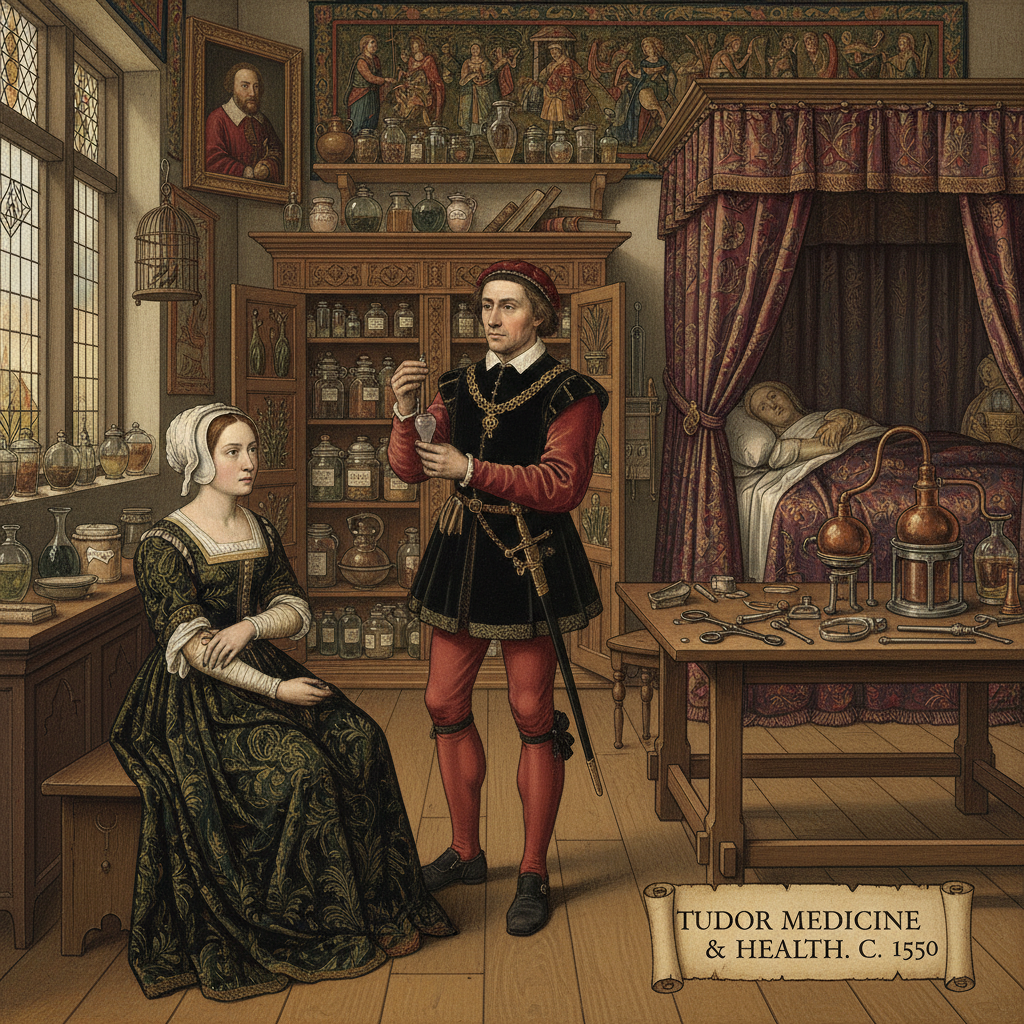
Imagine a world where illness was often seen as a punishment from God, where the humours governed your bodily functions, and where a barber might be your primary surgeon. Welcome to the fascinating, often frightening, and surprisingly sophisticated world of Tudor medicine and health. Far from the sterile environments of modern hospitals, the Tudors navigated a landscape of disease with a mix of ancient theories, herbal remedies, rudimentary surgery, and a strong dose of superstition. Understanding their approach to health offers a unique window into their daily lives, their beliefs, and their resilience in the face of widespread ailments.
The Four Humours: Cornerstone of Tudor Medical Theory
At the heart of Tudor medical understanding lay the ancient Greek theory of the Four Humours: blood, phlegm, yellow bile (choler), and black bile (melancholy). Each humour was associated with a specific organ, season, element, and temperament. Health was believed to be a state of perfect balance among these humours, while illness was a sign of imbalance. Too much blood, for instance, might make one sanguine and feverish; an excess of black bile could lead to melancholy and depression.
Physicians, often educated at universities like Oxford or Cambridge, spent years studying classical texts by Hippocrates and Galen. Their primary role was to diagnose imbalances and prescribe treatments to restore equilibrium. This often involved a combination of diet, lifestyle changes, and more invasive procedures.
“For as the body of man is compounded of the four elements, so is it nourished with four humours.”
– Andrew Boorde, A Dyetary of Helth, 1542
Diagnosis and Prognosis: A Physician's Toolkit
A Tudor physician’s examination would seem rudimentary by today’s standards. They would meticulously observe a patient’s urine, noting its colour, clarity, and even taste (though this practice declined over time). They might also examine faeces, sweat, and sputum. Pulse-taking was another key diagnostic tool, with different pulse strengths and rhythms indicating specific humoral imbalances. Astrological charts often played a role, as the alignment of planets was thought to influence bodily humours and the timing of treatments.
Prognosis was equally important. Physicians aimed to predict the course of a disease, offering hope or preparing families for the worst. Their fees were often substantial, meaning only the wealthy could afford their services regularly. The common folk relied on cheaper alternatives.
TAGS
Discussion
No comments yet
Be the first to share your thoughts on this article!
You May Also Like
Continue exploring Tudor history with these related articles

Catherine of Aragon: The Spanish Princess Who Defined the Tudor Era
Explore the life of Catherine of Aragon, the Spanish Infanta whose marriage to Henry VIII and subsequent refusal to accept an annulment triggered the English Reformation and defined the Tudor era.

The Sickening Truth: Medicine and Health in Tudor England
Dive into the precarious world of Tudor medicine, exploring the reliance on the Four Humours, the terrifying reality of the plague, and the often-dangerous treatments used by physicians, surgeons, and apothecaries in 16th-century England.
Anne Boleyn: Rise, Reign, & Tragic Fall of a Tudor Queen
Explore the captivating and tragic story of Anne Boleyn, from her sophisticated upbringing and meteoric rise as Henry VIII's second queen to her dramatic downfall and execution, forever changing England's history.

The Boleyn Ascent: How a Norfolk Family Conquered the Tudor Court
Explore the astonishing three-generation rise of the Boleyn family, from ambitious London merchants to the pinnacle of power, culminating in Anne Boleyn's controversial queenship and the English Reformation.