Beyond the Court: Tudor Sports & Pastimes Revealed
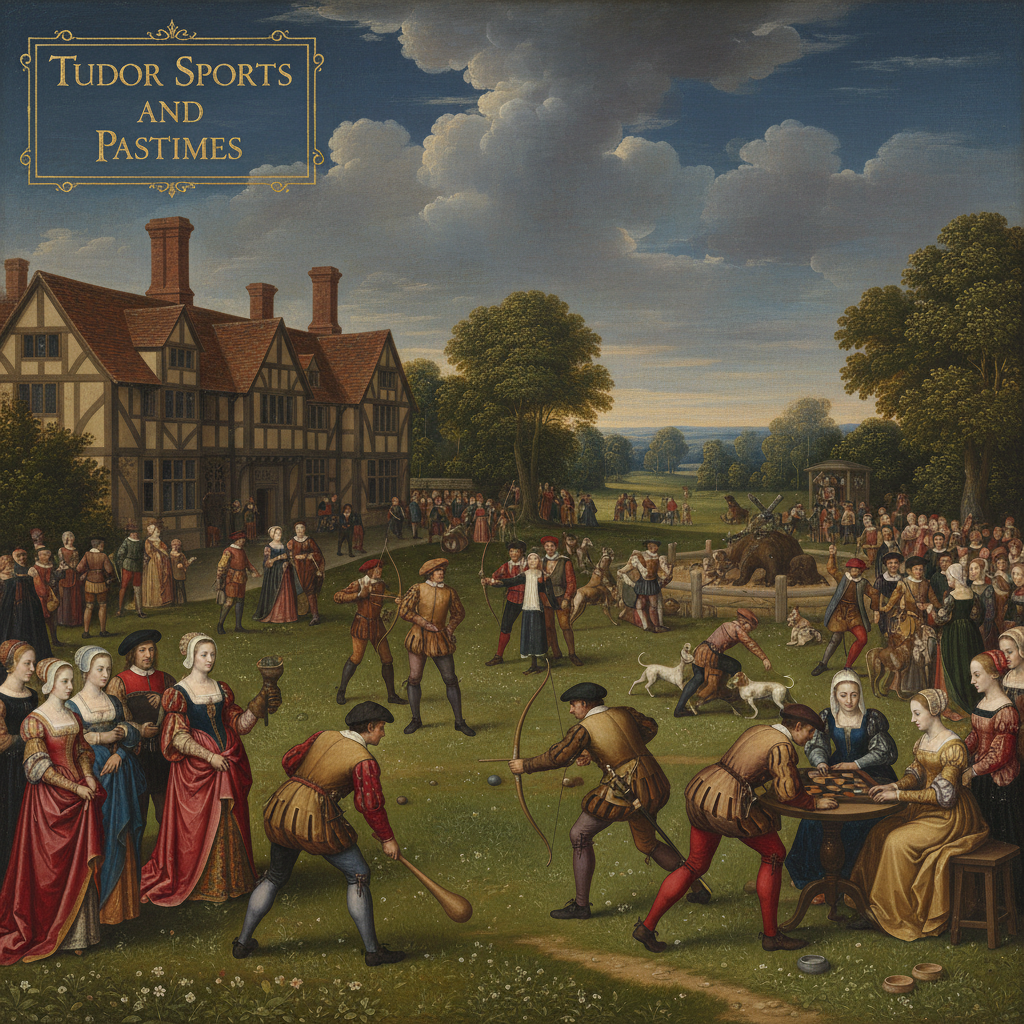
When we imagine the Tudor era, our minds often conjure images of opulent courts, religious upheaval, and powerful monarchs. Yet, beneath the grand narratives of statecraft and succession, everyday life, even for royalty, was punctuated by a rich tapestry of sports and pastimes. Far from being a dour age, Tudor England buzzed with a vibrant culture of entertainment, exercise, and social interaction, reflecting the hierarchical yet surprisingly diverse fabric of society. From the brutal spectacle of bear-baiting to the refined pursuit of hunting, and the boisterous energy of village football, these activities offered both diversion and a crucial means of social bonding, status display, and even physical training for war.
The Royal Pursuit: Hunting, Jousting, and Tennis
For the Tudor elite, particularly the monarchs themselves, sport was not merely recreation but a vital aspect of their public image, physical prowess, and political theatre. Henry VIII, a man of formidable physique and boundless energy in his youth, was a passionate participant in many aristocratic pursuits. His love for hunting was legendary; he maintained vast deer parks and forests, and the chase was a frequent royal activity, often involving hundreds of participants and elaborate preparations.
Jousting, the quintessential medieval sport, continued to thrive in the Tudor period, albeit evolving into more ceremonial displays than outright combat. Tournaments were grand spectacles, designed to impress foreign dignitaries and showcase the martial capabilities of the English nobility. Henry VIII himself was an accomplished jouster, though a serious accident in 1536, where he was unhorsed and lay unconscious for two hours, is often cited as a turning point in his health and temperament.
"His Majesty, being young, and of a princely courage, greatly delighted in these triumphs, and would often break a spear himself, to the great admiration of all his subjects."
— Edward Hall, Hall's Chronicle
Perhaps surprisingly, tennis, or 'real tennis' as it's now known, was another royal obsession. Henry VIII had courts at Hampton Court Palace and Whitehall, and he played with an intensity that often saw him drenched in sweat. This complex indoor game, played with rackets and a heavy ball, required skill, strategy, and agility, making it a favourite among the aristocracy.
Did You Know?
Henry VIII was so passionate about real tennis that he reputedly played it even on his deathbed, though this is likely an exaggeration. He certainly had a court built at his favourite residence, Hampton Court Palace, which is still in use today!
Archery: A National Pastime and Military Necessity
Archery held a unique place in Tudor society, being both a popular sport and a critical military skill. English longbowmen had been instrumental in victories like Agincourt, and successive monarchs, including the Tudors, understood its importance. Laws were in place requiring all able-bodied men to practice archery regularly.
- Every man between 17 and 60 had to own a longbow.
- Boys as young as 7 were encouraged to learn.
- Butts (targets) were set up in every village.
- Sunday afternoons were often dedicated to archery practice after church.
While the advent of firearms gradually diminished the longbow's military supremacy, archery remained a cherished pastime, fostering discipline and marksmanship across all social strata.
Popular Pastimes of the Common Folk
Life for the common people was arduous, but they too found solace and excitement in a variety of sports and games. These activities were often communal, fostering local identity and providing much-needed breaks from daily toil.
Football, though vastly different from its modern incarnation, was immensely popular. It was a chaotic, often violent affair played between villages or parishes, with few rules and goals often miles apart. Shins were kicked, bones were broken, and entire communities would descend into a muddy, exhilarating melee. Despite its popularity, authorities frequently tried to ban it, fearing it distracted from archery practice and led to public disorder.
"Moreover, I must needs say, that football playing is a friendly kind of fight, and a cruel kind of play. For what goeth it to the shins, the arms, and the legs, and all parts of the body, are in danger of their lives?"
— Philip Stubbes, The Anatomie of Abuses (1583)
Other popular village sports included wrestling, cudgel-play (fighting with sticks), and various forms of running and jumping contests. Festivals and holy days were prime opportunities for these events, often accompanied by feasting and copious ale.
Games of Chance and Skill
Indoors, or in less physically demanding moments, Tudors enjoyed a range of board games and card games. Chess, backgammon (known as 'tables'), and draughts were played by the literate and wealthy. Card games, often involving gambling, were widespread, though frequently condemned by moralists for encouraging idleness and vice. Dice games were also hugely popular, leading to many a lost shilling and heated argument.
Children, too, had their games, many of which are still recognizable today: hide-and-seek, tag, blind man's buff, and various ball games. Tops, hoops, and dolls were common toys, reflecting a childhood that, despite its hardships, still made room for play.
Blood Sports and Public Spectacles
Perhaps the most controversial aspect of Tudor entertainment, from a modern perspective, were the 'blood sports.' These brutal spectacles, though shocking to us, were integral to the social fabric and widely enjoyed by all classes, including royalty.
- Bear-baiting: A bear, often chained to a stake, would be attacked by a pack of mastiffs. This was a hugely popular event, with purpose-built bear gardens in London.
- Bull-baiting: Similar to bear-baiting, a bull would be tormented by dogs.
- Cock-fighting: Two specially bred fighting cocks, often fitted with metal spurs, would fight to the death.
These events were seen as tests of courage, strength, and endurance, and provided intense excitement for the spectators. The royal court frequently attended such events, underscoring their widespread acceptance.
Music, Dance, and Theatre
Beyond physical exertions, the Tudors also delighted in more artistic pastimes. Music was ubiquitous, from the elaborate court orchestras and choirs to the simple folk songs sung in taverns and fields. Every educated person was expected to have some musical ability, and instruments like the lute, virginal, and recorder were common.
Dancing was another vital social grace and a popular form of entertainment. Courtly dances like the pavane and galliard were intricate and formal, while country dances were more boisterous and communal. Theatre, too, flourished, especially towards the end of the Tudor period, with the rise of professional acting companies and playwrights like William Shakespeare, whose plays offered both entertainment and moral instruction to a diverse audience.
The Enduring Legacy of Tudor Pastimes
The sports and pastimes of the Tudor era offer a fascinating window into the lives of people from all walks of life. They reveal a society that valued physical prowess, communal entertainment, and the spectacle of competition, often with a raw, visceral edge that reflects the harsh realities of the age. While some activities, like blood sports, have rightly been consigned to history, others, like archery, tennis, and various ball games, have evolved into beloved modern sports, demonstrating the enduring human need for play, challenge, and connection. Exploring these pastimes allows us to connect with our Tudor ancestors, understanding not just how they lived, but how they found joy, excitement, and meaning in their world.
TAGS
Discussion
No comments yet
Be the first to share your thoughts on this article!
You May Also Like
Continue exploring Tudor history with these related articles

Sir Walter Raleigh: Explorer, Poet, and Queen Elizabeth's Favourite
Explore the dramatic life of Sir Walter Raleigh, Queen Elizabeth I's controversial favourite. From his rise as a dashing courtier and explorer of Virginia to his tragic execution under James I, Raleigh embodied the ambition and peril of the Tudor and Stuart eras.

Tudor Tables: A Feast for the Senses and Society
Explore the fascinating world of Tudor food and feasting, from peasant pottage to royal banquets. Discover how diet reflected social status, the role of spices, and the elaborate spectacles of 16th-century dining.

The Soundtrack of the Sixteenth Century: Tudor Music and Entertainment
Explore the vibrant world of Tudor music and entertainment, from the sophisticated polyphony of the royal court under Henry VIII and Elizabeth I to the raucous ballads and public spectacles enjoyed by commoners.

Tudor Fun: Sports, Games & Pastimes of the Tudor Era
Dive into the vibrant world of Tudor sports and pastimes! From royal jousts and noble hunts to chaotic football and popular archery, discover how Tudors entertained themselves across all social classes.