Tudor Fun: Sports, Games & Pastimes of the Tudor Era

When we think of the Tudor era, images of powerful monarchs, political intrigue, and religious upheaval often come to mind. Yet, beneath the grand narratives of statecraft and succession, ordinary Tudors, from the lowliest peasant to the highest noble, found time for recreation and amusement. Life in Tudor England, though often harsh and demanding, was punctuated by a vibrant array of sports, games, and pastimes that offered respite, entertainment, and a crucial sense of community. Far from being a period of unremitting toil, the Tudor age was one where leisure, in its many forms, played a significant role in daily life, shaping social interactions and reflecting the hierarchical structure of society.
The King's Games: Royal and Noble Pursuits
For the Tudor elite, leisure was often a display of status, skill, and wealth. King Henry VIII, a man renowned for his athleticism in his youth, set the standard for royal sporting prowess. He was an avid participant and patron of many activities, ensuring that sports were not just a pastime but a vital part of courtly life and diplomacy.
Jousting and Tournaments: Spectacle and Chivalry
The joust was arguably the most spectacular and dangerous of all Tudor sports, a direct inheritance from medieval chivalric traditions. These grand events, often held to celebrate royal occasions like coronations, weddings, or treaties, were elaborate affairs involving magnificent armour, richly caparisoned horses, and skilled knights. Henry VIII himself was a formidable jouster, famously engaging in a severe accident in 1536 that some historians believe contributed to his later health issues and personality changes.
"The King's grace, being young and lusty, much exercised himself in shooting, singing, dancing, wrestling, casting of the bar, playing at the recorder, flute, virginals, in setting of songs, and making of ballads."
– Edward Hall, chronicler of Henry VIII's reign
Tournaments were not just about individual combat; they were social events, complete with feasting, music, and dancing, drawing crowds from all strata of society. They served to reinforce the martial ideals of the nobility and provide a public spectacle of power and prestige.
Hunting and Hawking: The Noble Chase
Hunting was more than a sport; it was a fundamental aspect of noble life, providing food, training for warfare, and a means of social bonding. Deer hunting, in particular, was a highly ritualized event, often involving large retinues, hounds, and elaborate feasts afterwards. Hawking, or falconry, was equally popular, requiring immense skill, patience, and expensive birds of prey. Both activities demonstrated mastery over nature and were exclusive to those with access to vast estates and the necessary resources.
Did You Know?
Henry VIII was so passionate about hunting that he converted vast tracts of land, including what is now Hyde Park and Regent's Park, into royal hunting grounds, often displacing local villagers in the process.
Tennis and Bowls: Courtly Games
Real tennis, an indoor game played in specialized courts, was a favourite of the Tudors, particularly Henry VIII. It was a complex game, quite different from modern lawn tennis, involving walls, roofs, and intricate rules. The King was known to play for hours, often betting heavily on the outcome. Bowls, a more sedate but equally strategic game, was also popular, played on carefully manicured lawns or 'bowling greens'. These games offered a blend of physical activity and mental challenge, suitable for the refined tastes of the court.
Common Pleasures: Sports and Games for Everyone
While the nobility enjoyed their exclusive pursuits, the common people of Tudor England had their own vibrant array of sports and games, often played with fierce enthusiasm and a strong community spirit. These activities provided much-needed relief from hard labour and fostered social cohesion.
Football: A Rough and Tumble Affair
Tudor football bore little resemblance to the organized sport we know today. It was a chaotic, often violent affair, played between villages or parishes, with goals sometimes miles apart. There were few rules, and large numbers of players would chase a leather ball across fields, through streets, and even into rivers. Injuries were common, and the game was frequently banned by authorities due to its disruptive and dangerous nature.
"For as concerning football playing, I protest unto you that it may rather be called a friendly kind of fight than a play or recreation; a bloody and murdering practice than a fellowly sport or pastime."
– Philip Stubbes, 'The Anatomie of Abuses' (1583)
Despite official disapproval, football remained immensely popular, a testament to its role as a communal outlet for physical exertion and rivalry.
Archery: A Skill for War and Sport
Archery was not just a sport but a vital military skill. English longbowmen had been instrumental in victories like Agincourt, and successive Tudor monarchs, keenly aware of its importance, mandated regular practice. Every able-bodied man was expected to own a bow and practice shooting on Sundays and holidays. Archery contests were popular events, offering prizes and prestige to skilled marksmen. It was a sport that transcended social classes, though the quality of equipment might vary.
Wrestling and Bear-Baiting: Spectacles of Strength and Cruelty
Wrestling was a common pastime, particularly in rural areas, showcasing strength and agility. Matches were often held at fairs and festivals, drawing large crowds. More controversially, bear-baiting and bull-baiting were popular, though cruel, spectacles. A bear, often chained to a stake, would be attacked by a pack of dogs for the entertainment of onlookers. These events, while shocking to modern sensibilities, were a common form of public entertainment, even attended by royalty.
Indoor Amusements and Social Gatherings
When the weather turned foul, or for those seeking less strenuous entertainment, Tudor homes and taverns offered a variety of indoor games and social activities.
Board Games and Card Games: Wagers and Wit
- Chess: A game of strategy, enjoyed by the educated elite.
- Backgammon (Tables): A dice and board game, popular across social strata.
- Dice Games: Simple and widespread, but often associated with gambling and vice.
- Card Games: New to England in the Tudor period, cards quickly became popular, leading to widespread gambling and moral condemnation from some quarters.
These games provided intellectual stimulation and opportunities for social interaction, often accompanied by wagers, from small stakes among commoners to significant sums at court.
Music, Dancing, and Storytelling: The Heart of Tudor Entertainment
Music was an integral part of Tudor life, from courtly masques to folk songs in taverns. Instruments like the lute, viol, recorder, and virginals were common. Dancing was a popular social activity, with various forms ranging from stately court dances like the pavane to energetic country dances. Storytelling, ballads, and plays, often performed by travelling players, also provided crucial entertainment, especially for those who could not read.
Conclusion: A Glimpse into Tudor Life
The sports and pastimes of the Tudor era offer a fascinating window into the daily lives, social structures, and cultural values of the time. From the perilous jousts of the nobility to the rough-and-tumble football matches of the common folk, these activities provided not only entertainment and physical exertion but also served as vital social outlets, reinforcing community bonds and reflecting the hierarchical order of society. They remind us that even amidst the grandeur and gravity of Tudor history, there was always time for play, laughter, and the pursuit of pleasure. Exploring these aspects of Tudor life allows us to connect with the people of this remarkable period on a more personal and human level, revealing a world far richer and more diverse than mere political chronicles might suggest. What Tudor pastime would you have chosen?
Discussion
No comments yet
Be the first to share your thoughts on this article!
You May Also Like
Continue exploring Tudor history with these related articles

Sir Walter Raleigh: Explorer, Poet, and Queen Elizabeth's Favourite
Explore the dramatic life of Sir Walter Raleigh, Queen Elizabeth I's controversial favourite. From his rise as a dashing courtier and explorer of Virginia to his tragic execution under James I, Raleigh embodied the ambition and peril of the Tudor and Stuart eras.

Tudor Tables: A Feast for the Senses and Society
Explore the fascinating world of Tudor food and feasting, from peasant pottage to royal banquets. Discover how diet reflected social status, the role of spices, and the elaborate spectacles of 16th-century dining.

The Soundtrack of the Sixteenth Century: Tudor Music and Entertainment
Explore the vibrant world of Tudor music and entertainment, from the sophisticated polyphony of the royal court under Henry VIII and Elizabeth I to the raucous ballads and public spectacles enjoyed by commoners.
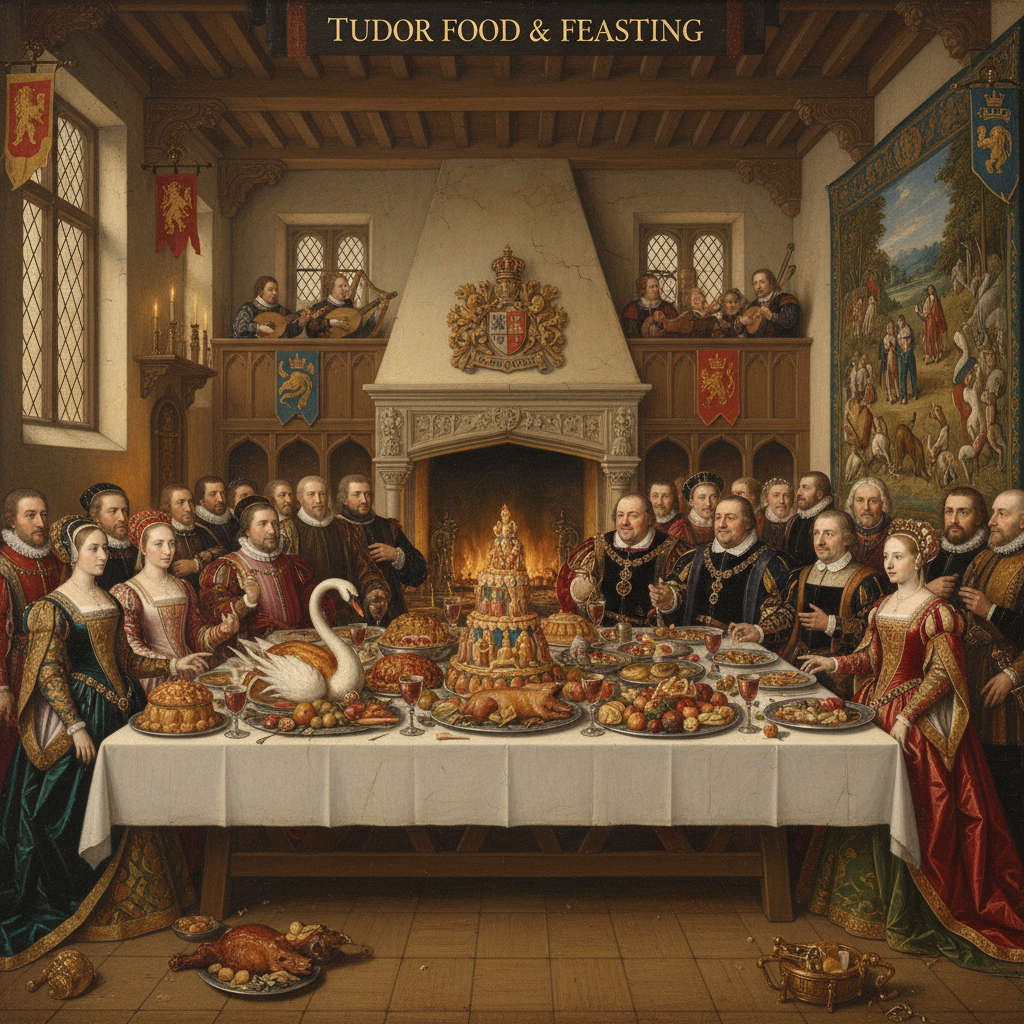
Tudor Tables: A Feast of Food and Social Status
Dive into the world of Tudor food and feasting, where meals were a grand display of wealth and social status, from peasant pottage to Henry VIII's lavish banquets.