Sir Walter Raleigh: Explorer, Courtier, and Enigma of the Tudor Age
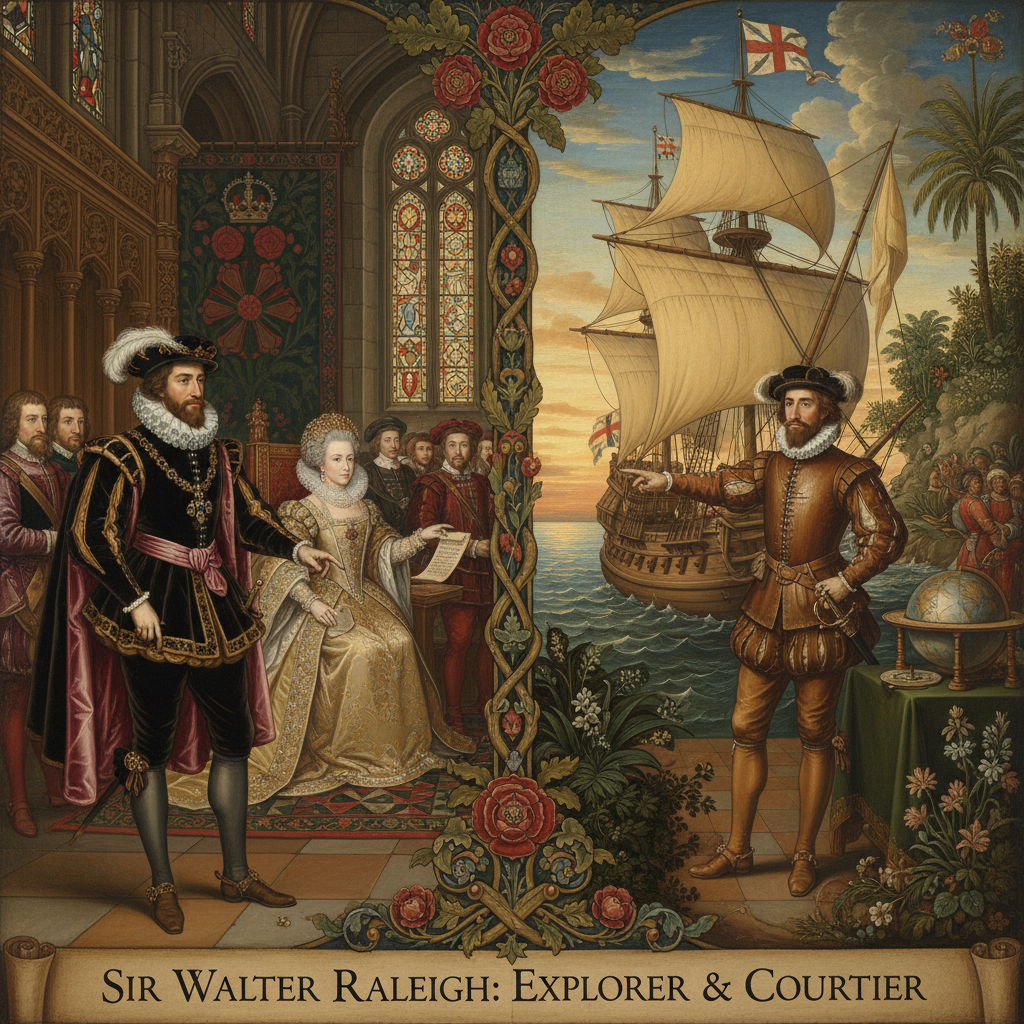
Few figures embody the adventurous spirit and complex contradictions of the Tudor era quite like Sir Walter Raleigh. A dashing courtier, a daring explorer, a gifted poet, and a shrewd politician, Raleigh's life was a whirlwind of ambition, triumph, and ultimately, tragedy. From his humble beginnings in Devon to his meteoric rise at the court of Queen Elizabeth I, and his later, ill-fated voyages, Raleigh's story is a captivating tapestry woven with threads of innovation, intrigue, and an unyielding quest for glory. He was a man who dared to dream of empires across the ocean, forever linking his name with the early attempts at English colonization in the New World, and whose very existence seemed to challenge the boundaries of his time.
The Rise of a Devon Gentleman: From Soldier to Courtier
Born around 1552 in Hayes Barton, Devon, Walter Raleigh's early life was steeped in the maritime traditions of England's West Country. His family, though not of the highest nobility, was well-connected and staunchly Protestant. This religious conviction would shape much of Raleigh's career, particularly in his opposition to Catholic Spain. He studied briefly at Oriel College, Oxford, but the lure of adventure soon called him away. Raleigh cut his teeth as a soldier in the French Wars of Religion, fighting alongside the Huguenots, and later served in Ireland during the brutal Desmond Rebellions. It was in Ireland that he first caught the eye of the Queen's Privy Council, notably Lord Deputy Arthur Grey, for his military prowess and ruthlessness.
His true ascent began in the early 1580s when he arrived at Elizabeth I's court. The Queen, ever drawn to handsome, intelligent, and articulate men, was immediately captivated by Raleigh's charm and wit. Legend has it he first gained her favour by laying his expensive cloak over a muddy puddle for her to walk across, though this anecdote is likely apocryphal. What is certain is that he quickly became one of her most cherished favourites, showered with lands, titles, and monopolies. He was knighted in 1585, appointed Captain of the Queen's Guard, and granted vast estates in Ireland. His influence grew to such an extent that he became a central figure in court politics, often to the envy and resentment of other courtiers.
“I am of opinion that he was the most remarkable man of his time, for he was a good soldier, a good sailor, a good statesman, and a good author.” – John Aubrey, Brief Lives
TAGS
Discussion
No comments yet
Be the first to share your thoughts on this article!
You May Also Like
Continue exploring Tudor history with these related articles

Sir Walter Raleigh: Explorer, Poet, and Queen Elizabeth's Favourite
Explore the dramatic life of Sir Walter Raleigh, Queen Elizabeth I's controversial favourite. From his rise as a dashing courtier and explorer of Virginia to his tragic execution under James I, Raleigh embodied the ambition and peril of the Tudor and Stuart eras.

Tudor Tables: A Feast for the Senses and Society
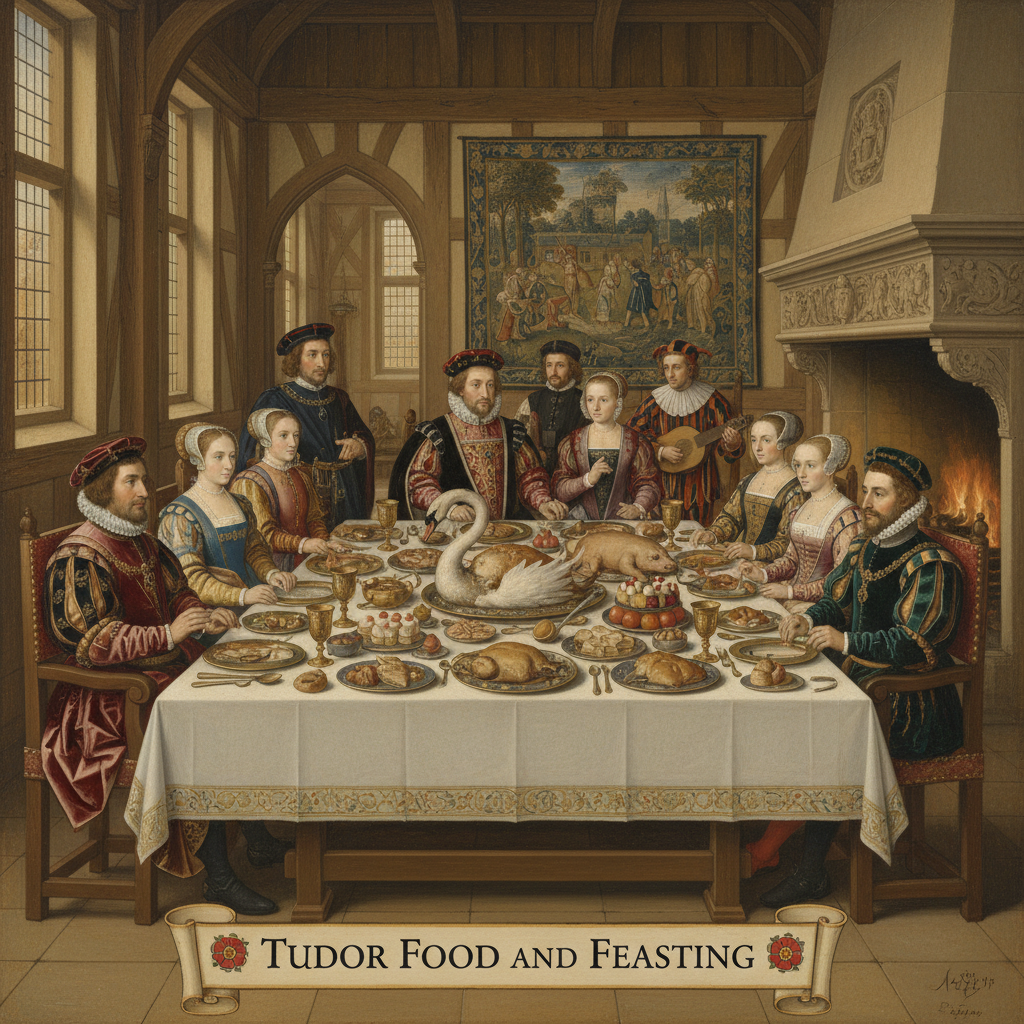
Explore the fascinating world of Tudor food and feasting, from peasant pottage to royal banquets. Discover how diet reflected social status, the role of spices, and the elaborate spectacles of 16th-century dining.

The Soundtrack of the Sixteenth Century: Tudor Music and Entertainment
Explore the vibrant world of Tudor music and entertainment, from the sophisticated polyphony of the royal court under Henry VIII and Elizabeth I to the raucous ballads and public spectacles enjoyed by commoners.
Tudor Feasts: A Culinary Journey Through History
Explore the lavish world of Tudor food and feasting, from Henry VIII's extravagant banquets to the humble pottage of commoners. Discover the social hierarchy on a plate, ancient preservation methods, and the enduring legacy of Tudor culinary traditions.